Millettia extensa
Millettia extensa · Accepted scientific name
Scientific literature: Very Sparse (10 studies) · ★☆☆☆☆
Millettia extensa, scientifically known as Millettia extensa, is a versatile medicinal plant celebrated in traditional Ayurvedic practices. Renowned for its diverse therapeutic properties, this species is frequently utilized to treat skin ailments, inflammation, and digestive issues. Its potent bioactive compounds make it a vital resource in natural pharmacology.
- Family
- Fabaceae
- Native range
- Asia-Tropical
- Parts used
- Leaf · Stem
- Common names
- Not available
- Scientific synonyms
- Millettia Auriculata F. Extensa · Phaseoloides Extensum · 7 more
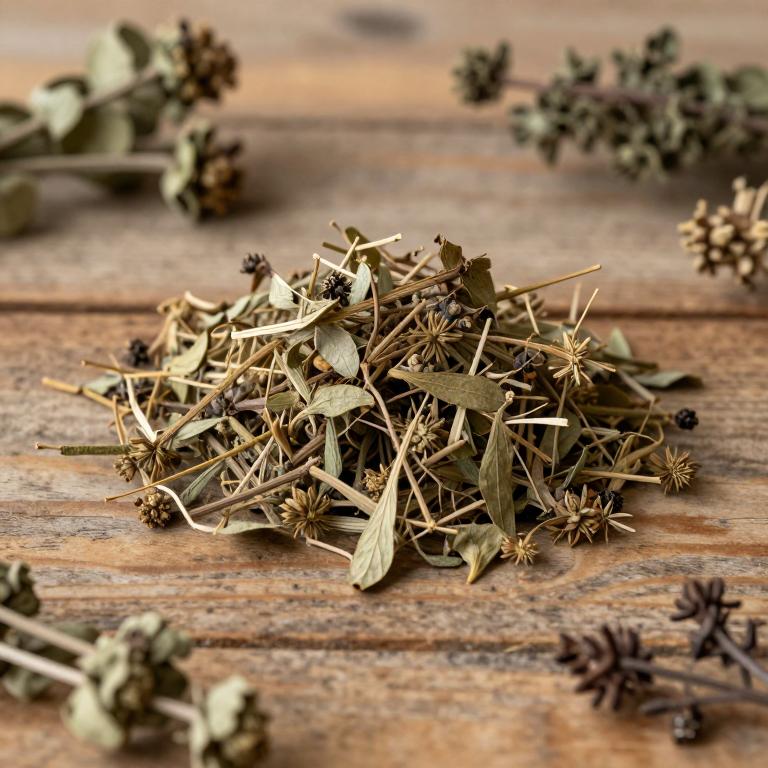
Names and Synonyms
Scientific Names
Accepted name
Millettia extensaSynonyms
- Millettia auriculata f. extensa
- Phaseoloides extensum
- Millettia auriculata var. extensa
- Otosema macrophylla
- Otosema extensa
- Amerimnon pallidum
- Pongamia macrophylla
- Millettia auriculata
- Tephrosia macrophylla
Sources: Wikidata, Catalogue of Life
Taxonomical Classification
This plant belongs to the kingdom Plantae and is classified under the phylum Streptophyta and class Equisetopsida. Within the subclass Magnoliidae, it is further categorized under the order Fabales and the family Fabaceae. It is specifically identified by the genus Millettia.
| Rank | Classification |
|---|---|
| Kingdom | Plantae |
| Phylum | Streptophyta |
| Class | Equisetopsida |
| Subclass | Magnoliidae |
| Order | Fabales |
| Family | Fabaceae |
| Genus | Millettia |
Sources: The World Checklist of Vascular Plants (WCVP)
Distribution
This plant exhibits a widespread presence across several key regions within the Indian Subcontinent. It can be found growing throughout the various states and territories of India. Its distribution extends into the neighboring country of Bangladesh, where it thrives in local ecosystems. Furthermore, the species is commonly documented in the mountainous terrains of Nepal and the East Himalaya region. Finally, the plant is also specifically noted to occur within the state of Assam.
| Region | Area |
|---|---|
| Indian Subcontinent | Assam |
| Indian Subcontinent | Bangladesh |
| Indian Subcontinent | East Himalaya |
| Indian Subcontinent | India |
| Indian Subcontinent | Nepal |
| Indian Subcontinent | Pakistan |
| Indian Subcontinent | West Himalaya |
| Indo-China | Cambodia |
| Indo-China | Laos |
| Indo-China | Myanmar |
Sources: The World Checklist of Vascular Plants (WCVP)
Botanical Identification
Ecology
The ecology of Millettia extensa is characterized by its specific altitudinal preferences, as it thrives within a defined vertical niche. This species is predominantly found in environments situated at moderate elevations, maintaining a strictly regulated elevational range that begins at a minimum of 400 m AMSL and extends to a maximum of 600 m AMSL. This specific altitudinal belt suggests that the plant is adapted to the particular climatic conditions, such as temperature gradients and moisture availability, found within this narrow lowland to sub-montane transition zone.
- Elevational range max:
- 600 m AMSL
- Elevational range min:
- 400 m AMSL
Morphology
The morphology of Millettia extensa is characterized by its significant stature, with an average plant height reaching approximately 15 m. It is classified as a terrestrial species, growing in land-based environments rather than aquatic or semiaquatic habitats. As an obligatory climber, it relies on external structures for upward growth, and its growth form is categorized as other, distinguishing it from typical herbs, shrubs, or standard trees. Furthermore, the plant functions as an independent organism, exhibiting no parasitic tendencies, and it maintains a terrestrial existence rather than acting as an epiphyte.
- Aquatic :
- terrestrial
- Climber :
- obligatory
- Epiphyte :
- terrestrial
- Growth form :
- other
- Parasite :
- independent
- Plant height mean:
- 15 m
Physiology
The physiology of Millettia extensa is characterized by its specific metabolic and nutritional processes, most notably its utilization of the C3 photosynthetic pathway for carbon fixation. As a C3 plant, it employs the enzyme Rubisco to fix atmospheric carbon dioxide directly into a three-carbon compound during the Calvin cycle, a process that dictates its efficiency and environmental adaptations. Furthermore, the plant exhibits a significant capacity for nitrogen acquisition through its role as a nitrogen fixer. By engaging in symbiotic relationships, typically with rhizobial bacteria within root nodules, it can convert atmospheric nitrogen into biologically available forms, thereby enhancing its nutrient uptake and supporting its growth in nitrogen-limited environments.
- Nitrogen fixer :
- yes
- Photosynthetic pathway :
- C3
Sources: Global Inventory of Floras and Traits (GIFT)
Plant Parts
Millettia extensa has 3 reported plant parts identified across 5 scientific publications and several other databases that are studied for medicinal purposes. The most consistently reported plant part include leaf, stem, root.
| Plant part | Supporting sources | Consensus |
|---|---|---|
| Leaf | 2 supporting sources | ★☆☆☆☆ |
| Stem | 2 supporting sources | ★☆☆☆☆ |
| Root | 1 supporting sources | ★☆☆☆☆ |
Leaf
- BMC complementary and alternative medicine
- Journal of natural products
Stem
- Journal of basic and clinical physiology and pharmacology
- Journal of pharmacological sciences
Root
- Journal of natural products
Chemicals
Millettia extensa has 1 reported phytochemicals identified across 5 scientific publications and several other databases. The most consistently reported chemicals include AURICULATIN.
| Chemical | Supporting sources | Consensus |
|---|---|---|
| AURICULATIN | 1 supporting sources | ★☆☆☆☆ |
AURICULATIN
- ACS omega
Activities
Millettia extensa has 1 reported activities identified across 5 scientific publications and several other databases. The most consistently reported activities include Antibacterial.
| Activity | Supporting sources | Consensus |
|---|---|---|
| Antibacterial | 1 supporting sources | ★☆☆☆☆ |
Antibacterial
- Journal of natural products
Conditions
Millettia extensa has 2 reported investigations on conditions identified across 5 scientific publications and several other databases. The most consistently reported conditions include bacterial infections, skin diseases.
| Condition | Supporting sources | Consensus |
|---|---|---|
| Bacterial infections | 1 supporting sources | ★☆☆☆☆ |
| Skin diseases | 1 supporting sources | ★☆☆☆☆ |
Bacterial infections
- ACS omega
Skin diseases
- Journal of ethnopharmacology
Preparations
Millettia extensa has 7 reported preparations identified across 5 scientific publications and several other databases. The most consistently reported preparations include DCM and MeOH extracts, MeOH extract, acetone extract, dichloromethane (DCM) and methanol (MeOH) extracts of the stem bark, leaf extracts.
| Preparation | Supporting sources | Consensus |
|---|---|---|
| Dcm and meoh extracts | 1 supporting sources | ★☆☆☆☆ |
| Meoh extract | 1 supporting sources | ★☆☆☆☆ |
| Acetone extract | 1 supporting sources | ★☆☆☆☆ |
| Dichloromethane (dcm) and methanol (meoh) extracts of the stem bark | 1 supporting sources | ★☆☆☆☆ |
| Leaf extracts | 1 supporting sources | ★☆☆☆☆ |
| Methanol soluble fraction | 1 supporting sources | ★☆☆☆☆ |
| Root extracts | 1 supporting sources | ★☆☆☆☆ |
Dcm and meoh extracts
- Journal of pharmacological sciences
Meoh extract
- Journal of pharmacological sciences
Acetone extract
- RSC advances
Dichloromethane (dcm) and methanol (meoh) extracts of the stem bark
- Journal of pharmacological sciences
Leaf extracts
- Journal of natural products
Methanol soluble fraction
- Journal of complementary & integrative medicine
Root extracts
- Journal of natural products