climbing hempweed
Mikania micrantha · Accepted scientific name
Scientific literature: Very Sparse (39 studies) · ★☆☆☆☆
Climbing hempweed, scientifically known as Mikania micrantha, is a vigorous perennial vine native to tropical regions. Renowned for its medicinal properties, this plant is frequently utilized in traditional medicine to treat various ailments, including skin infections, inflammation, and digestive issues, owing to its potent bioactive and antimicrobial compounds.
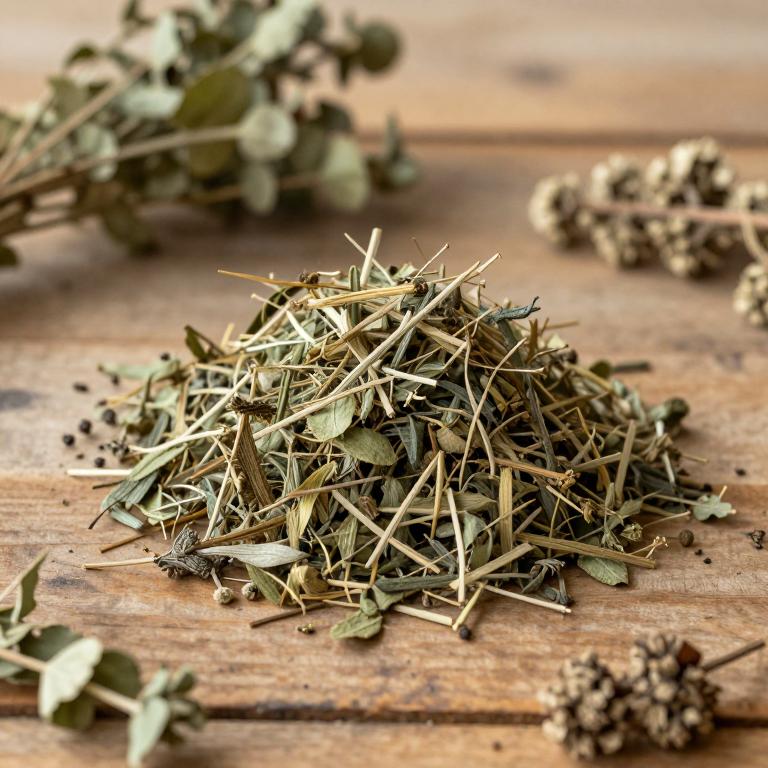
Names and Synonyms
Common Names
- climbing hempweed
- mikania-vine
- mile-a-minute
Scientific Names
Accepted name
Mikania micranthaSynonyms
- Eupatorium denticulatum
- Eupatorium orinocense
- Mikania deltoides
- Mikania denticulata
- Mikania glechomifolia
- Mikania micrantha f. hirsuta
- Mikania orinocensis
- Mikania scandens var. hirsuta
- Mikania scandens var. villosa
- Mikania sinuata
- Mikania subcrenata
- Mikania subcymosa
- Willoughbya heterophylla
- Willoughbya variabilis
- Mikania micrantha var. cynanchifolia
- Eupatorium orinocense var. batatifolium
- Eupatorium orinocense var. tamoides
- Mikania cordata var. indica
- Mikania scandens var. subcymosa
- Mikania scandens var. umbellifera
- Willoughbya micrantha
- Willoughbya scandens var. orinocensis
- Mikania tamoides
- Mikania umbellifera
Regional and Traditional Names
French:
- liane-serpent
Sources: Wikidata, Catalogue of Life
Taxonomical Classification
This plant belongs to the kingdom Plantae within the phylum Streptophyta and the class Equisetopsida. It is further classified under the subclass Magnoliidae and the order Asterales. Finally, it is a member of the family Asteraceae within the genus Mikania.
| Rank | Classification |
|---|---|
| Kingdom | Plantae |
| Phylum | Streptophyta |
| Class | Equisetopsida |
| Subclass | Magnoliidae |
| Order | Asterales |
| Family | Asteraceae |
| Genus | Mikania |
Sources: The World Checklist of Vascular Plants (WCVP)
Distribution
This plant exhibits a diverse geographical distribution spanning multiple regions of the world. In the Western Indian Ocean, its presence is noted across the Chagos Archipelago, Mauritius, and Réunion. Moving toward East Asia, it can be found within the Nansei-shoto islands. Its range further extends into the southeastern parts of China. Collectively, these locations highlight the wide environmental adaptability of the species.
| Region | Area |
|---|---|
| Western Indian Ocean | Chagos Archipelago |
| Western Indian Ocean | Mauritius |
| Western Indian Ocean | Réunion |
| China | China Southeast |
| Eastern Asia | Nansei-shoto |
| Eastern Asia | Taiwan |
| Indian Subcontinent | Assam |
| Indian Subcontinent | East Himalaya |
| Indian Subcontinent | India |
| Indian Subcontinent | Laccadive Is. |
Sources: The World Checklist of Vascular Plants (WCVP)
Botanical Identification
Ecology
The ecology of Mikania micrantha is characterized by its remarkable adaptability to diverse environments and a broad altitudinal distribution. It thrives across a wide elevational gradient, ranging from sea level (0 m AMSL) up to a maximum of 2,900 m AMSL, with a mean elevation of approximately 500 m AMSL. This species demonstrates high ecological plasticity, colonizing a vast array of habitats including anthropogenic areas (Área Antrópica), the Caatinga (strictu sensu), and Campo Limpo. It is frequently found in Cerrado (lato sensu) landscapes and various forest types, such as Riparian or Gallery Forests (Floresta Ciliar ou Galeria), Deciduous Seasonal Forests (Floresta Estacional Decidual), Evergreen Seasonal Forests (Floresta Estacional Perenifólia), Semi-deciduous Seasonal Forests (Floresta Estacional Semidecidual), and Ombrophilous/Rainforests (Floresta Ombrófila/Pluvial), as well as Ombrophilous forests.
- Elevational range max:
- 2900 m AMSL
- Elevational range mean:
- 500 m AMSL
- Elevational range min:
- 0 m AMSL
- Habitat :
- Área Antrópica, Caatinga (stricto sensu), Campo Limpo, Cerrado (lato sensu), Floresta Ciliar ou Galeria, Floresta Estacional Decidual, Floresta Estacional Perenifólia, Floresta Estacional Semidecidual, Floresta Ombrófila (= Floresta Pluvial), Floresta Omb
Life history
The life history of Mikania micrantha is characterized by its classification as a perennial plant, allowing it to persist in its environment over multiple growing seasons. As a vigorous climbing vine, its lifecycle is defined by rapid vegetative growth and a highly opportunistic strategy for colonization. It often begins its life from seeds or through vegetative propagation via stolons and rooting nodes, quickly establishing a presence in disturbed areas or forest edges. Throughout its perennial lifespan, the plant demonstrates significant adaptability, often exhibiting variable growth patterns depending on the availability of light and nutrients. During its reproductive phase, it produces small, inconspicuous flowers that facilitate widespread dispersal, ensuring the continued establishment of new colonies across its habitat.
- Lifecycle :
- perennial
Morphology
The morphology of Mikania micrantha is characterized by its growth habit as a non-woody, herbaceous vine. Functioning as an obligatory climber, it utilizes a vine-like structure to ascend surrounding vegetation, though it is classified under the broader growth form of an herb or other non-tree categories. The plant is strictly terrestrial in its ecological positioning, lacking any epiphytic tendencies such as being a holoepiphyte or hemiepiphyte. Furthermore, it operates as an independent organism, showing no parasitic behavior toward its host plants.
- Aquatic :
- terrestrial
- Climber :
- vine
- Climber :
- obligatory
- Epiphyte :
- terrestrial
- Growth form :
- herb
- Growth form :
- other
- Parasite :
- independent
- Woodiness :
- non-woody
Physiology
The physiology of Mikania micrantha is characterized by its rapid growth rate and highly efficient metabolic processes that allow it to function as an aggressive climbing vine. Its physiological framework does not exhibit succulence, as it lacks specialized water-storing tissues in its stems or leaves, relying instead on consistent moisture absorption through its extensive root system to maintain turgor pressure. Furthermore, the plant is not a nitrogen fixer; it does not possess symbiotic relationships with nitrogen-fixing bacteria such as Rhizobium in root nodules, meaning it must derive its nitrogen requirements directly from the soil through the uptake of nitrates and ammonium ions. Its physiological strategy focuses on maximizing photosynthetic surface area and nutrient acquisition to outcompete surrounding vegetation, driven by high transpiration rates and efficient nutrient transport mechanisms.
- Nitrogen fixer :
- no
- Succulence :
- no
Reproduction
The reproduction of Mikania micrantha is characterized by the production of highly uniform, minute seeds, with a consistent seed mass across the population; both the mean, minimum, and maximum recorded seed mass are documented at 9e-05 g. This lightweight seed structure is an evolutionary adaptation to its primary dispersal syndrome, which is anemochorous, allowing the plant to utilize wind currents for efficient long-distance spread. This wind-based dispersal mechanism is the dominant mode of movement for the species, facilitating its ability to colonize new territories rapidly.
- Dispersal syndrome :
- anemochorous
- Seed mass mean:
- 9e-05 g
Sources: Global Inventory of Floras and Traits (GIFT)
Plant Parts
Mikania micrantha has 1 reported plant parts identified across 1 scientific publications and several other databases that are studied for medicinal purposes. The most consistently reported plant part include leaf.
| Plant part | Supporting sources | Consensus |
|---|---|---|
| Leaf | 1 supporting sources | ★☆☆☆☆ |
Leaf
- International journal of biological macromolecules
Chemicals
Mikania micrantha has 7 reported phytochemicals identified across 1 scientific publications and several other databases. The most consistently reported chemicals include Deoxymikanolide, Dihydromikanolide, Glycosides, Mikanolide, Quercetin 3-O-rutinoside.
| Chemical | Supporting sources | Consensus |
|---|---|---|
| Deoxymikanolide | 1 supporting sources | ★☆☆☆☆ |
| Dihydromikanolide | 1 supporting sources | ★☆☆☆☆ |
| Glycosides | 1 supporting sources | ★☆☆☆☆ |
| Mikanolide | 1 supporting sources | ★☆☆☆☆ |
| Quercetin 3-O-rutinoside | 1 supporting sources | ★☆☆☆☆ |
| RUTIN | 1 supporting sources | ★☆☆☆☆ |
| Terpenes | 1 supporting sources | ★☆☆☆☆ |
Deoxymikanolide
- Pesticide biochemistry and physiology
Dihydromikanolide
- The Journal of pharmacy and pharmacology
Glycosides
- Chemistry & biodiversity
Mikanolide
- The Journal of pharmacy and pharmacology
Quercetin 3-O-rutinoside
- Planta
RUTIN
- Planta
Terpenes
- Chemistry & biodiversity
Activities
Mikania micrantha has 9 reported activities identified across 1 scientific publications and several other databases. The most consistently reported activities include Antioxidant, Cytotoxic, Anthelmintic, Antiaging, Antibacterial.
| Activity | Supporting sources | Consensus |
|---|---|---|
| Antioxidant | 3 supporting sources | ★★☆☆☆ |
| Cytotoxic | 2 supporting sources | ★☆☆☆☆ |
| Anthelmintic | 1 supporting sources | ★☆☆☆☆ |
| Antiaging | 1 supporting sources | ★☆☆☆☆ |
| Antibacterial | 1 supporting sources | ★☆☆☆☆ |
| Antidiabetic | 1 supporting sources | ★☆☆☆☆ |
| Anxiolytic | 1 supporting sources | ★☆☆☆☆ |
| Spasmolytic | 1 supporting sources | ★☆☆☆☆ |
| Thrombolytic | 1 supporting sources | ★☆☆☆☆ |
Antioxidant
- Chemistry & biodiversity
- Applied biochemistry and biotechnology
- Advances in pharmacological and pharmaceutical sciences
Cytotoxic
- Chemistry & biodiversity
- Applied biochemistry and biotechnology
Anthelmintic
- Chemistry & biodiversity
Antiaging
- Advances in pharmacological and pharmaceutical sciences
Antibacterial
- Pesticide biochemistry and physiology
Antidiabetic
- Chemistry & biodiversity
Anxiolytic
- Chemistry & biodiversity
Spasmolytic
- Chemistry & biodiversity
Thrombolytic
- Chemistry & biodiversity
Conditions
Mikania micrantha has 17 reported investigations on conditions identified across 1 scientific publications and several other databases. The most consistently reported conditions include Aeromonas hydrophila, E. coli, Pseudomonas aeruginosa, Pseudomonas fluorescens, Ralstonia solanacearum.
| Condition | Supporting sources | Consensus |
|---|---|---|
| Aeromonas hydrophila | 1 supporting sources | ★☆☆☆☆ |
| E. coli | 1 supporting sources | ★☆☆☆☆ |
| Pseudomonas aeruginosa | 1 supporting sources | ★☆☆☆☆ |
| Pseudomonas fluorescens | 1 supporting sources | ★☆☆☆☆ |
| Ralstonia solanacearum | 1 supporting sources | ★☆☆☆☆ |
| Streptococcus iniae | 1 supporting sources | ★☆☆☆☆ |
| Burns | 1 supporting sources | ★☆☆☆☆ |
| Chicken pox | 1 supporting sources | ★☆☆☆☆ |
| Fever | 1 supporting sources | ★☆☆☆☆ |
| Inflammation | 1 supporting sources | ★☆☆☆☆ |
Aeromonas hydrophila
- Current microbiology
E. coli
- International journal of biological macromolecules
Pseudomonas aeruginosa
- Current microbiology
Pseudomonas fluorescens
- Current microbiology
Ralstonia solanacearum
- Pesticide biochemistry and physiology
Streptococcus iniae
- Current microbiology
Burns
- Journal of ethnopharmacology
Chicken pox
- Chemistry & biodiversity
Fever
- Chemistry & biodiversity
Inflammation
- Current issues in molecular biology
Preparations
Mikania micrantha has 4 reported preparations identified across 1 scientific publications and several other databases. The most consistently reported preparations include ethanol extracts, extracts, hot aqueous and methanolic extracts, plant extract.
| Preparation | Supporting sources | Consensus |
|---|---|---|
| Ethanol extracts | 1 supporting sources | ★☆☆☆☆ |
| Extracts | 1 supporting sources | ★☆☆☆☆ |
| Hot aqueous and methanolic extracts | 1 supporting sources | ★☆☆☆☆ |
| Plant extract | 1 supporting sources | ★☆☆☆☆ |
Ethanol extracts
- Journal of ethnopharmacology
Extracts
- The Journal of pharmacy and pharmacology
Hot aqueous and methanolic extracts
- Journal of natural medicines
Plant extract
- Applied biochemistry and biotechnology