Striped Savory
Micromeria nervosa · Accepted scientific name
Scientific literature: Very Sparse (4 studies) · ★☆☆☆☆
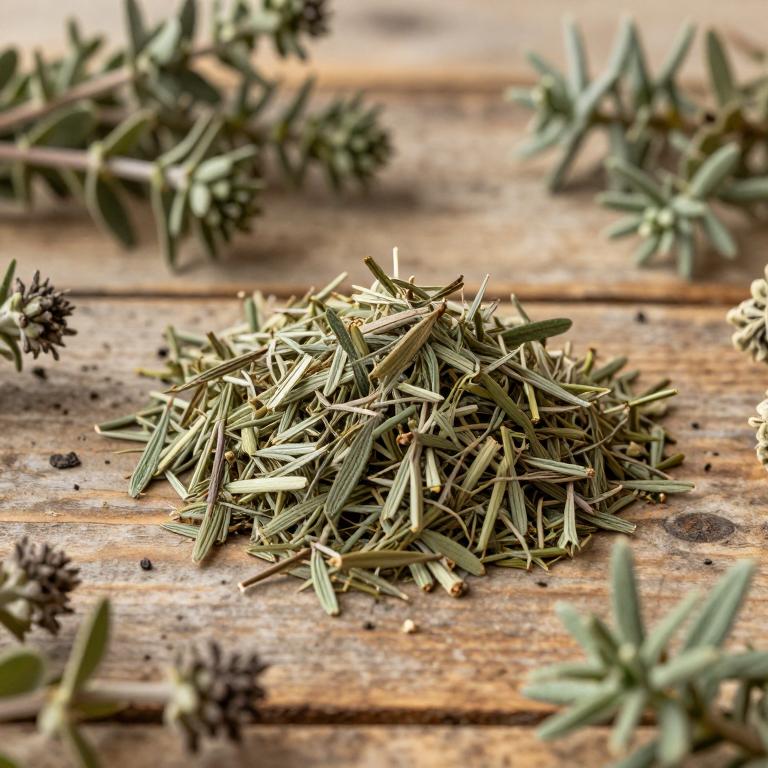
Striped Savory, scientifically known as Micromeria nervosa, is a versatile medicinal plant prized for its therapeutic properties. Often found in tropical regions, this herb is traditionally utilized to treat various ailments, including skin inflammations and digestive issues. Its unique foliage and potent bioactive compounds make it a botanical treasure.
- Family
- Lamiaceae
- Native range
- Europe
- Parts used
- Not available
- Common names
- Striped Savory
- Scientific synonyms
- Clinopodium Nervosum · Satureja Graeca Subsp. Nervosa · 7 more
Names and Synonyms
Common Names
- Striped Savory
Scientific Names
Accepted name
Micromeria nervosaSynonyms
- Clinopodium nervosum
- Satureja graeca subsp. nervosa
- Satureja capitata
- Satureja fortii
- Satureja nervosa
- Micromeria hirsuta
- Micromeria nervosa var. plumosa
- Satureja plumosa
- Micromeria plumosa
Regional and Traditional Names
German:
- Palästina-Steinminze
Sources: Wikidata, Catalogue of Life
Taxonomical Classification
This plant belongs to the kingdom Plantae and is classified under the phylum Streptophyta and class Equisetopsida. Within the subclass Magnoliidae, it is situated in the order Lamiales and the family Lamiaceae. Finally, its taxonomic identity is completed by its placement in the genus Micromeria.
| Rank | Classification |
|---|---|
| Kingdom | Plantae |
| Phylum | Streptophyta |
| Class | Equisetopsida |
| Subclass | Magnoliidae |
| Order | Lamiales |
| Family | Lamiaceae |
| Genus | Micromeria |
Sources: The World Checklist of Vascular Plants (WCVP)
Distribution
This plant exhibits a specific distribution pattern across several regions of Southern Europe. Within Southwestern Europe, it can be found inhabiting the islands of Baleares and Sardegna. Its presence extends into Southeast Europe, where it is documented in Albania. Furthermore, the species is also located within the borders of Greece. Finally, the geographical range of this medicinal plant includes Italy.
| Region | Area |
|---|---|
| Southwestern Europe | Baleares |
| Southwestern Europe | Sardegna |
| Southeastern Europe | Albania |
| Southeastern Europe | Greece |
| Southeastern Europe | Italy |
| Southeastern Europe | Kriti |
| Southeastern Europe | Sicilia |
| Northern Africa | Algeria |
| Northern Africa | Egypt |
| Northern Africa | Libya |
Sources: The World Checklist of Vascular Plants (WCVP)
Botanical Identification
Life history
The life history of Micromeria nervosa is characterized by its status as a perennial organism, allowing it to persist through multiple growing seasons. In terms of its structural growth habit and survival strategy, the species functions as a chamaephyte, maintaining its buds close to or just above the soil surface to withstand environmental fluctuations. This combination of a long-term lifecycle and a low-growing life form enables the plant to establish stable populations within its specific ecological niche.
- Life form :
- chamaephyte
- Lifecycle :
- perennial
Morphology
The morphology of Micromeria nervosa is characterized by a growth form that functions as both a herb and a subshrub, exhibiting a woody texture in its structure. This plant is categorized as a terrestrial species, occupying land habitats rather than being aquatic or semiaquatic, and it maintains a terrestrial existence rather than acting as an epiphyte. As a climber, it is notably self-supporting in its growth habit and exists as an independent organism, functioning without parasitic requirements.
- Aquatic :
- terrestrial
- Climber :
- self-supporting
- Epiphyte :
- terrestrial
- Growth form :
- herb
- Growth form :
- subshrub
- Parasite :
- independent
- Woodiness :
- woody
Reproduction
The reproduction of Micromeria nervosa is characterized by the production of specialized seeds that play a critical role in its dispersal and survival. Quantitative analysis of its reproductive output reveals a highly consistent seed morphology, with a recorded seed mass that remains uniform across observations. The seed mass is measured at a mean value of 4e-05 g, a figure that is mirrored by both the maximum and minimum recorded weights, which are also 4e-05 g. This lack of variance in seed mass suggests a highly stabilized reproductive strategy, ensuring that each individual seed carries a precise and predictable amount of nutrient reserves for germinating in its natural habitat.
- Seed mass mean:
- 4e-05 g
Sources: Global Inventory of Floras and Traits (GIFT)
Chemicals
Micromeria nervosa has 4 reported phytochemicals identified across 0 scientific publications and several other databases. The most consistently reported chemicals include CARVACROL, THYMOL, arabinose, xylose.
| Chemical | Supporting sources | Consensus |
|---|---|---|
| CARVACROL | 1 supporting sources | ★☆☆☆☆ |
| THYMOL | 1 supporting sources | ★☆☆☆☆ |
| arabinose | 1 supporting sources | ★☆☆☆☆ |
| xylose | 1 supporting sources | ★☆☆☆☆ |
CARVACROL
- Journal of ethnopharmacology
THYMOL
- Journal of ethnopharmacology
arabinose
- Foods (Basel, Switzerland)
xylose
- Foods (Basel, Switzerland)
Preparations
Micromeria nervosa has 2 reported preparations identified across 0 scientific publications and several other databases. The most consistently reported preparations include aqueous extract, ethanolic extract.
| Preparation | Supporting sources | Consensus |
|---|---|---|
| Aqueous extract | 1 supporting sources | ★☆☆☆☆ |
| Ethanolic extract | 1 supporting sources | ★☆☆☆☆ |
Aqueous extract
- Journal of ethnopharmacology
Ethanolic extract
- Journal of ethnopharmacology