Myrtle-leaved Savory
Micromeria myrtifolia · Accepted scientific name
Scientific literature: Very Extensive (318 studies) · ★★★★★
Myrtle-leaved Savory, scientifically known as Micromeria myrtifolia, is a versatile medicinal shrub native to tropical regions. Renowned for its diverse therapeutic properties, this plant is traditionally utilized to treat skin ailments, inflammation, and digestive issues. Its unique botanical characteristics make it a significant subject in ethnobotanical research.
- Family
- Lamiaceae
- Native range
- Europe
- Parts used
- Not available
- Common names
- Myrtle-Leaved Savory · Myrtleleaf Whitweed
- Scientific synonyms
- Satureja Myrtifolia · Micromeria Minoa · 3 more
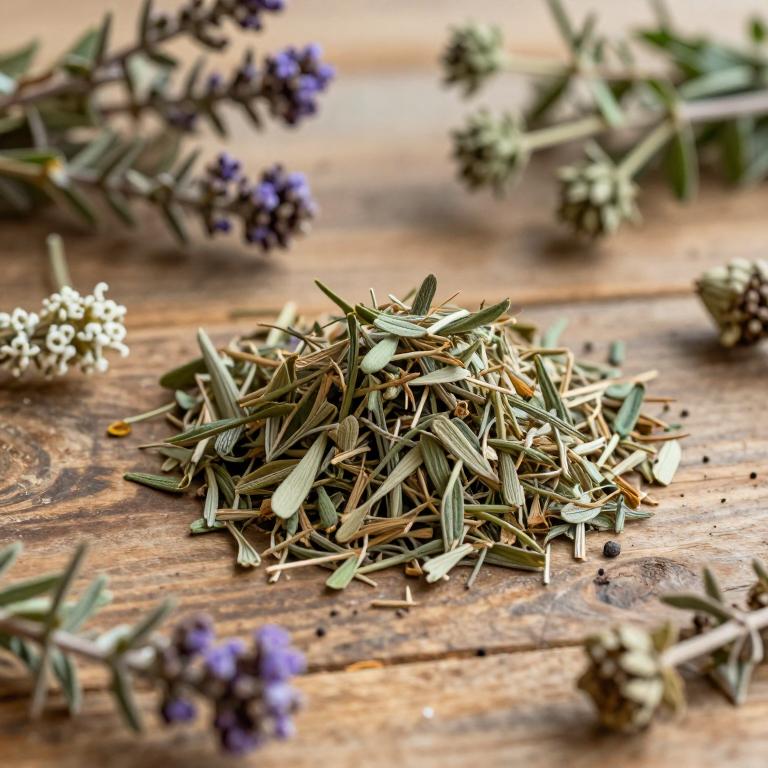
Names and Synonyms
Common Names
- Myrtle-leaved Savory
- Myrtleleaf Whitweed
Scientific Names
Accepted name
Micromeria myrtifoliaSynonyms
- Satureja myrtifolia
- Micromeria minoa
- Micromeria obtusiflora
- Micromeria lycia
- Micromeria juliana var. myrtifolia
Sources: Wikidata, Catalogue of Life
Taxonomical Classification
This plant belongs to the kingdom Plantae and is classified under the phylum Streptophyta and the class Equisetopsida. Within the subclass Magnoliidae, it is ordered under Lamiales and placed in the family Lamiaceae. Finally, it is categorized under the genus Micromeria.
| Rank | Classification |
|---|---|
| Kingdom | Plantae |
| Phylum | Streptophyta |
| Class | Equisetopsida |
| Subclass | Magnoliidae |
| Order | Lamiales |
| Family | Lamiaceae |
| Genus | Micromeria |
Sources: The World Checklist of Vascular Plants (WCVP)
Distribution
This plant exhibits a specific geographical range spanning across parts of Southeastern Europe and Western Asia. In Southeastern Europe, its presence is documented in Greece, including the island of Kriti. The species can also be found within the European portion of Türkiye. Moving into Western Asia, the plant is distributed across Cyprus. Additionally, its habitat extends to the East Aegean Islands.
| Region | Area |
|---|---|
| Southeastern Europe | Greece |
| Southeastern Europe | Kriti |
| Southeastern Europe | Türkiye-in-Europe |
| Western Asia | Cyprus |
| Western Asia | East Aegean Is. |
| Western Asia | Iran |
| Western Asia | Iraq |
| Western Asia | Lebanon-Syria |
| Western Asia | Palestine |
| Western Asia | Sinai |
Sources: The World Checklist of Vascular Plants (WCVP)
Botanical Identification
Life history
The life history of Micromeria myrtifolia is characterized by its classification as a chamaephyte, a growth form where the majority of the plant's vegetative organs remain close to the soil surface, with buds located just above the ground level. Specifically, within the spectrum of life forms, it is identified as a chamaephyte, reflecting its ability to persist in various environmental conditions by maintaining a low-growing stature. This life history strategy allows the plant to survive through seasonal changes by protecting its vital meristematic tissues near or at the substrate level, facilitating resilience against herbivory or environmental fluctuations.
- Life form :
- chamaephyte
Morphology
The morphology of Micromeria myrtifolia is characterized by its growth form as a woody subshrub or shrub that functions as a self-supporting plant. It is a terrestrial species, not classified as aquatic, semiaquatic, or an epiphyte, and it grows independently rather than as a parasite. The plant exhibits woodiness in its structure, providing the necessary support for its developmental habit.
- Aquatic :
- terrestrial
- Climber :
- self-supporting
- Epiphyte :
- terrestrial
- Growth form :
- shrub
- Growth form :
- subshrub
- Parasite :
- independent
- Woodiness :
- woody
Reproduction
The reproduction of Micromeria myrtifolia is characterized by the production of small, specialized seeds that exhibit specific variations in weight. The seed mass within this species is relatively minute, with a calculated mean seed mass of 7e-05 g. Detailed analysis of the reproductive output shows a range of seed sizes, where the minimum recorded seed mass is 4e-05 g and the maximum reaches 0.00011 g. These quantitative traits highlight the fine scale of the plant's dispersal units, which are essential for its propagation and survival in its natural habitat.
- Seed mass max:
- 0.00011 g
- Seed mass mean:
- 7e-05 g
- Seed mass min:
- 4e-05 g
Sources: Global Inventory of Floras and Traits (GIFT)
Chemicals
Micromeria myrtifolia has 68 reported phytochemicals identified across 0 scientific publications and several other databases. The most consistently reported chemicals include (E)-beta-ocimene, 1,8-Cineole, 1-OCTEN-3-OL, 2,5-diethyl tetrahydrofuran, 2-hexanal.
| Chemical | Supporting sources | Consensus |
|---|---|---|
| (E)-beta-ocimene | 1 supporting sources | ★☆☆☆☆ |
| 1,8-Cineole | 1 supporting sources | ★☆☆☆☆ |
| 1-OCTEN-3-OL | 1 supporting sources | ★☆☆☆☆ |
| 2,5-diethyl tetrahydrofuran | 1 supporting sources | ★☆☆☆☆ |
| 2-hexanal | 1 supporting sources | ★☆☆☆☆ |
| 3-OCTANOL | 1 supporting sources | ★☆☆☆☆ |
| 6,10,14-Trimethyl-2-pentadecanol | 1 supporting sources | ★☆☆☆☆ |
| 6-Methyl-3-heptanol | 1 supporting sources | ★☆☆☆☆ |
| ALPHA-PINENE | 1 supporting sources | ★☆☆☆☆ |
| Alpha terpinene | 1 supporting sources | ★☆☆☆☆ |
(E)-beta-ocimene
- Dr. Duke
1,8-Cineole
- Dr. Duke
1-OCTEN-3-OL
- Dr. Duke
2,5-diethyl tetrahydrofuran
- Dr. Duke
2-hexanal
- Dr. Duke
3-OCTANOL
- Dr. Duke
6,10,14-Trimethyl-2-pentadecanol
- Dr. Duke
6-Methyl-3-heptanol
- Dr. Duke
ALPHA-PINENE
- Dr. Duke
Alpha terpinene
- Dr. Duke
Activities
Micromeria myrtifolia has 249 reported activities identified across 0 scientific publications and several other databases. The most consistently reported activities include (-)-Chronotropic, (-)-Inotropic, ACE-Inhibitor, AChE-Inhibitor, Acaricide.
| Activity | Supporting sources | Consensus |
|---|---|---|
| (-)-Chronotropic | 1 supporting sources | ★☆☆☆☆ |
| (-)-Inotropic | 1 supporting sources | ★☆☆☆☆ |
| ACE-Inhibitor | 1 supporting sources | ★☆☆☆☆ |
| AChE-Inhibitor | 1 supporting sources | ★☆☆☆☆ |
| Acaricide | 1 supporting sources | ★☆☆☆☆ |
| Aldose-Reductase-Inhibitor | 1 supporting sources | ★☆☆☆☆ |
| Allelochemic | 1 supporting sources | ★☆☆☆☆ |
| Allelopathic | 1 supporting sources | ★☆☆☆☆ |
| Allergenic | 1 supporting sources | ★☆☆☆☆ |
| Analgesic | 1 supporting sources | ★☆☆☆☆ |
(-)-Chronotropic
- Dr. Duke
(-)-Inotropic
- Dr. Duke
ACE-Inhibitor
- Dr. Duke
AChE-Inhibitor
- Dr. Duke
Acaricide
- Dr. Duke
Aldose-Reductase-Inhibitor
- Dr. Duke
Allelochemic
- Dr. Duke
Allelopathic
- Dr. Duke
Allergenic
- Dr. Duke
Analgesic
- Dr. Duke
Conditions
Micromeria myrtifolia has 1 reported investigations on conditions identified across 0 scientific publications and several other databases. The most consistently reported conditions include depression.
| Condition | Supporting sources | Consensus |
|---|---|---|
| Depression | 1 supporting sources | ★☆☆☆☆ |
Depression
- Molecules (Basel, Switzerland)