Micromeria juliana
Micromeria juliana · Accepted scientific name
Scientific literature: Very Extensive (227 studies) · ★★★★★
Micromeria juliana, scientifically known as Micromeria juliana, is a versatile medicinal shrub native to tropical regions. Renowned for its bioactive properties, this plant is traditionally used to treat skin inflammations, wounds, and digestive ailments. Its antioxidant and antimicrobial qualities make it a significant subject in ethnobotanical research.
- Family
- Not available
- Native range
- Europe
- Parts used
- Not available
- Common names
- Not available
- Scientific synonyms
- Not available
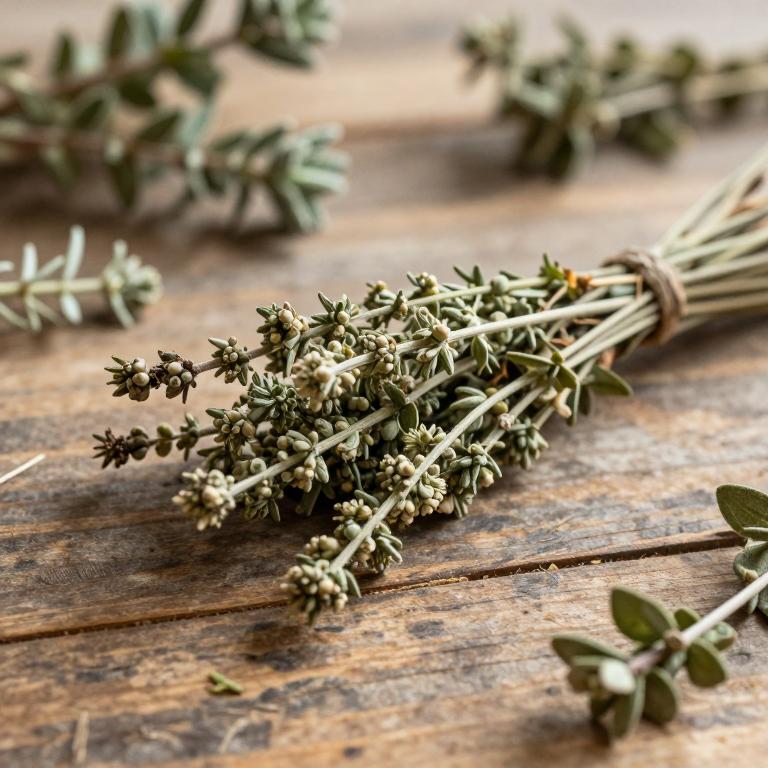
Names and Synonyms
Scientific Names
Accepted name
Micromeria julianaDistribution
This plant exhibits a specific geographical distribution across several regions of Europe. In Southwestern Europe, it can be found growing within the borders of France, Portugal, and Spain. Its range also extends into Southeastern Europe, where it is present in Albania. Additionally, the species has been documented inhabiting parts of Bulgaria. Together, these locations define the primary areas where the plant is naturally situated.
| Region | Area |
|---|---|
| Southwestern Europe | France |
| Southwestern Europe | Portugal |
| Southwestern Europe | Spain |
| Southeastern Europe | Albania |
| Southeastern Europe | Bulgaria |
| Southeastern Europe | Greece |
| Southeastern Europe | Italy |
| Southeastern Europe | Sicilia |
| Southeastern Europe | Türkiye-in-Europe |
| Southeastern Europe | NW. Balkan Pen. |
Sources: The World Checklist of Vascular Plants (WCVP)
Botanical Identification
Life history
The life history of Micromeria juliana is characterized by its status as a perennial organism, allowing it to persist through multiple growing seasons. In terms of its growth habit and structural organization, the species is classified as a chamaephyte, a life form where the permanent buds are located close to the soil surface, often just above it. This specific growth strategy enables the plant to maintain its vitality and recover effectively within its ecological niche.
- Life form :
- chamaephyte
- Lifecycle :
- perennial
Morphology
The morphology of Micromeria juliana is characterized by its growth as a woody subshrub that can exhibit a shrub-like habit. It functions as a self-supporting plant, possessing the structural integrity to stand without the need for external support like vines or lianas. While its ecological niche allows for a terrestrial existence, it can transition between aquatic, semiaquatic, and terrestrial environments. The plant is an independent organism, functioning neither as an obligatory nor facultative parasite, and maintains a terrestrial rather than epiphytic lifestyle. Its physical structure is defined by its woody nature, providing the necessary firmness for its subshrub growth form.
- Aquatic :
- terrestrial
- Climber :
- self-supporting
- Epiphyte :
- terrestrial
- Growth form :
- shrub
- Growth form :
- subshrub
- Parasite :
- independent
- Woodiness :
- woody
Physiology
The physiology of Microremia juliana is characterized by a metabolic framework centered around a C3 photosynthetic pathway, which dictates its carbon fixation processes and water-use efficiency. In this C3 pathway, the initial fixation of atmospheric carbon dioxide occurs via the enzyme RuBisCO, resulting in the direct formation of a three-carbon compound, 3-phosphoglycerate, within the mesophyll cells. This metabolic strategy implies that the plant undergoes photorespiration when stomata close during periods of high temperature or water stress, as oxygen competes with carbon dioxide for the active sites of RuBisCO. Consequently, its physiological performance and growth rates are closely tied to environmental humidity and light availability, as the plant relies on continuous gas exchange to maintain optimal photosynthetic rates. This C3 mechanism governs the plant's energy acquisition, nutrient assimilation, and overall resource allocation within its vegetative structures.
- Photosynthetic pathway :
- C3
Reproduction
Reproduction in Micromeria juliana occurs through a combination of sexual processes involving pollination and asexual mechanisms, primarily centered around the development of its fruit. The plant produces small, inconspicuous flowers that facilitate genetic recombination via seeds. Following fertilization, the plant develops fruits that exhibit varying degrees of moisture; depending on the specific stage of maturity or environmental conditions, the fruit can transition between being fleshy and becoming dry. This variation in fruit dryness plays a crucial role in its dispersal strategy, where the dry state often aids in seed release and movement, while the fleshy state may interact differently with the immediate microenvironment. The resulting seeds are then dispersed to establish new individuals, ensuring the continued propagation of the species across its habitat.
- Fruit dryness :
- dry
Sources: Global Inventory of Floras and Traits (GIFT)
Chemicals
Micromeria juliana has 31 reported phytochemicals identified across 0 scientific publications and several other databases. The most consistently reported chemicals include ALLO-OCIMENE, ALPHA-PINENE, Alpha terpinene, BETA-CARYOPHYLLENE, BETA-PINENE.
| Chemical | Supporting sources | Consensus |
|---|---|---|
| ALLO-OCIMENE | 1 supporting sources | ★☆☆☆☆ |
| ALPHA-PINENE | 1 supporting sources | ★☆☆☆☆ |
| Alpha terpinene | 1 supporting sources | ★☆☆☆☆ |
| BETA-CARYOPHYLLENE | 1 supporting sources | ★☆☆☆☆ |
| BETA-PINENE | 1 supporting sources | ★☆☆☆☆ |
| CAMPHENE | 1 supporting sources | ★☆☆☆☆ |
| CARVACROL | 1 supporting sources | ★☆☆☆☆ |
| CARVONE | 1 supporting sources | ★☆☆☆☆ |
| EO | 1 supporting sources | ★☆☆☆☆ |
| Fenchone | 1 supporting sources | ★☆☆☆☆ |
ALLO-OCIMENE
- Dr. Duke
ALPHA-PINENE
- Dr. Duke
Alpha terpinene
- Dr. Duke
BETA-CARYOPHYLLENE
- Dr. Duke
BETA-PINENE
- Dr. Duke
CAMPHENE
- Dr. Duke
CARVACROL
- Dr. Duke
CARVONE
- Dr. Duke
EO
- Dr. Duke
Fenchone
- Dr. Duke
Activities
Micromeria juliana has 196 reported activities identified across 0 scientific publications and several other databases. The most consistently reported activities include ACE-Inhibitor, AChE-Inhibitor, Abortifacient, Acaricide, Aldose-Reductase-Inhibitor.
| Activity | Supporting sources | Consensus |
|---|---|---|
| ACE-Inhibitor | 1 supporting sources | ★☆☆☆☆ |
| AChE-Inhibitor | 1 supporting sources | ★☆☆☆☆ |
| Abortifacient | 1 supporting sources | ★☆☆☆☆ |
| Acaricide | 1 supporting sources | ★☆☆☆☆ |
| Aldose-Reductase-Inhibitor | 1 supporting sources | ★☆☆☆☆ |
| Allelochemic | 1 supporting sources | ★☆☆☆☆ |
| Allelopathic | 1 supporting sources | ★☆☆☆☆ |
| Allergenic | 1 supporting sources | ★☆☆☆☆ |
| Analgesic | 1 supporting sources | ★☆☆☆☆ |
| Ancylostomicide | 1 supporting sources | ★☆☆☆☆ |
ACE-Inhibitor
- Dr. Duke
AChE-Inhibitor
- Dr. Duke
Abortifacient
- Dr. Duke
Acaricide
- Dr. Duke
Aldose-Reductase-Inhibitor
- Dr. Duke
Allelochemic
- Dr. Duke
Allelopathic
- Dr. Duke
Allergenic
- Dr. Duke
Analgesic
- Dr. Duke
Ancylostomicide
- Dr. Duke