Scentless Whitweed
Micromeria inodora · Accepted scientific name
Scientific literature: Very Sparse (7 studies) · ★☆☆☆☆
Scentless Whitweed, scientifically known as Micromeria inodora, is a versatile medicinal shrub native to tropical regions. Renowned for its vibrant flowers, this plant holds significant ethnobotanical value. It is frequently utilized in traditional healing practices to treat various ailments, offering promising bioactive compounds for modern pharmacological research and development.
- Family
- Lamiaceae
- Native range
- Europe
- Parts used
- Not available
- Common names
- Scentless Whitweed
- Scientific synonyms
- Clinopodium Inodorum · Satureja Barceloi · 6 more
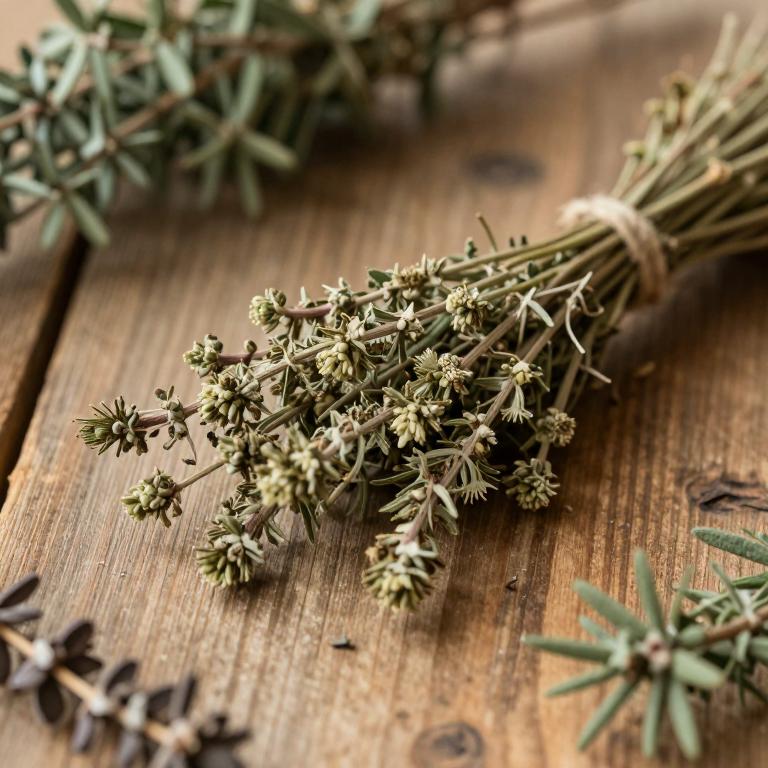
Names and Synonyms
Common Names
- Scentless Whitweed
Scientific Names
Accepted name
Micromeria inodoraSynonyms
- Clinopodium inodorum
- Satureja barceloi
- Satureja fontanesii var. barceloi
- Satureja fontanesii
- Thymus mutisii
- Micromeria barceloi
- Micromeria barceloi var. africana
- Micromeria approximata subsp. barceloi
Sources: Wikidata, Catalogue of Life
Taxonomical Classification
This plant, Micromeria inoadora, belongs to the kingdom Plantae and the phylum Streptophyta. Within the class Equisetopsida and subclass Magnoliidae, it is classified under the order Lamiales and the family Lamiaceae. Finally, it is categorized under the genus Micromeria.
| Rank | Classification |
|---|---|
| Kingdom | Plantae |
| Phylum | Streptophyta |
| Class | Equisetopsida |
| Subclass | Magnoliidae |
| Order | Lamiales |
| Family | Lamiaceae |
| Genus | Micromeria |
Sources: The World Checklist of Vascular Plants (WCVP)
Distribution
This plant exhibits a specific geographical range concentrated within the Mediterranean region. In Southwestern Europe, its presence is documented in both Spain and the Balearic Islands. Moving across the sea to Northern Africa, it can be found inhabiting the landscapes of Algeria. The species is also distributed throughout the territory of Morocco. Finally, its range extends further east to include parts of Tunisia.
| Region | Area |
|---|---|
| Southwestern Europe | Baleares |
| Southwestern Europe | Spain |
| Northern Africa | Algeria |
| Northern Africa | Morocco |
| Northern Africa | Tunisia |
Sources: The World Checklist of Vascular Plants (WCVP)
Botanical Identification
Life history
The life history of Micromeria inodora is characterized by its classification as a chamaephyte, a growth form where the majority of the plant's regenerative buds are located close to the soil surface. Within this ecological framework, its biological structure is specifically identified as a chamaephyte, reflecting a life strategy that allows it to persist through seasonal environmental changes by keeping its vital organs protected near the ground level. This life history pattern enables the plant to maintain stability and resilience in its natural habitat, utilizing this low-growing architecture to navigate its specific environmental niche.
- Life form :
- chamaephyte
Morphology
The morphology of Micromeria inodora is characterized by its growth habit as a self-supporting climber, functioning as a liana or vine that can maintain its structure within its environment. It acts as a self-supporting climber in both obligatory and facultative capacities, allowing it to navigate its habitat without external structural dependence. Furthermore, the plant is an independent organism, exhibiting no parasitic behavior, and it maintains a terrestrial existence rather than functioning as an epiphyte.
- Climber :
- self-supporting
- Epiphyte :
- terrestrial
- Parasite :
- independent
Sources: Global Inventory of Floras and Traits (GIFT)
Chemicals
Micromeria inodora has 7 reported phytochemicals identified across 0 scientific publications and several other databases. The most consistently reported chemicals include Epigallocatechin, Flavonoids, Sagerinic acid, arabinose, caffeic acid glucoside.
| Chemical | Supporting sources | Consensus |
|---|---|---|
| Epigallocatechin | 1 supporting sources | ★☆☆☆☆ |
| Flavonoids | 1 supporting sources | ★☆☆☆☆ |
| Sagerinic acid | 1 supporting sources | ★☆☆☆☆ |
| arabinose | 1 supporting sources | ★☆☆☆☆ |
| caffeic acid glucoside | 1 supporting sources | ★☆☆☆☆ |
| flavonols | 1 supporting sources | ★☆☆☆☆ |
| xylose | 1 supporting sources | ★☆☆☆☆ |
Epigallocatechin
- Chemistry & biodiversity
Flavonoids
- Chemistry & biodiversity
Sagerinic acid
- Chemistry & biodiversity
arabinose
- Foods (Basel, Switzerland)
caffeic acid glucoside
- Chemistry & biodiversity
flavonols
- Chemistry & biodiversity
xylose
- Foods (Basel, Switzerland)
Preparations
Micromeria inodora has 4 reported preparations identified across 0 scientific publications and several other databases. The most consistently reported preparations include flowers extracts, leaves extracts, roots extracts, stems extracts.
| Preparation | Supporting sources | Consensus |
|---|---|---|
| Flowers extracts | 1 supporting sources | ★☆☆☆☆ |
| Leaves extracts | 1 supporting sources | ★☆☆☆☆ |
| Roots extracts | 1 supporting sources | ★☆☆☆☆ |
| Stems extracts | 1 supporting sources | ★☆☆☆☆ |
Flowers extracts
- Chemistry & biodiversity
Leaves extracts
- Chemistry & biodiversity
Roots extracts
- Chemistry & biodiversity
Stems extracts
- Chemistry & biodiversity