Micromeria ericifolia
Micromeria ericifolia · Accepted scientific name
Scientific literature: Very Extensive (224 studies) · ★★★★★
Micromeria ericifolia, scientifically known as Micromeria ericifolia, is a resilient shrub native to tropical regions. Valued in traditional medicine, this plant possesses significant bioactive properties. Researchers are increasingly exploring its potential for antioxidant and anti-inflammatory applications, highlighting its importance in developing natural therapeutic treatments for various ailments.
- Family
- Not available
- Native range
- Africa
- Parts used
- Not available
- Common names
- Not available
- Scientific synonyms
- Not available
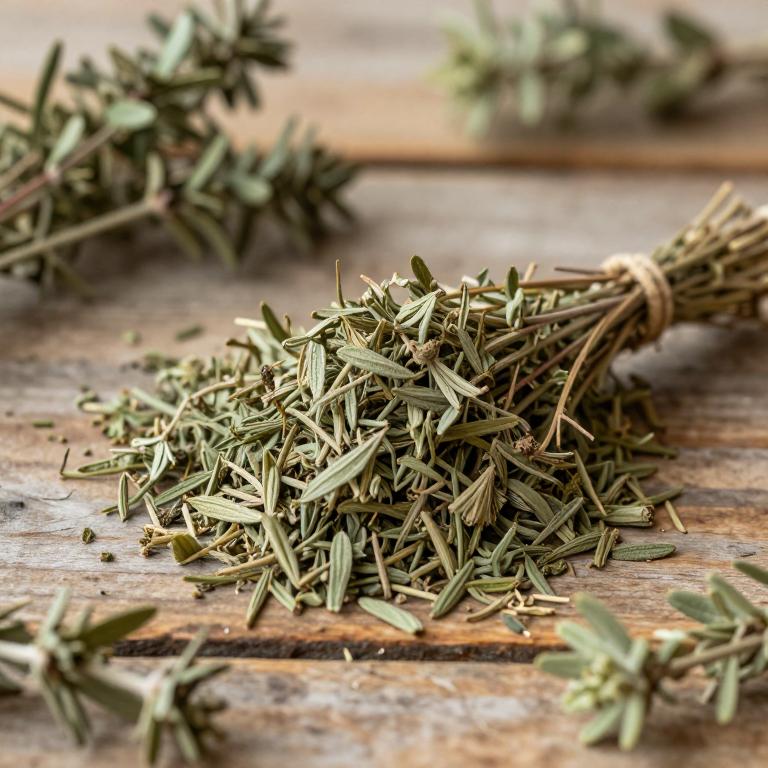
Names and Synonyms
Scientific Names
Accepted name
Micromeria ericifoliaDistribution
This plant exhibits a highly restricted geographical range within the Macaronesian region. Specifically, its distribution is confined to the unique island environments of the Canary Islands. Because it is endemic to this specific archipelago, it is not found naturally in other parts of the world. This localized presence makes the species a significant component of the islands' unique botanical landscape. Consequently, its survival is closely tied to the specific ecological conditions found throughout these volcanic islands.
| Region | Area |
|---|---|
| Macaronesia | Canary Is. |
Sources: The World Checklist of Vascular Plants (WCVP)
Botanical Identification
Ecology
The ecology of Micromeria ericifolia is defined by its ability to inhabit a diverse vertical gradient within its native landscape, demonstrating significant adaptability to varying altitudinal zones. This species is found across a broad elevational range, establishing itself in habitats starting from as low as 50 m AMSL and extending up to a maximum altitude of 1500 m AMSL. This wide distribution suggests that the plant can tolerate a variety of environmental conditions, ranging from lowland tropical or subtropical settings to higher, cooler montane environments. Such an ecological breadth allows it to occupy various niches within its ecosystem, likely responding to fluctuations in temperature, humidity, and atmospheric pressure encountered throughout this 1450-meter altitudinal span.
- Elevational range max:
- 1500 m AMSL
- Elevational range min:
- 50 m AMSL
Life history
The life history of Micromeria ericifolia is characterized by its status as a perennial plant, allowing it to persist through multiple growing seasons. In terms of its growth habit and ecological strategy, the species is classified as a chamaephyte, a life form where the permanent buds are located close to the soil surface, often protected by a layer of leaf litter or organic matter. This specific life form classification applies to both its structural categorization and its functional niche within its habitat, ensuring its long-term survival and ability to regenerate within its environment.
- Life form :
- chamaephyte
- Lifecycle :
- perennial
Morphology
The morphology of Micromeria ericifolia is characterized by a low-growing growth form, manifesting as both a shrub and a subshrub. It is a woody, independent species that functions as a terrestrial plant rather than an epiphyte or parasite. In terms of stature, the plant maintains a relatively small profile, with a height ranging from a minimum of 0.1 m to a maximum of 0.4 m. Although it possesses a climbing tendency, it is classified as self-supporting in its growth habit.
- Climber :
- self-supporting
- Epiphyte :
- terrestrial
- Growth form :
- shrub
- Growth form :
- subshrub
- Parasite :
- independent
- Plant height max:
- 0.4 m
- Plant height min:
- 0.1 m
- Woodiness :
- woody
Physiology
- Leaf form :
- linear
- Leaf length max:
- 1.2 cm
- Leaf length min:
- 0.2 cm
- Leaf width max:
- 0.4 cm
- Leaf width min:
- 0.05 cm
Reproduction
- Flower colour :
- pink
- Flower length max:
- 0.6 cm
- Flower length min:
- 0.25 cm
- Flower width max:
- 0.4 cm
- Flower width min:
- 0.25 cm
- Flowering time :
- Jan
- Flowering time :
- Jun
- Inflorescence :
- spike
Sources: Global Inventory of Floras and Traits (GIFT)
Chemicals
Micromeria ericifolia has 46 reported phytochemicals identified across 0 scientific publications and several other databases. The most consistently reported chemicals include ALPHA-PHELLANDRENE, ALPHA-PINENE, ALPHA-THUJENE, Alpha terpinene, BETA-CARYOPHYLLENE.
| Chemical | Supporting sources | Consensus |
|---|---|---|
| ALPHA-PHELLANDRENE | 1 supporting sources | ★☆☆☆☆ |
| ALPHA-PINENE | 1 supporting sources | ★☆☆☆☆ |
| ALPHA-THUJENE | 1 supporting sources | ★☆☆☆☆ |
| Alpha terpinene | 1 supporting sources | ★☆☆☆☆ |
| BETA-CARYOPHYLLENE | 1 supporting sources | ★☆☆☆☆ |
| BETA-ELEMENE | 1 supporting sources | ★☆☆☆☆ |
| BETA-PHELLANDRENE | 1 supporting sources | ★☆☆☆☆ |
| BETA-PINENE | 1 supporting sources | ★☆☆☆☆ |
| Borneol | 1 supporting sources | ★☆☆☆☆ |
| CAMPHENE | 1 supporting sources | ★☆☆☆☆ |
ALPHA-PHELLANDRENE
- Dr. Duke
ALPHA-PINENE
- Dr. Duke
ALPHA-THUJENE
- Dr. Duke
Alpha terpinene
- Dr. Duke
BETA-CARYOPHYLLENE
- Dr. Duke
BETA-ELEMENE
- Dr. Duke
BETA-PHELLANDRENE
- Dr. Duke
BETA-PINENE
- Dr. Duke
Borneol
- Dr. Duke
CAMPHENE
- Dr. Duke
Activities
Micromeria ericifolia has 132 reported activities identified across 0 scientific publications and several other databases. The most consistently reported activities include (-)-Chronotropic, (-)-Inotropic, ACE-Inhibitor, AChE-Inhibitor, Acaricide.
| Activity | Supporting sources | Consensus |
|---|---|---|
| (-)-Chronotropic | 1 supporting sources | ★☆☆☆☆ |
| (-)-Inotropic | 1 supporting sources | ★☆☆☆☆ |
| ACE-Inhibitor | 1 supporting sources | ★☆☆☆☆ |
| AChE-Inhibitor | 1 supporting sources | ★☆☆☆☆ |
| Acaricide | 1 supporting sources | ★☆☆☆☆ |
| Aldose-Reductase-Inhibitor | 1 supporting sources | ★☆☆☆☆ |
| Allelochemic | 1 supporting sources | ★☆☆☆☆ |
| Allelopathic | 1 supporting sources | ★☆☆☆☆ |
| Allergenic | 1 supporting sources | ★☆☆☆☆ |
| Analgesic | 1 supporting sources | ★☆☆☆☆ |
(-)-Chronotropic
- Dr. Duke
(-)-Inotropic
- Dr. Duke
ACE-Inhibitor
- Dr. Duke
AChE-Inhibitor
- Dr. Duke
Acaricide
- Dr. Duke
Aldose-Reductase-Inhibitor
- Dr. Duke
Allelochemic
- Dr. Duke
Allelopathic
- Dr. Duke
Allergenic
- Dr. Duke
Analgesic
- Dr. Duke