Micromeria benthamii
Micromeria benthamii · Accepted scientific name
Scientific literature: Very Sparse (13 studies) · ★☆☆☆☆
Micromeria benthamii, scientifically known as Micromeria benthamii, is a versatile medicinal herb native to tropical regions. Renowned for its diverse therapeutic properties, this plant is traditionally utilized in folk medicine to treat various ailments, including skin inflammations and digestive issues, offering significant potential for modern pharmacological research and development.
- Family
- Not available
- Native range
- Africa
- Parts used
- Not available
- Common names
- Not available
- Scientific synonyms
- Not available
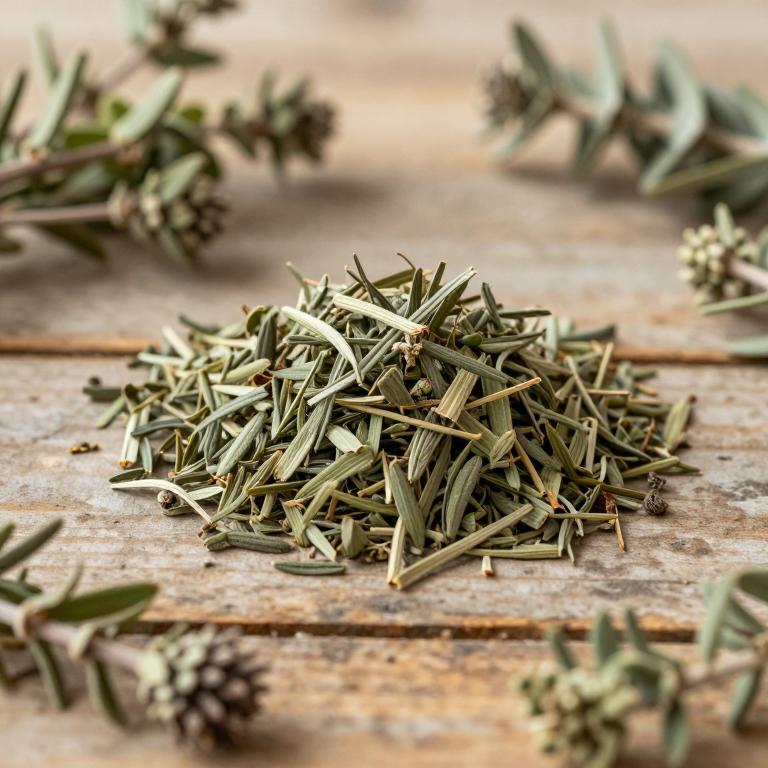
Names and Synonyms
Scientific Names
Accepted name
Micromeria benthamiiDistribution
This plant is characterized by a highly specific and restricted geographical range. Its distribution is primarily centered within the Macaronesian region. Specifically, it can be found growing naturally on the Canary Islands. This limited occurrence suggests that the species is endemic to this particular volcanic archipelago. Consequently, its survival is closely tied to the unique environmental conditions of this island habitat.
| Region | Area |
|---|---|
| Macaronesia | Canary Is. |
Sources: The World Checklist of Vascular Plants (WCVP)
Botanical Identification
Ecology
The ecology of Micromeria benthamii is characterized by its ability to inhabit a broad altitudinal gradient, demonstrating significant adaptability to varying environmental conditions across different terrains. This species is typically found distributed across an elevational range that begins at a minimum of 500 m AMSL and extends up to a maximum of 1900 m AMSL. This wide vertical distribution suggests that the plant can thrive in diverse microclimates, ranging from lower-altitude tropical or subtropical environments to more temperate, montane ecosystems found at higher elevations. Such a range indicates a tolerance for varying temperature regimes and atmospheric pressures, allowing it to occupy a variety of ecological niches within its native habitat.
- Elevational range max:
- 1900 m AMSL
- Elevational range min:
- 500 m AMSL
Life history
The life history of Micromeria benthamii is characterized by its classification as a perennial organism, allowing it to persist through multiple growing seasons. In terms of its structural growth strategy and life form, the species is identified as a chamaephyte, meaning its regenerative buds are located close to the soil surface, typically just above the ground level. This life form, consistent across both its nanophanerophytic and chamaephyte categorizations, enables the plant to maintain stability and resilience within its ecological niche.
- Life form :
- chamaephyte
- Lifecycle :
- perennial
Morphology
The morphology of Micromeria benthamii is characterized by a growth form that transitions between a shrub and a subshrub, exhibiting a woody texture throughout its structure. It functions as an independent, non-parasitic plant with a terrestrial habit. In terms of stature, the species is relatively low-growing, with a plant height ranging from a minimum of 0.15 m to a maximum of 0.4 m. Despite its woody nature, it is classified as a self-supporting climber rather than an obligatory or facultative climber requiring external support.
- Climber :
- self-supporting
- Epiphyte :
- terrestrial
- Growth form :
- shrub
- Growth form :
- subshrub
- Parasite :
- independent
- Plant height max:
- 0.4 m
- Plant height min:
- 0.15 m
- Woodiness :
- woody
Physiology
The physiological characteristics of Micromeria benthamii are closely integrated with its morphological adaptations, particularly regarding its vegetative structure and photosynthetic efficiency. A defining aspect of its leaf morphology is the linear leaf form, a trait that significantly influences the plant's transpiration rates and gas exchange dynamics. This linear configuration minimizes the boundary layer resistance, allowing for efficient heat dissipation and optimized CO2 uptake during photosynthesis. The metabolic processes within the plant are governed by the cellular organization of these narrow leaves, which facilitates rapid water movement through the vascular tissue to support turgor pressure. Furthermore, the physiological resilience of the species is tied to its ability to manage photosynthetic activity under varying environmental stressors, utilizing its specialized leaf architecture to balance light interception with the prevention of excessive moisture loss.
- Leaf form :
- linear
Reproduction
The reproduction of Micromeria benthamii is characterized by its distinct flowering cycle and specific floral morphology. The plant exhibits a flowering period that begins as early as April and continues through August, though the timing can be highly variable across different months of the year. The flowers are notably small, with a length ranging from a minimum of 0.7 cm to a maximum of 0.9 cm. In terms of width, the flowers measure between 0.4 cm and 0.6 cm. These blooms are distinguished by their pink coloration, which serves as a key visual trait during its reproductive phase.
- Flower colour :
- pink
- Flower length max:
- 0.9 cm
- Flower length min:
- 0.7 cm
- Flower width max:
- 0.6 cm
- Flower width min:
- 0.4 cm
- Flowering time :
- Apr
- Flowering time :
- Aug
Sources: Global Inventory of Floras and Traits (GIFT)
Chemicals
Micromeria benthamii has 1 reported phytochemicals identified across 0 scientific publications and several other databases. The most consistently reported chemicals include Betulin.
| Chemical | Supporting sources | Consensus |
|---|---|---|
| Betulin | 1 supporting sources | ★☆☆☆☆ |
Betulin
- Dr. Duke
Activities
Micromeria benthamii has 12 reported activities identified across 0 scientific publications and several other databases. The most consistently reported activities include AntiHIV, Anticarcinomic, Antifeedant, Antiflu, Antiinflammatory.
| Activity | Supporting sources | Consensus |
|---|---|---|
| AntiHIV | 1 supporting sources | ★☆☆☆☆ |
| Anticarcinomic | 1 supporting sources | ★☆☆☆☆ |
| Antifeedant | 1 supporting sources | ★☆☆☆☆ |
| Antiflu | 1 supporting sources | ★☆☆☆☆ |
| Antiinflammatory | 1 supporting sources | ★☆☆☆☆ |
| Antitumor | 1 supporting sources | ★☆☆☆☆ |
| Antiviral | 1 supporting sources | ★☆☆☆☆ |
| Aphidifuge | 1 supporting sources | ★☆☆☆☆ |
| Cytotoxic | 1 supporting sources | ★☆☆☆☆ |
| Hypolipemic | 1 supporting sources | ★☆☆☆☆ |
AntiHIV
- Dr. Duke
Anticarcinomic
- Dr. Duke
Antifeedant
- Dr. Duke
Antiflu
- Dr. Duke
Antiinflammatory
- Dr. Duke
Antitumor
- Dr. Duke
Antiviral
- Dr. Duke
Aphidifuge
- Dr. Duke
Cytotoxic
- Dr. Duke
Hypolipemic
- Dr. Duke