Miconia myriantha
Miconia myriantha · Accepted scientific name
Scientific literature: Very Sparse (6 studies) · ★☆☆☆☆
Miconia myriantha, scientifically known as Miconia myriantha, is a versatile tropical shrub valued in traditional medicine. Renowned for its vibrant purple blooms and lush foliage, this plant is utilized in various cultures to treat inflammation, skin ailments, and digestive issues, showcasing the profound healing potential of botanical diversity.
- Family
- Melastomataceae
- Native range
- Southern America
- Parts used
- Leaf
- Common names
- Not available
- Scientific synonyms
- Not available
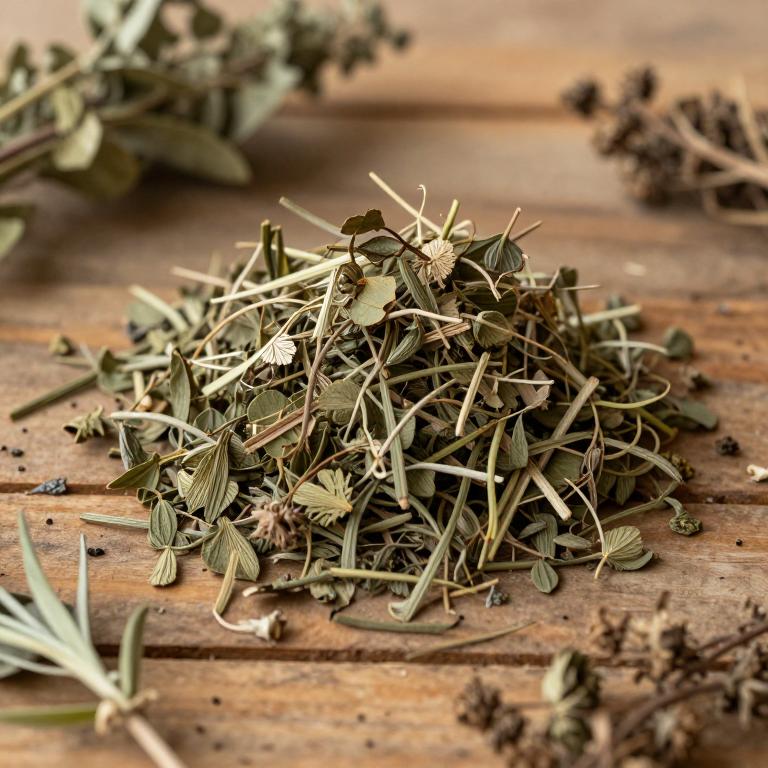
Names and Synonyms
Scientific Names
Accepted name
Miconia myrianthaSources: Wikidata
Taxonomical Classification
This plant belongs to the kingdom Plantae and is classified under the phylum Streptophyta and the class Equisetopsida. Within the subclass Magnoliidae, it is situated in the order Myrtaleales and the family Melastomataceae. Finally, its specific taxonomic placement is within the genus Miconia.
| Rank | Classification |
|---|---|
| Kingdom | Plantae |
| Phylum | Streptophyta |
| Class | Equisetopsida |
| Subclass | Magnoliidae |
| Order | Myrtales |
| Family | Melastomataceae |
| Genus | Miconia |
Sources: The World Checklist of Vascular Plants (WCVP)
Distribution
This plant exhibits a specific geographical distribution concentrated within the tropical regions of the Americas. In Central America, its presence is documented within the borders of Belize. Moving into Northern South America, it can be found spanning across French Guiana and Guyana. The species also extends its range throughout the territory of Suriname. Finally, its distribution reaches into Venezuela, completing its regional footprint.
| Region | Area |
|---|---|
| Central America | Belize |
| Northern South America | French Guiana |
| Northern South America | Guyana |
| Northern South America | Suriname |
| Northern South America | Venezuela |
| Western South America | Bolivia |
| Western South America | Colombia |
| Western South America | Peru |
| Brazil | Brazil North |
Sources: The World Checklist of Vascular Plants (WCVP)
Botanical Identification
Ecology
The ecology of Miconia myriantha is characterized by its presence in diverse forest environments, specifically within Campinarana, Floresta de Terra Firme, and Floresta Ombrófila (also known as Floresta Pluvial). This species inhabits a varied altitudinal gradient, thriving at elevations ranging from a minimum of 120 m AMSL to a maximum of 810 m AMSL.
- Elevational range max:
- 810 m AMSL
- Elevational range min:
- 120 m AMSL
- Habitat :
- Campinarana, Floresta de Terra Firme, Floresta Ombrófila (= Floresta Pluvial)
Morphology
The morphology of Miconia myriantha is characterized by a woody growth form, primarily manifesting as a self-supporting tree. As a terrestrial plant, it lacks aquatic or semiaquatic adaptations and functions as an independent organism rather than a parasite or an epiphyte. The structure is robust and self-supporting, categorized as a self-supporting plant rather than a liana or vine. In terms of stature, this species reaches a maximum plant height of approximately 9 meters.
- Aquatic :
- terrestrial
- Climber :
- self-supporting
- Epiphyte :
- terrestrial
- Growth form :
- tree
- Parasite :
- independent
- Plant height max:
- 9 m
- Woodiness :
- woody
Sources: Global Inventory of Floras and Traits (GIFT)
Plant Parts
Miconia myriantha has 1 reported plant parts identified across 1 scientific publications and several other databases that are studied for medicinal purposes. The most consistently reported plant part include leaf.
| Plant part | Supporting sources | Consensus |
|---|---|---|
| Leaf | 1 supporting sources | ★☆☆☆☆ |
Leaf
- Journal of natural products
Chemicals
Miconia myriantha has 2 reported phytochemicals identified across 1 scientific publications and several other databases. The most consistently reported chemicals include Gallic acid, ellagic acid.
| Chemical | Supporting sources | Consensus |
|---|---|---|
| Gallic acid | 1 supporting sources | ★☆☆☆☆ |
| ellagic acid | 1 supporting sources | ★☆☆☆☆ |
Gallic acid
- Journal of natural products
ellagic acid
- Journal of natural products
Preparations
Miconia myriantha has 1 reported preparations identified across 1 scientific publications and several other databases. The most consistently reported preparations include ethanol extract of the twigs and leaves.
| Preparation | Supporting sources | Consensus |
|---|---|---|
| Ethanol extract of the twigs and leaves | 1 supporting sources | ★☆☆☆☆ |
Ethanol extract of the twigs and leaves
- Journal of natural products