Mezoneuron benthamianum
Mezoneuron benthamianum · Accepted scientific name
Scientific literature: Very Sparse (13 studies) · ★☆☆☆☆
Mezoneuron benthamianum, scientifically known as Mezoneuron benthamianum, is a climbing legume valued in traditional medicine. Native to tropical forest regions, this plant is frequently utilized for its bioactive properties. Researchers study its phytochemical constituents to explore potential therapeutic applications, particularly in addressing inflammatory conditions and promoting overall wellness.
- Family
- Fabaceae
- Native range
- Africa
- Parts used
- Leaf
- Common names
- Not available
- Scientific synonyms
- Caesalpinia Benthamiana
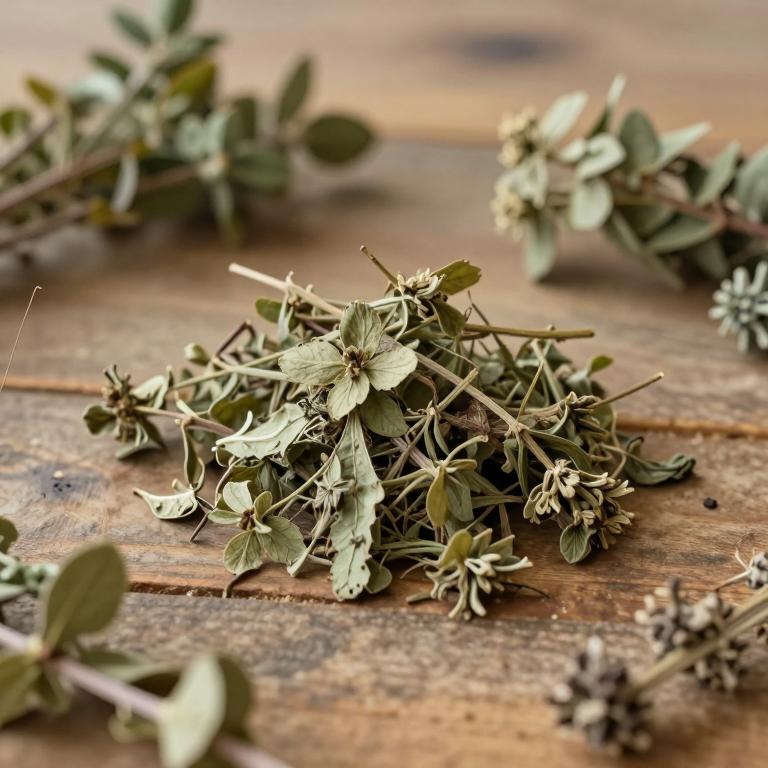
Names and Synonyms
Scientific Names
Accepted name
Mezoneuron benthamianumSynonyms
- Caesalpinia benthamiana
Sources: Wikidata
Taxonomical Classification
This plant belongs to the kingdom Plantae and is classified under the phylum Streptophyta and the class Equisetopsida. Within the subclass Magnoliidae, it is ordered under Fabales and placed in the family Fabaceae. Specifically, it is categorized under the genus Mezoneuron.
| Rank | Classification |
|---|---|
| Kingdom | Plantae |
| Phylum | Streptophyta |
| Class | Equisetopsida |
| Subclass | Magnoliidae |
| Order | Fabales |
| Family | Fabaceae |
| Genus | Mezoneuron |
Sources: The World Checklist of Vascular Plants (WCVP)
Distribution
This plant exhibits a wide geographical distribution across several distinct regions. Within the Macaronesia archipelago, its presence is recorded in Cape Verde. It is also found throughout various parts of West Tropical Africa. Specifically, its range extends through the nations of Benin, Burkina, and Gambia. Finally, the species can be located within the borders of Ghana.
| Region | Area |
|---|---|
| Macaronesia | Cape Verde |
| West Tropical Africa | Benin |
| West Tropical Africa | Burkina |
| West Tropical Africa | Gambia |
| West Tropical Africa | Ghana |
| West Tropical Africa | Guinea-Bissau |
| West Tropical Africa | Guinea |
| West Tropical Africa | Ivory Coast |
| West Tropical Africa | Liberia |
| West Tropical Africa | Nigeria |
Sources: The World Checklist of Vascular Plants (WCVP)
Botanical Identification
Life history
The life history of Mezoneuron benthamianum is characterized by its classification as a phanerophyte, a growth form where the perennating buds are located well above the ground level. Within this classification, its development is specifically aligned with the phanerophyte life form, indicating that its regenerative organs are held high on woody stems to survive seasonal environmental fluctuations. This life strategy allows the plant to maintain a stable presence in its ecosystem, utilizing its elevated bud positions to navigate climatic variations while establishing a persistent structural presence.
- Life form :
- phanerophyte
Morphology
The morphology of Mezoneuron benthamianum is characterized by a woody growth habit, functioning as an independent organism rather than a parasite or epiphyte. This species is a terrestrial plant that exhibits a liana climbing habit, specifically acting as an obligatory climber to ascend through its habitat. It can reach a significant plant height, with a mean stature of approximately 10 m.
- Aquatic :
- terrestrial
- Climber :
- liana
- Climber :
- obligatory
- Epiphyte :
- terrestrial
- Parasite :
- independent
- Plant height mean:
- 10 m
- Woodiness :
- woody
Physiology
The physiology of Mezoneuron benthamianum is characterized by its metabolic processes as a woody legume, though it does not function as a nitrogen fixer. Unlike many other members of the Fabaceae family that form symbiotic relationships with Rhizobium bacteria to convert atmospheric nitrogen into usable forms, this species lacks the physiological capacity for nitrogen fixation, as indicated by the absence of specialized root nodules for this purpose. Consequently, its nutritional physiology relies on the uptake of dissolved nitrates and ammonium ions directly from the soil through its root system. Its photosynthetic pathways are optimized for tropical environments, facilitating efficient carbon assimilation to support its structural growth and complex vascular system. The plant's physiological regulation also involves sophisticated transpiration mechanisms and water-use efficiency to maintain turgor pressure and metabolic activity within its canopy.
- Nitrogen fixer :
- no
Sources: Global Inventory of Floras and Traits (GIFT)
Plant Parts
Mezoneuron benthamianum has 1 reported plant parts identified across 1 scientific publications and several other databases that are studied for medicinal purposes. The most consistently reported plant part include leaf.
| Plant part | Supporting sources | Consensus |
|---|---|---|
| Leaf | 1 supporting sources | ★☆☆☆☆ |
Leaf
- Journal of ethnopharmacology
Chemicals
Mezoneuron benthamianum has 5 reported phytochemicals identified across 1 scientific publications and several other databases. The most consistently reported chemicals include Gallic acid, Neocaesalpin H, kaempferol, quercetin, resveratrol.
| Chemical | Supporting sources | Consensus |
|---|---|---|
| Gallic acid | 1 supporting sources | ★☆☆☆☆ |
| Neocaesalpin H | 1 supporting sources | ★☆☆☆☆ |
| kaempferol | 1 supporting sources | ★☆☆☆☆ |
| quercetin | 1 supporting sources | ★☆☆☆☆ |
| resveratrol | 1 supporting sources | ★☆☆☆☆ |
Gallic acid
- Journal of ethnopharmacology
Neocaesalpin H
- Journal of ethnopharmacology
kaempferol
- Journal of ethnopharmacology
quercetin
- Journal of ethnopharmacology
resveratrol
- Journal of ethnopharmacology
Activities
Mezoneuron benthamianum has 2 reported activities identified across 1 scientific publications and several other databases. The most consistently reported activities include Antimicrobial, Antioxidant.
| Activity | Supporting sources | Consensus |
|---|---|---|
| Antimicrobial | 1 supporting sources | ★☆☆☆☆ |
| Antioxidant | 1 supporting sources | ★☆☆☆☆ |
Antimicrobial
- Phytotherapy research : PTR
Antioxidant
- Phytotherapy research : PTR
Conditions
Mezoneuron benthamianum has 3 reported investigations on conditions identified across 1 scientific publications and several other databases. The most consistently reported conditions include malaria, skin diseases, wounds.
| Condition | Supporting sources | Consensus |
|---|---|---|
| Malaria | 1 supporting sources | ★☆☆☆☆ |
| Skin diseases | 1 supporting sources | ★☆☆☆☆ |
| Wounds | 1 supporting sources | ★☆☆☆☆ |
Malaria
- Journal of ethnopharmacology
Skin diseases
- Phytotherapy research : PTR
Wounds
- Phytotherapy research : PTR
Preparations
Mezoneuron benthamianum has 4 reported preparations identified across 1 scientific publications and several other databases. The most consistently reported preparations include Methanol extract, Petroleum spirit, chloroform, ethanol.
| Preparation | Supporting sources | Consensus |
|---|---|---|
| Methanol extract | 1 supporting sources | ★☆☆☆☆ |
| Petroleum spirit | 1 supporting sources | ★☆☆☆☆ |
| Chloroform | 1 supporting sources | ★☆☆☆☆ |
| Ethanol | 1 supporting sources | ★☆☆☆☆ |
Methanol extract
- Journal of basic and clinical physiology and pharmacology
Petroleum spirit
- Phytotherapy research : PTR
Chloroform
- Phytotherapy research : PTR
Ethanol
- Phytotherapy research : PTR