Meyna spinosa
Meyna spinosa · Accepted scientific name
Scientific literature: Very Sparse (6 studies) · ★☆☆☆☆
Meyna spinosa, scientifically known as Meyna spinosa, is a perennial shrub native to the tropical regions of Asia. Renowned for its diverse therapeutic properties, this plant is frequently utilized in traditional medicine to treat various ailments, offering significant potential for pharmacological research and natural healing applications worldwide.
- Family
- Rubiaceae
- Native range
- Asia-Tropical
- Parts used
- Leaf
- Common names
- Not available
- Scientific synonyms
- Pyrostria Spinosa · Vangueria Spinosa · 6 more
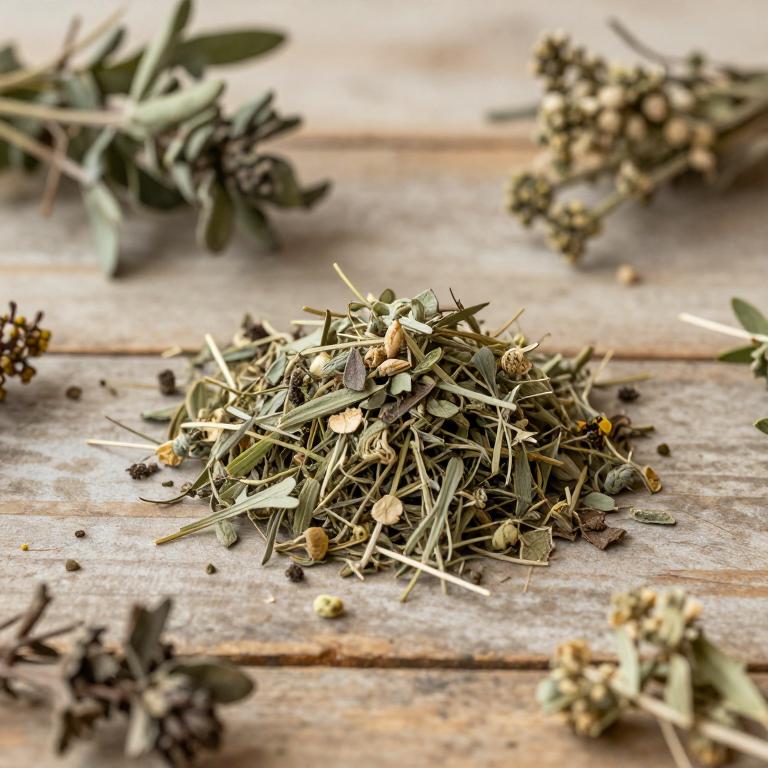
Names and Synonyms
Scientific Names
Accepted name
Meyna spinosaSynonyms
- Pyrostria spinosa
- Vangueria spinosa
- Vangueria pyrostria
- Vangueria stellata
- Meyna spinosa var. pubescens
- Vangueria miqueliana
- Vangueria spinosa var. mollis
- Vangueria spinosa var. tomentosa
Sources: Wikidata, Catalogue of Life
Taxonomical Classification
This plant belongs to the kingdom Plantae within the phylum Streptophyta and is classified under the class Equisetopsida. As a member of the subclass Magnoliidae and the order Gentianaales, it is further nested within the family Rubiaceae. Specifically, its taxonomic identity is defined by the genus Meyna, with its species name being Meyna spinosa.
| Rank | Classification |
|---|---|
| Kingdom | Plantae |
| Phylum | Streptophyta |
| Class | Equisetopsida |
| Subclass | Magnoliidae |
| Order | Gentianales |
| Family | Rubiaceae |
| Genus | Meyna |
Sources: The World Checklist of Vascular Plants (WCVP)
Distribution
This plant is primarily distributed across the diverse landscapes of the Indian Subcontinent. Within this region, its presence is noted in several specific areas including Assam and India. It can also be found flourishing in the fertile terrains of Bangladesh. Additionally, the species inhabits the rugged elevations of the East Himalaya. Beyond the Indian Subcontinent, its range extends into the Indo-China region, specifically within Cambodia.
| Region | Area |
|---|---|
| Indian Subcontinent | Assam |
| Indian Subcontinent | Bangladesh |
| Indian Subcontinent | East Himalaya |
| Indian Subcontinent | India |
| Indo-China | Cambodia |
| Indo-China | Laos |
| Indo-China | Myanmar |
| Indo-China | Thailand |
| Indo-China | Vietnam |
Sources: The World Checklist of Vascular Plants (WCVP)
Botanical Identification
Ecology
The ecology of Meyna spinosa is characterized by its adaptation to specific altitudinal gradients within its native habitats. This species thrives within an elevational range that extends from a minimum of 300 m AMSL to a maximum of 1200 m AMSL. This distribution suggests a preference for subtropical to tropical montane environments, where it can occupy various niches ranging from lowland foothills to mid-elevation forest structures. Its ability to inhabit this specific vertical range dictates its interaction with varying temperature regimes and moisture levels found across these different altitudes.
- Elevational range max:
- 1200 m AMSL
- Elevational range min:
- 300 m AMSL
Life history
The life history of Meyna spinosa is characterized by its status as a perennial species, allowing it to persist and thrive through multiple growing seasons. In terms of its structural growth patterns and ecological classification, it exhibits characteristics of both phanerophyte and nanophanerophyte life forms, indicating its ability to maintain its buds and photosynthetic organs well above the ground level. This combination of traits enables the plant to establish a stable presence within its habitat, undergoing continuous developmental cycles over its long life span.
- Life form :
- nanophanerophyte
- Life form :
- phanerophyte
- Lifecycle :
- perennial
Morphology
The morphology of Meyna spinosa is characterized by its robust growth form as a woody tree. As a terrestrial species, it does not exhibit aquatic or semiaquatic tendencies, nor does it function as an epiphyte. The plant is an independent organism, meaning it does not act as a parasite, and it is entirely self-supporting rather than acting as a climber. Its structure is defined by permanent woody tissues that support its stature as a perennial tree.
- Aquatic :
- terrestrial
- Climber :
- self-supporting
- Epiphyte :
- terrestrial
- Growth form :
- tree
- Parasite :
- independent
- Woodiness :
- woody
Sources: Global Inventory of Floras and Traits (GIFT)
Plant Parts
Meyna spinosa has 1 reported plant parts identified across 1 scientific publications and several other databases that are studied for medicinal purposes. The most consistently reported plant part include leaf.
| Plant part | Supporting sources | Consensus |
|---|---|---|
| Leaf | 1 supporting sources | ★☆☆☆☆ |
Leaf
- Chinese journal of natural medicines
Activities
Meyna spinosa has 4 reported activities identified across 1 scientific publications and several other databases. The most consistently reported activities include Cytotoxic, Genotoxic, Mutagenic, Toxic.
| Activity | Supporting sources | Consensus |
|---|---|---|
| Cytotoxic | 1 supporting sources | ★☆☆☆☆ |
| Genotoxic | 1 supporting sources | ★☆☆☆☆ |
| Mutagenic | 1 supporting sources | ★☆☆☆☆ |
| Toxic | 1 supporting sources | ★☆☆☆☆ |
Cytotoxic
- Pharmacognosy magazine
Genotoxic
- Pharmacognosy magazine
Mutagenic
- Pharmacognosy magazine
Toxic
- Pharmacognosy magazine