Metagentiana rhodantha
Metagentiana rhodantha · Accepted scientific name
Scientific literature: Very Sparse (28 studies) · ★☆☆☆☆
Metagentiana rhodantha, scientifically known as Metagentiana rhodantha, is a rare, high-altitude perennial herb native to the Alpine regions of Europe. Valued in traditional herbalism for its potent medicinal properties, this striking plant is often sought after for its restorative qualities and its unique role in mountain biodiversity.
- Family
- Gentianaceae
- Native range
- Asia-Temperate
- Parts used
- Not available
- Common names
- Not available
- Scientific synonyms
- Gentiana Jankae · Gentiana Rhodantha · 1 more
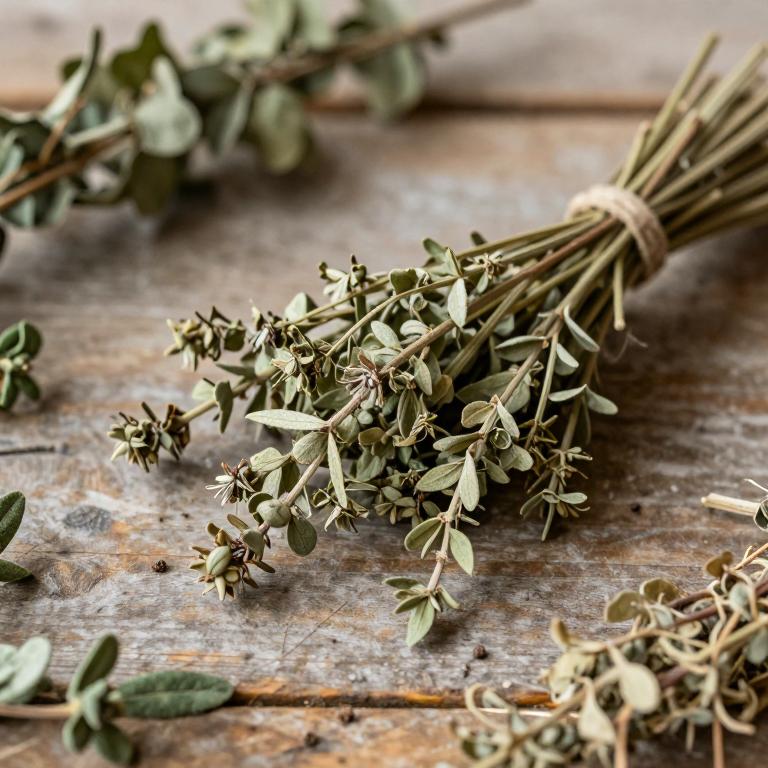
Names and Synonyms
Scientific Names
Accepted name
Metagentiana rhodanthaSynonyms
- Gentiana jankae
- Gentiana rhodantha
- Gentiana rhodantha var. wilsonii
Sources: Wikidata, Catalogue of Life
Taxonomical Classification
This plant, Metagentiana rhodantha, belongs to the kingdom Plantae and the phylum Streptophyta. Within the class Equisetopsida and subclass Magnoliidae, it is classified under the order Gentianales and the family Gentianaceae. It is specifically identified by the genus Metagentiana.
| Rank | Classification |
|---|---|
| Kingdom | Plantae |
| Phylum | Streptophyta |
| Class | Equisetopsida |
| Subclass | Magnoliidae |
| Order | Gentianales |
| Family | Gentianaceae |
| Genus | Metagentiana |
Sources: The World Checklist of Vascular Plants (WCVP)
Distribution
This plant, Metagentiana rhodantha, exhibits a specific distribution pattern across various regions of China. It can be found growing within the landscapes of China South-Central. Additionally, the species is present in the territories of China North-Central. Its geographical reach also extends into the areas of China Southeast. Consequently, these three distinct regions define the known habitat of this medicinal plant.
| Region | Area |
|---|---|
| China | China South-Central |
| China | China North-Central |
| China | China Southeast |
Sources: The World Checklist of Vascular Plants (WCVP)
Botanical Identification
Ecology
The ecology of Metagentiana rhodantha is defined by its specific altitudinal distribution within mountainous ecosystems, where it occupies a distinct vertical niche. The species is primarily found across a broad elevational gradient, ranging from a minimum altitude of 570 m AMSL to a maximum altitude of 2000 m AMSL. Throughout its natural habitat, the plant maintains a mean elevation of approximately 1160 m AMSL, a positioning that suggests an adaptation to mid-to-high altitude montane environments. This specific range dictates the climatic conditions, soil types, and moisture availability to which the species must adapt to thrive.
- Elevational range max:
- 2000 m AMSL
- Elevational range mean:
- 1160 m AMSL
- Elevational range min:
- 570 m AMSL
Life history
The life history of Metagentiana rhodantha is characterized by a perennial lifecycle, allowing the plant to persist in its habitat over multiple growing seasons. As a perennial species, it does not rely on a single reproductive event to complete its cycle but instead establishes a stable presence through the continuous development of its root systems and vegetative structures. This long-term survival strategy enables the plant to navigate seasonal fluctuations, storing necessary nutrients to support regrowth and flowering in subsequent years. Throughout its life, the plant undergoes cyclical phases of vegetative growth and reproductive maturity, contributing to its sustained presence within its specific ecological niche.
- Lifecycle :
- perennial
Morphology
The morphology of Metagentiana rhodantha is characterized by its relatively low-growing stature, with a plant height that typically ranges from a minimum of 0.2 m to a maximum of 0.5 m, maintaining an average height of approximately 0.35 m.
- Plant height max:
- 0.5 m
- Plant height mean:
- 0.35 m
- Plant height min:
- 0.2 m
Physiology
The physiology of Metagentiana rhodantha is closely integrated with its morphological dimensions, particularly regarding its foliar structure and surface area optimization. The leaf development within this species exhibits significant variability, with individual leaf lengths ranging from a minimum of 1 cm to a maximum of 3 cm, maintaining an average length of approximately 2 cm. This longitudinal variation is complemented by a specific width profile, where leaf widths fluctuate between a minimum of 0.5 cm and a maximum of 2 cm. These dimensional constraints suggest a specialized physiological adaptation for light interception and gas exchange within its specific ecological niche, as the ratio between the mean length of 2 cm and the varying width facilitates efficient photosynthetic activity and metabolic regulation.
- Leaf length max:
- 3 cm
- Leaf length mean:
- 2 cm
- Leaf length min:
- 1 cm
- Leaf width max:
- 2 cm
- Leaf width min:
- 0.5 cm
Reproduction
The reproduction of Metagentiana rhodantha culminates in the development of distinct fruits that exhibit specific morphological dimensions. These fruits are characterized by a consistent width, maintaining a uniform measurement of 0.4 cm, which is reflected in the minimum, mean, and maximum width values. In terms of longitudinal development, the fruit length shows more variability, ranging from a minimum of 2 cm to a maximum of 2.5 cm, with an average length of 2.25 cm. This variation in length, contrasted with the stable width, defines the structural profile of the reproductive output of the plant.
- Fruit length max:
- 2.5 cm
- Fruit length mean:
- 2.25 cm
- Fruit length min:
- 2 cm
- Fruit width max:
- 0.4 cm
Sources: Global Inventory of Floras and Traits (GIFT)
Chemicals
Metagentiana rhodantha has 21 reported phytochemicals identified across 0 scientific publications and several other databases. The most consistently reported chemicals include Mangiferin, Isoorientin, 2alpha-Hydroxyursolic acid, Erythrodiol 3-O-palmitate, Flavonoids.
| Chemical | Supporting sources | Consensus |
|---|---|---|
| Mangiferin | 5 supporting sources | ★★★☆☆ |
| Isoorientin | 2 supporting sources | ★☆☆☆☆ |
| 2alpha-Hydroxyursolic acid | 1 supporting sources | ★☆☆☆☆ |
| Erythrodiol 3-O-palmitate | 1 supporting sources | ★☆☆☆☆ |
| Flavonoids | 1 supporting sources | ★☆☆☆☆ |
| Gallic acid ethyl ester | 1 supporting sources | ★☆☆☆☆ |
| Gentiopicroside | 1 supporting sources | ★☆☆☆☆ |
| Iridoids | 1 supporting sources | ★☆☆☆☆ |
| Lancerin | 1 supporting sources | ★☆☆☆☆ |
| Loganic acid | 1 supporting sources | ★☆☆☆☆ |
Mangiferin
- Biomedical chromatography : BMC
- BMC biochemistry
- Zhongguo Zhong yao za zhi = Zhongguo zhongyao zazhi = China journal of Chinese materia medica
- Natural product research
- Chemistry & biodiversity
Isoorientin
- Zhongguo Zhong yao za zhi = Zhongguo zhongyao zazhi = China journal of Chinese materia medica
- Natural product research
2alpha-Hydroxyursolic acid
- Zhongguo Zhong yao za zhi = Zhongguo zhongyao zazhi = China journal of Chinese materia medica
Erythrodiol 3-O-palmitate
- Zhongguo Zhong yao za zhi = Zhongguo zhongyao zazhi = China journal of Chinese materia medica
Flavonoids
- Natural product research
Gallic acid ethyl ester
- Zhongguo Zhong yao za zhi = Zhongguo zhongyao zazhi = China journal of Chinese materia medica
Gentiopicroside
- Biomedical chromatography : BMC
Iridoids
- BMC biochemistry
Lancerin
- Chemistry & biodiversity
Loganic acid
- Biomedical chromatography : BMC
Conditions
Metagentiana rhodantha has 1 reported investigations on conditions identified across 0 scientific publications and several other databases. The most consistently reported conditions include inflammation.
| Condition | Supporting sources | Consensus |
|---|---|---|
| Inflammation | 1 supporting sources | ★☆☆☆☆ |
Inflammation
- Natural product research