Mesosphaerum sidifolium
Mesosphaerum sidifolium · Accepted scientific name
Scientific literature: Very Sparse (3 studies) · ★☆☆☆☆
, scientifically known as Mesosphaerum sidifoliuim, is a remarkable medicinal plant valued for its diverse therapeutic properties. Renowned in traditional healing practices, this species contains potent bioactive compounds used to treat various ailments. Understanding its botanical characteristics and pharmacological potential is essential for advancing natural medicine and holistic wellness.
- Family
- Lamiaceae
- Native range
- Southern America
- Parts used
- Leaf
- Common names
- Not available
- Scientific synonyms
- Hyptis Sidifolia · Mesosphaerum Graveolens · 9 more
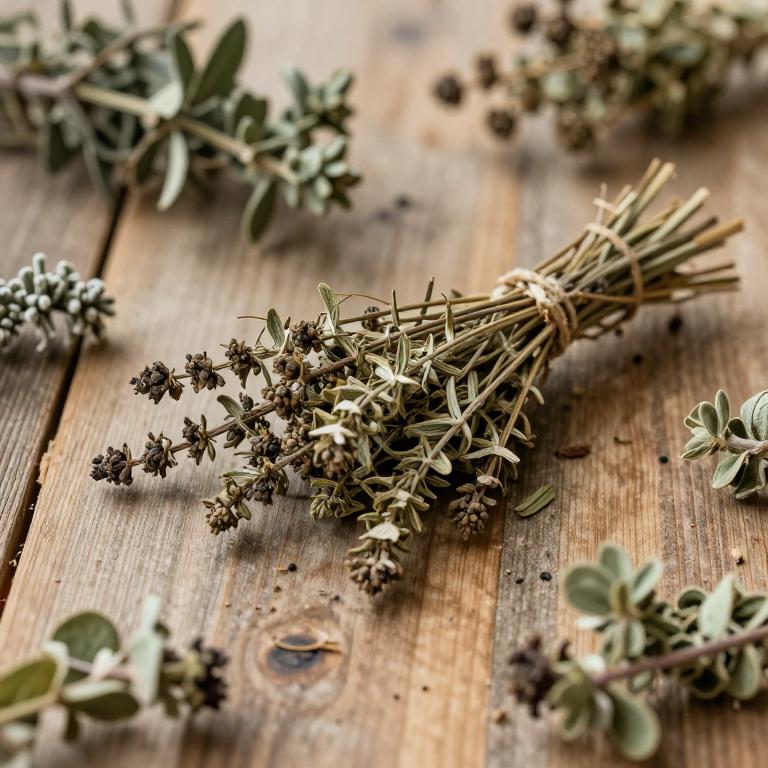
Names and Synonyms
Scientific Names
Accepted name
Mesosphaerum sidifoliumSynonyms
- Hyptis sidifolia
- Mesosphaerum graveolens
- Mesosphaerum polyanthum
- Hyptis silvestris
- Hyptis umbrosa
- Hyptis polyantha
- Hyptis polystachya var. longiflora
- Nepeta pauciflora
- Nepeta sidifolia
- Bystropogon sidifolius
- Hyptis umbrosa var. mikanii
Sources: Wikidata
Taxonomical Classification
This plant belongs to the kingdom Plantae and the phylum Streptophyta. Within the class Equisetopsida and subclass Magnoliidae, it is classified under the order Lamiales and the family Lamiaceae. Finally, it is identified by the genus Mesosphaerum and the specific species Mesosphaerum sidifolium.
| Rank | Classification |
|---|---|
| Kingdom | Plantae |
| Phylum | Streptophyta |
| Class | Equisetopsida |
| Subclass | Magnoliidae |
| Order | Lamiales |
| Family | Lamiaceae |
| Genus | Mesosphaerum |
Sources: The World Checklist of Vascular Plants (WCVP)
Distribution
This plant exhibits a diverse range of locations across the tropical regions of the Americas. In Central America, its presence is documented within the borders of Belize, Honduras, and Nicaragua. Moving into Northern South America, the species can be found growing in Venezuela. Its distribution extends further south into Western South America, specifically within Bolivia. Collectively, these regions highlight a wide geographical spread spanning from Central America down to the Bolivian landscape.
| Region | Area |
|---|---|
| Central America | Belize |
| Central America | Honduras |
| Central America | Nicaragua |
| Northern South America | Venezuela |
| Western South America | Bolivia |
| Western South America | Colombia |
| Western South America | Ecuador |
| Western South America | Galápagos |
| Western South America | Peru |
| Brazil | Brazil Northeast |
Sources: The World Checklist of Vascular Plants (WCVP)
Botanical Identification
Ecology
The ecology of Mesosphaerum sidifolium is characterized by a broad environmental tolerance and a diverse distribution across multiple biomes and topographical gradients. This species can be found across an extensive elevational range, spanning from sea level (0 m AMSL) up to a maximum altitude of 2800 m AMSL. Its habitat versatility is remarkable, as it inhabits a wide array of ecosystems including Caatinga (strictu sensu), Cerrado (lato sensu), and various forest types such as Floresta Ombrófila (Pluvial), Floresta Estacional Semidecidual, and Floresta Ciliar or Galeria. Furthermore, it thrives in specialized environments like Campo Rupestre and Campo de Várzea, as well as within Áreas Antrópicas, demonstrating a significant capacity to adapt to both natural landscapes and human-modified environments.
- Elevational range max:
- 2800 m AMSL
- Elevational range min:
- 0 m AMSL
- Habitat :
- Área Antrópica, Caatinga (stricto sensu), Campo de Várzea, Campo Rupestre, Cerrado (lato sensu), Floresta Ciliar ou Galeria, Floresta Estacional Semidecidual, Floresta Ombrófila (= Floresta Pluvial)
Life history
The life history of Mesocephalaum sidifolium is characterized by a perennial lifecycle, allowing the plant to persist through multiple growing seasons rather than completing its cycle in a single year. In terms of its structural growth habit and survival strategy, it is classified as a chamaephyte, meaning its permanent buds are located close to the soil surface, typically just above the ground level. This life form enables the plant to withstand various environmental stresses by maintaining its regenerative organs near the substrate, ensuring its continued existence across successive years.
- Life form :
- chamaephyte
- Lifecycle :
- perennial
Morphology
The morphology of Meso Sphaerum sidifolium is characterized by a non-woody, herbaceous growth form, specifically classified as a herb or forb. This plant typically reaches an average height of 1.5 m and functions as a self-supporting organism, lacking the climbing tendencies of a vine or liana. It is an independent species that does not exhibit parasitic behavior, maintaining a terrestrial life habit rather than being aquatic or epiphytic.
- Aquatic :
- terrestrial
- Climber :
- self-supporting
- Epiphyte :
- terrestrial
- Growth form :
- herb
- Parasite :
- independent
- Plant height mean:
- 1.5 m
- Woodiness :
- non-woody
Sources: Global Inventory of Floras and Traits (GIFT)
Plant Parts
Mesosphaerum sidifolium has 1 reported plant parts identified across 1 scientific publications and several other databases that are studied for medicinal purposes. The most consistently reported plant part include leaf.
| Plant part | Supporting sources | Consensus |
|---|---|---|
| Leaf | 1 supporting sources | ★☆☆☆☆ |
Leaf
- EXCLI journal
Activities
Mesosphaerum sidifolium has 2 reported activities identified across 1 scientific publications and several other databases. The most consistently reported activities include Analgesic, Antinociceptive.
| Activity | Supporting sources | Consensus |
|---|---|---|
| Analgesic | 1 supporting sources | ★☆☆☆☆ |
| Antinociceptive | 1 supporting sources | ★☆☆☆☆ |
Analgesic
- EXCLI journal
Antinociceptive
- EXCLI journal
Preparations
Mesosphaerum sidifolium has 3 reported preparations identified across 1 scientific publications and several other databases. The most consistently reported preparations include EEB, ethanol extract, ethanolic extract.
| Preparation | Supporting sources | Consensus |
|---|---|---|
| Eeb | 1 supporting sources | ★☆☆☆☆ |
| Ethanol extract | 1 supporting sources | ★☆☆☆☆ |
| Ethanolic extract | 1 supporting sources | ★☆☆☆☆ |
Eeb
- EXCLI journal
Ethanol extract
- EXCLI journal
Ethanolic extract
- EXCLI journal