blue-hyacinth
Merwilla plumbea · Accepted scientific name
Scientific literature: Very Sparse (8 studies) · ★☆☆☆☆
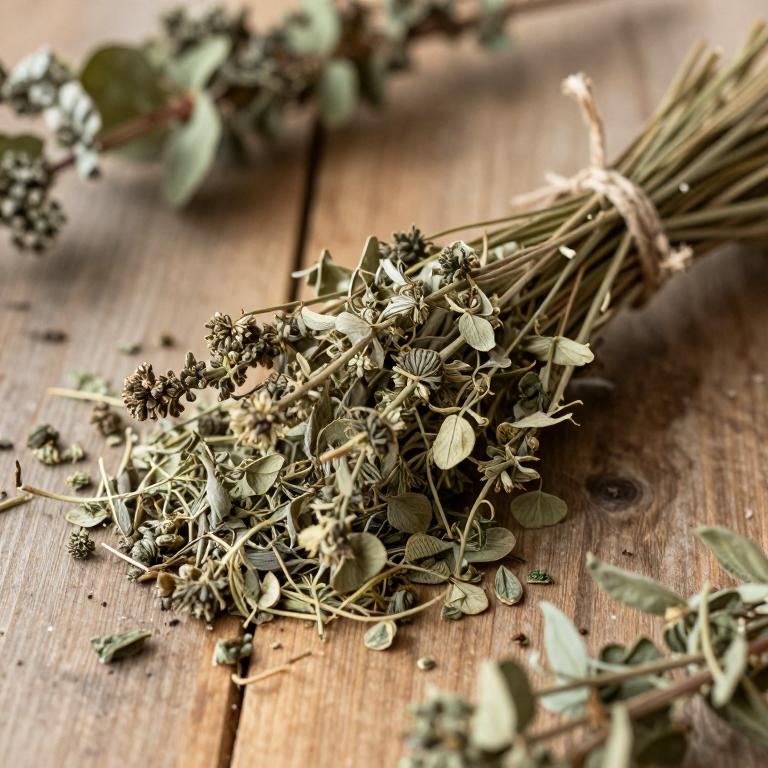
blue-hyacinth, scientifically known as Merwilla plumbea, is a rare medicinal herb celebrated for its striking azure blooms and potent healing properties. Found in remote highland ecosystems, this botanical treasure is rich in bioactive alkaloids, traditionally used in holistic remedies to soothe inflammation and support cognitive wellness and vitality.
- Family
- Asparagaceae
- Native range
- Africa
- Parts used
- Leaf
- Common names
- Blue-Hyacinth · Blue-Squill · 1 more
- Scientific synonyms
- Scilla Plumbea
Names and Synonyms
Common Names
- blue-hyacinth
- blue-squill
- Blue Squill
Scientific Names
Accepted name
Merwilla plumbeaSynonyms
- Scilla plumbea
Sources: Wikidata, Catalogue of Life
Taxonomical Classification
This plant belongs to the kingdom Plantae and is classified under the phylum Streptophyta within the class Equisetopsida. As a member of the subclass Magnoliidae and the order Asparagales, it falls into the family Asparagaceae. Finally, its specific taxonomic identity is defined by the genus Merwilla.
| Rank | Classification |
|---|---|
| Kingdom | Plantae |
| Phylum | Streptophyta |
| Class | Equisetopsida |
| Subclass | Magnoliidae |
| Order | Asparagales |
| Family | Asparagaceae |
| Genus | Merwilla |
Sources: The World Checklist of Vascular Plants (WCVP)
Distribution
This plant exhibits a diverse range of habitats across several regions of the African continent. In South Tropical Africa, its presence is specifically noted within the borders of Malawi. Moving into the southern portion of the continent, it can be found throughout the Cape Provinces. The species also inhabits the mountainous terrain of Lesotho. Furthermore, its distribution extends to the provinces of KwaZulu-Natal and the Free State in Southern Africa.
| Region | Area |
|---|---|
| South Tropical Africa | Malawi |
| Southern Africa | Cape Provinces |
| Southern Africa | Lesotho |
| Southern Africa | KwaZulu-Natal |
| Southern Africa | Free State |
| Southern Africa | Eswatini |
| Southern Africa | Northern Provinces |
Sources: The World Checklist of Vascular Plants (WCVP)
Botanical Identification
Life history
The life history of Merwilla plumbea is characterized by a perennial lifecycle, allowing the plant to persist through multiple growing seasons. As a cryptophyte, its regenerative organs are situated below the soil surface, a strategy that facilitates survival during unfavorable environmental conditions. Furthermore, its classification as a geophyte indicates that it relies on specialized underground structures to endure periods of dormancy and to re-emerge when conditions become favorable for growth.
- Life form :
- geophyte
- Life form :
- cryptophyte
- Lifecycle :
- perennial
Morphology
The morphology of Merwilla plumbea is characterized by its growth form as a non-woody herb that maintains a self-supporting structure. This species exhibits a versatile ecological habit, ranging from aquatic and semiaquatic to terrestrial environments, though it primarily functions as a terrestrial plant rather than an epiphyte. As an independent organism, it does not exhibit parasitic behavior. In terms of physical dimensions, the plant is relatively small, with a height that typically ranges from a minimum of 0.2 meters to a maximum of 1 meter.
- Aquatic :
- terrestrial
- Climber :
- self-supporting
- Epiphyte :
- terrestrial
- Growth form :
- herb
- Parasite :
- independent
- Plant height max:
- 1 m
- Plant height min:
- 0.2 m
- Woodiness :
- non-woody
Sources: Global Inventory of Floras and Traits (GIFT)
Plant Parts
Merwilla plumbea has 1 reported plant parts identified across 1 scientific publications and several other databases that are studied for medicinal purposes. The most consistently reported plant part include leaf.
| Plant part | Supporting sources | Consensus |
|---|---|---|
| Leaf | 1 supporting sources | ★☆☆☆☆ |
Leaf
- Journal of ethnopharmacology
Chemicals
Merwilla plumbea has 2 reported phytochemicals identified across 1 scientific publications and several other databases. The most consistently reported chemicals include CADMIUM, Vanillic acid.
| Chemical | Supporting sources | Consensus |
|---|---|---|
| CADMIUM | 1 supporting sources | ★☆☆☆☆ |
| Vanillic acid | 1 supporting sources | ★☆☆☆☆ |
CADMIUM
- Annals of botany
Vanillic acid
- Journal of plant physiology
Activities
Merwilla plumbea has 1 reported activities identified across 1 scientific publications and several other databases. The most consistently reported activities include Embryotoxic.
| Activity | Supporting sources | Consensus |
|---|---|---|
| Embryotoxic | 1 supporting sources | ★☆☆☆☆ |
Embryotoxic
- Journal of ethnopharmacology
Conditions
Merwilla plumbea has 1 reported investigations on conditions identified across 1 scientific publications and several other databases. The most consistently reported conditions include infectious diseases.
| Condition | Supporting sources | Consensus |
|---|---|---|
| Infectious diseases | 1 supporting sources | ★☆☆☆☆ |
Infectious diseases
- Journal of ethnopharmacology
Preparations
Merwilla plumbea has 2 reported preparations identified across 1 scientific publications and several other databases. The most consistently reported preparations include Bulb and leaf extracts, PE and DCM extracts.
| Preparation | Supporting sources | Consensus |
|---|---|---|
| Bulb and leaf extracts | 1 supporting sources | ★☆☆☆☆ |
| Pe and dcm extracts | 1 supporting sources | ★☆☆☆☆ |
Bulb and leaf extracts
- Journal of ethnopharmacology
Pe and dcm extracts
- Journal of ethnopharmacology