annual mercury
Mercurialis annua · Accepted scientific name
Scientific literature: Moderate (141 studies) · ★★★☆☆
Annual mercury, scientifically known as Mercurialis annua, is a versatile medicinal herb belonging to the Euphorbiaceae family. Widely distributed across various climates, it is traditionally valued in herbal medicine for its potent antimicrobial and anti-inflammatory properties, often utilized in treating skin conditions, respiratory ailments, and various systemic infections.
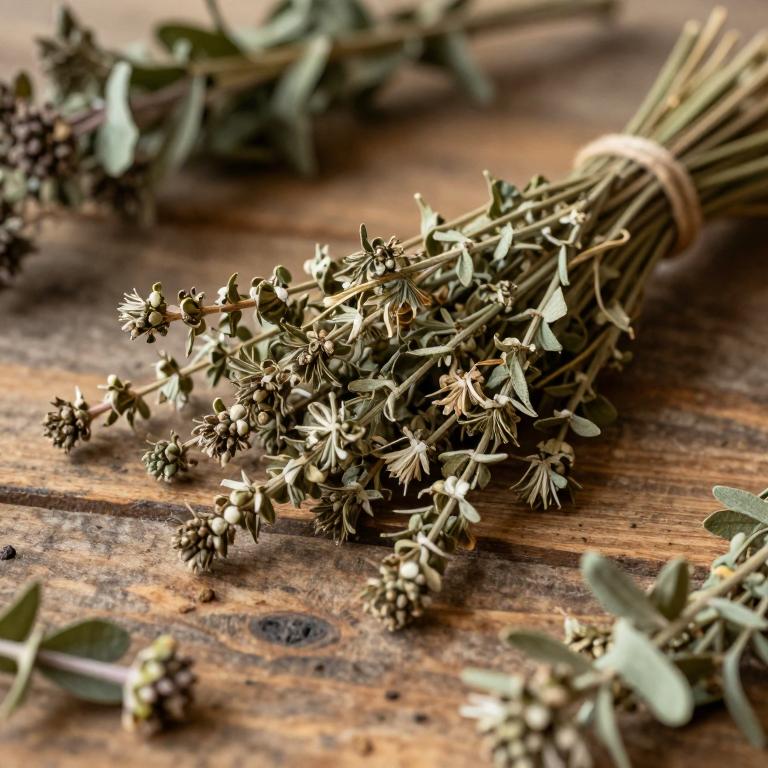
Names and Synonyms
Common Names
- annual mercury
- herb mercury
- Annual Dog's Mercury
- French mercury
Scientific Names
Accepted name
Mercurialis annuaSynonyms
- Mercurialis annua var. ambigua
- Mercurialis tarraconensis
- Mercurialis pinnatifida
- Mercurialis annua var. monoica
- Mercurialis annua f. ovata
- Mercurialis annua subvar. serrata
- Mercurialis annua var. transsylvanica
- Mercurialis annua var. variegata
- Mercurialis ladanum
- Discoplis serrata
- Mercurialis annua var. capillacea
- Mercurialis annua f. verticillata
- Mercurialis annua f. ambigua
- Mercurialis ambigua
- Mercurialis annua var. intermixta
- Mercurialis annua var. urticiformis
- Mercurialis annua subsp. ambigua
- Mercurialis annua lusus ambigua
- Mercurialis annua var. angustifolia
- Mercurialis annua var. camberiensis
- Mercurialis annua f. ciliata
- Mercurialis annua f. cordata
- Mercurialis annua f. cuneatolanceolata
- Mercurialis annua var. dioica
- Mercurialis annua var. laciniata
- Mercurialis annua f. lanceolata
- Mercurialis ciliata
- Mercurialis monoica
- Mercurialis annua var. sancti-marini
- Synema annuum
Regional and Traditional Names
Spanish:
- Mercurialis pinnatifida
- Synema annuum
- Discoplis serrata
- Mercurialis ambigua
- Mercurialis ladanum
- Mercurialis ciliata
- Mercurialis monoica
- Mercurialis tarraconensis
German:
- Einjähriges Bingelkraut
- einjähriges Bingelkraut
- Einjaehriges Bingelkraut
French:
- Mercuriale annuelle
- chimou
- mercuriale annuelle
- mercuriale annuelle
Sources: Wikidata, Catalogue of Life
Taxonomical Classification
This plant belongs to the kingdom Plantae and the phylum Streptophyta, situated within the class Equisetopsida and subclass Magnoliidae. It is classified under the order Malpighiales and the family Euphorbiaceae. Finally, it is identified by the genus Mercurialis, which includes the species Mercurialis annua.
| Rank | Classification |
|---|---|
| Kingdom | Plantae |
| Phylum | Streptophyta |
| Class | Equisetopsida |
| Subclass | Magnoliidae |
| Order | Malpighiales |
| Family | Euphorbiaceae |
| Genus | Mercurialis |
Sources: The World Checklist of Vascular Plants (WCVP)
Distribution
This plant exhibits a broad geographical presence across several regions of Europe. In Northern Europe, its distribution includes Denmark, Great Britain, and Ireland. Moving toward the center of the continent, it can also be found within Middle Europe. Specifically, the species is documented to grow in Austria. Finally, its range extends to include Belgium within the Middle European region.
| Region | Area |
|---|---|
| Northern Europe | Denmark |
| Northern Europe | Great Britain |
| Northern Europe | Ireland |
| Middle Europe | Austria |
| Middle Europe | Belgium |
| Middle Europe | Czechia-Slovakia |
| Middle Europe | Germany |
| Middle Europe | Hungary |
| Middle Europe | Netherlands |
| Middle Europe | Poland |
Sources: The World Checklist of Vascular Plants (WCVP)
Botanical Identification
Ecology
The ecology of Mercurialis annua is characterized by its ability to thrive in disturbed environments, frequently colonizing anthropogenically influenced landscapes such as crop fields, old fields, and various ruderal sites. This species exhibits a broad altitudinal distribution, occurring across a vertical gradient that begins at sea level (0 m AMSL) and extends up to a maximum elevation of 1000 m AMSL. Its preference for ruderal habitats suggests a high degree of adaptability to nutrient-rich, disturbed soils where competition from established perennial vegetation may be lower.
- Elevational range max:
- 1000 m AMSL
- Elevational range min:
- 0 m AMSL
- Habitat :
- crop fields, old fields, ruderal sites
Life history
The life history of Mercurialis annua is characterized by its classification as an annual plant, meaning it completes its entire biological cycle—from germination to seed production—within a single growing season. As a therophyte, the species survives the unfavorable seasons primarily through the production of seeds, which remain dormant until conditions are favorable for regrowth. This life form strategy allows the plant to colonize disturbed or open habitats effectively. Additionally, the plant exhibits deciduous behavior, shedding its foliage as part of its seasonal developmental cycle.
- Deciduousness :
- deciduous
- Life form :
- therophyte
- Lifecycle :
- annual
Morphology
The morphology of Mercurialis annua is characterized by its growth form as a non-woody herb and forb. It is a terrestrial, independent species that does not function as an epiphyte or a parasite. The plant exhibits a self-supporting habit and is not a climber, such as a liana or vine. In terms of stature, the plant maintains an erect shoot orientation, with a height that typically ranges from a minimum of 0.1 m to a maximum of 0.6 m, resulting in a mean plant height of approximately 0.275 m.
- Aquatic :
- terrestrial
- Climber :
- self-supporting
- Epiphyte :
- terrestrial
- Growth form :
- herb
- Growth form :
- forb
- Parasite :
- independent
- Plant height max:
- 0.6 m
- Plant height mean:
- 0.275 m
- Plant height min:
- 0.1 m
- Shoot orientation :
- erect
- Woodiness :
- non-woody
Physiology
The physiology of Mercurialis annua is characterized by a C3 photosynthetic pathway, reflecting its metabolic strategy for carbon fixation. The plant exhibits a non-carnivorous nutritional profile and does not function as a nitrogen fixer, relying instead on soil-based nutrient uptake. Its foliar morphology is defined by an opposite leaf arrangement, with individual leaves presenting an elliptic form. Morphometric data indicates a mean leaf size of approximately 7.59855 cm² and a maximum leaf length of 4 cm. Furthermore, the plant maintains a relatively high Specific Leaf Area (SLA) with a mean value of 484.7 cm²/g, suggesting a physiological adaptation toward maximizing light interception through leaf area expansion relative to its biomass.
- Carnivory :
- non-carnivorous
- Leaf arrangement :
- opposite
- Leaf form :
- elliptic
- Leaf length max:
- 4 cm
- Leaf size mean:
- 7.59855 cm²
- Nitrogen fixer :
- no
- Photosynthetic pathway :
- C3
- Specific Leaf Area (SLA) mean:
- 484.7 cm²/g
Reproduction
The reproduction of Mercurialis annua is characterized by a sexual process facilitated by a monoeciouse reproductive system, with asexual reproduction being entirely absent. The flowering period typically commences in June and can extend through to December. Pollination is achieved through a combination of abiotic and biotic mechanisms, primarily utilizing wind and bees to facilitate fertilization, while self-fertilization is noted as absent. Following successful pollination, the plant produces fruit in the form of a capsule, which measures between 0.25 cm and 0.3 cm in length. Each fruit is highly prolific, containing a high density of seeds ranging from 101 to 1000 per fruit. These seeds are quite small, with a mean length of 2 mm and a mean mass of 0.001943 g (ranging from a minimum of 0.0015 g to a maximum of 0.00212 g). The dispersal syndrome is classified as autochorous, meaning the plant relies on internal mechanisms for seed dispersal.
- Dispersal syndrome :
- autochorous
- Flowering time :
- Jun
- Flowering time :
- Dec
- Fruit length max:
- 0.3 cm
- Fruit length min:
- 0.25 cm
- Fruit type :
- capsule
- Pollination syndrome :
- wind
- Pollination syndrome :
- bee
- Pollination syndrome :
- abiotic
- Reproduction asexual :
- absent
- Reproduction sexual :
- monoecious
- Seed length mean:
- 2 mm
- Seed mass max:
- 0.00212 g
- Seed mass mean:
- 0.001943 g
- Seed mass min:
- 0.0015 g
- Seeds_per_fruit :
- 101-1000
- Self fertilization :
- absent
Sources: Global Inventory of Floras and Traits (GIFT)
Chemicals
Mercurialis annua has 21 reported phytochemicals identified across 0 scientific publications and several other databases. The most consistently reported chemicals include EO, Ethyl amine, FAT, Isorhamnetin, Mercurialin.
| Chemical | Supporting sources | Consensus |
|---|---|---|
| EO | 1 supporting sources | ★☆☆☆☆ |
| Ethyl amine | 1 supporting sources | ★☆☆☆☆ |
| FAT | 1 supporting sources | ★☆☆☆☆ |
| Isorhamnetin | 1 supporting sources | ★☆☆☆☆ |
| Mercurialin | 1 supporting sources | ★☆☆☆☆ |
| Narcissin | 1 supporting sources | ★☆☆☆☆ |
| Propylamine | 1 supporting sources | ★☆☆☆☆ |
| RUTIN | 1 supporting sources | ★☆☆☆☆ |
| Saponins | 1 supporting sources | ★☆☆☆☆ |
| SiO2 | 1 supporting sources | ★☆☆☆☆ |
EO
- Dr. Duke
Ethyl amine
- Dr. Duke
FAT
- Dr. Duke
Isorhamnetin
- Dr. Duke
Mercurialin
- Dr. Duke
Narcissin
- Dr. Duke
Propylamine
- Dr. Duke
RUTIN
- Dr. Duke
Saponins
- Dr. Duke
SiO2
- Dr. Duke
Activities
Mercurialis annua has 114 reported activities identified across 0 scientific publications and several other databases. The most consistently reported activities include Antidiabetic, Antihypertensive, 5-HT-Inhibitor, Acetylcholinergic, Aldehyde-Oxidase-Inhibitor.
| Activity | Supporting sources | Consensus |
|---|---|---|
| Antidiabetic | 2 supporting sources | ★☆☆☆☆ |
| Antihypertensive | 2 supporting sources | ★☆☆☆☆ |
| 5-HT-Inhibitor | 1 supporting sources | ★☆☆☆☆ |
| Acetylcholinergic | 1 supporting sources | ★☆☆☆☆ |
| Aldehyde-Oxidase-Inhibitor | 1 supporting sources | ★☆☆☆☆ |
| Aldose-Reductase-Inhibitor | 1 supporting sources | ★☆☆☆☆ |
| Allelochemic | 1 supporting sources | ★☆☆☆☆ |
| Anthelmintic | 1 supporting sources | ★☆☆☆☆ |
| AntiCVI | 1 supporting sources | ★☆☆☆☆ |
| AntiHIV | 1 supporting sources | ★☆☆☆☆ |
Antidiabetic
- Dr. Duke
- Plants (Basel, Switzerland)
Antihypertensive
- Dr. Duke
- Plants (Basel, Switzerland)
5-HT-Inhibitor
- Dr. Duke
Acetylcholinergic
- Dr. Duke
Aldehyde-Oxidase-Inhibitor
- Dr. Duke
Aldose-Reductase-Inhibitor
- Dr. Duke
Allelochemic
- Dr. Duke
Anthelmintic
- Dr. Duke
AntiCVI
- Dr. Duke
AntiHIV
- Dr. Duke
Conditions
Mercurialis annua has 2 reported investigations on conditions identified across 0 scientific publications and several other databases. The most consistently reported conditions include antidiabetic, antihypertensive.
| Condition | Supporting sources | Consensus |
|---|---|---|
| Antidiabetic | 1 supporting sources | ★☆☆☆☆ |
| Antihypertensive | 1 supporting sources | ★☆☆☆☆ |
Antidiabetic
- Plants (Basel, Switzerland)
Antihypertensive
- Plants (Basel, Switzerland)