menta
Mentha · Accepted scientific name
Scientific literature: Moderate (104 studies) · ★★★☆☆
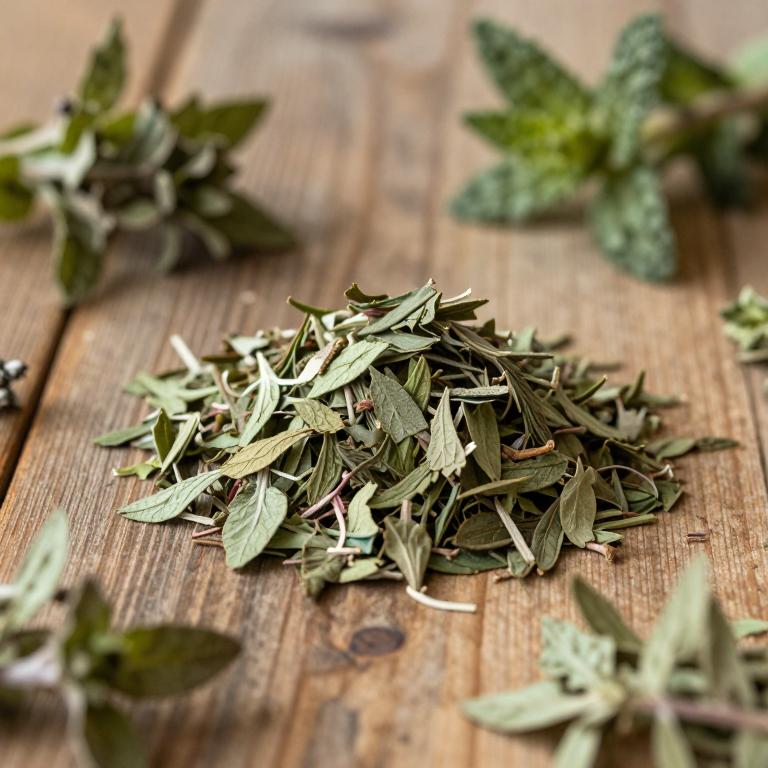
Mentha, scientifically known as Mentha, is a versatile genus of aromatic herbs widely celebrated for its therapeutic properties. Renowned for its refreshing scent and cooling sensation, these plants are staples in traditional medicine. From soothing digestive issues to relieving headaches, Mentha offers diverse holistic benefits for modern wellness.
- Family
- Lamiaceae
- Native range
- Europe
- Parts used
- Leaf
- Common names
- Mints
- Scientific synonyms
- Menthella · Pulegium · 1 more
Names and Synonyms
Common Names
- mints
Scientific Names
Accepted name
MenthaSynonyms
- Menthella
- Pulegium
- Minthe
Regional and Traditional Names
Spanish:
- Audibertia
- Preslia
- Menta
- Yerba mota
- Hierbahuerto
- Menthella
- Pulegio
- mentas
German:
- Minzen
- Basilikumminze
- Nudelminze
- Braune Minze
- Minze
- Zitronenminze
- Bergamotteminze
- Orangenminze
- Minzen
French:
- menthe
- menthe verte
- menthe poivrée
- menthe marocaine
- menthe fraîche
- menthe douce
- menthes
- Menthe
Sources: Wikidata, Catalogue of Life
Taxonomical Classification
This plant belongs to the kingdom Plantae and the phylum Streptophyta, falling under the class Equisetopsida and subclass Magnoliidae. It is further classified within the order Lamiales and the family Lamiaceae. Finally, it is identified under the genus Mentha.
| Rank | Classification |
|---|---|
| Kingdom | Plantae |
| Phylum | Streptophyta |
| Class | Equisetopsida |
| Subclass | Magnoliidae |
| Order | Lamiales |
| Family | Lamiaceae |
| Genus | Mentha |
Sources: The World Checklist of Vascular Plants (WCVP)
Distribution
This plant exhibits a notable presence across several regions within Northern Europe. Specifically, it can be found growing in the coastal and inland areas of Denmark. Its distribution extends further north into the landscapes of Finland and the island of Iceland. Additionally, the species is documented within the territory of the Føroyaar islands. Finally, the geographical reach of this medicinal plant includes the various regions of Great Britain.
| Region | Area |
|---|---|
| Northern Europe | Denmark |
| Northern Europe | Finland |
| Northern Europe | Føroyar |
| Northern Europe | Great Britain |
| Northern Europe | Iceland |
| Northern Europe | Ireland |
| Northern Europe | Norway |
| Northern Europe | Svalbard |
| Northern Europe | Sweden |
| Middle Europe | Austria |
Sources: The World Checklist of Vascular Plants (WCVP)
Plant Parts
Mentha has 1 reported plant parts identified across 3 scientific publications and several other databases that are studied for medicinal purposes. The most consistently reported plant part include leaf.
| Plant part | Supporting sources | Consensus |
|---|---|---|
| Leaf | 3 supporting sources | ★★☆☆☆ |
Leaf
- Molecules (Basel, Switzerland)
- ACS omega
- Pharmaceuticals (Basel, Switzerland)
Chemicals
Mentha has 33 reported phytochemicals identified across 3 scientific publications and several other databases. The most consistently reported chemicals include MENTHOL, rosmarinic acid, MENTHONE, Terpenoids, luteolin.
| Chemical | Supporting sources | Consensus |
|---|---|---|
| MENTHOL | 3 supporting sources | ★★☆☆☆ |
| rosmarinic acid | 3 supporting sources | ★★☆☆☆ |
| MENTHONE | 2 supporting sources | ★☆☆☆☆ |
| Terpenoids | 2 supporting sources | ★☆☆☆☆ |
| luteolin | 2 supporting sources | ★☆☆☆☆ |
| Alcohols | 1 supporting sources | ★☆☆☆☆ |
| BAX | 1 supporting sources | ★☆☆☆☆ |
| CARVACROL | 1 supporting sources | ★☆☆☆☆ |
| CARVONE | 1 supporting sources | ★☆☆☆☆ |
| CHLOROGENIC ACID | 1 supporting sources | ★☆☆☆☆ |
MENTHOL
- Experimental & applied acarology
- Plants (Basel, Switzerland)
- Pharmaceuticals (Basel, Switzerland)
rosmarinic acid
- Phytotherapy research : PTR
- Nutrients
- Plants (Basel, Switzerland)
MENTHONE
- Plants (Basel, Switzerland)
- Pharmaceuticals (Basel, Switzerland)
Terpenoids
- Phytotherapy research : PTR
- Plants (Basel, Switzerland)
luteolin
- Talanta
- Plants (Basel, Switzerland)
Alcohols
- Phytotherapy research : PTR
BAX
- Molecules (Basel, Switzerland)
CARVACROL
- The Analyst
CARVONE
- Molecules (Basel, Switzerland)
CHLOROGENIC ACID
- Talanta
Activities
Mentha has 12 reported activities identified across 3 scientific publications and several other databases. The most consistently reported activities include Antioxidant, Antimicrobial, Antiallergic, Anticancer, Antidiabetic.
| Activity | Supporting sources | Consensus |
|---|---|---|
| Antioxidant | 4 supporting sources | ★★☆☆☆ |
| Antimicrobial | 2 supporting sources | ★☆☆☆☆ |
| Antiallergic | 1 supporting sources | ★☆☆☆☆ |
| Anticancer | 1 supporting sources | ★☆☆☆☆ |
| Antidiabetic | 1 supporting sources | ★☆☆☆☆ |
| Antigiardial | 1 supporting sources | ★☆☆☆☆ |
| Antihypertensive | 1 supporting sources | ★☆☆☆☆ |
| Antiinflammatory | 1 supporting sources | ★☆☆☆☆ |
| Antitumor | 1 supporting sources | ★☆☆☆☆ |
| Antiviral | 1 supporting sources | ★☆☆☆☆ |
Antioxidant
- Phytotherapy research : PTR
- Current pharmaceutical biotechnology
- Molecules (Basel, Switzerland)
- Plants (Basel, Switzerland)
Antimicrobial
- Molecules (Basel, Switzerland)
- Phytotherapy research : PTR
Antiallergic
- Phytotherapy research : PTR
Anticancer
- Phytotherapy research : PTR
Antidiabetic
- Molecules (Basel, Switzerland)
Antigiardial
- Veterinary parasitology
Antihypertensive
- Phytotherapy research : PTR
Antiinflammatory
- Phytotherapy research : PTR
Antitumor
- Phytotherapy research : PTR
Antiviral
- Phytotherapy research : PTR
Conditions
Mentha has 31 reported investigations on conditions identified across 3 scientific publications and several other databases. The most consistently reported conditions include gastrointestinal disorders, bronchitis, Candida albicans, Cardiovascular Diseases, Giardia duodenalis.
| Condition | Supporting sources | Consensus |
|---|---|---|
| Gastrointestinal disorders | 3 supporting sources | ★★☆☆☆ |
| Bronchitis | 2 supporting sources | ★☆☆☆☆ |
| Candida albicans | 1 supporting sources | ★☆☆☆☆ |
| Cardiovascular diseases | 1 supporting sources | ★☆☆☆☆ |
| Giardia duodenalis | 1 supporting sources | ★☆☆☆☆ |
| Mycobacterium tuberculosis | 1 supporting sources | ★☆☆☆☆ |
| Varroa destructor | 1 supporting sources | ★☆☆☆☆ |
| Abdominal pain | 1 supporting sources | ★☆☆☆☆ |
| Anxiety | 1 supporting sources | ★☆☆☆☆ |
| Breast cancer | 1 supporting sources | ★☆☆☆☆ |
Gastrointestinal disorders
- Evidence-based complementary and alternative medicine : eCAM
- Pharmaceuticals (Basel, Switzerland)
- BMC complementary medicine and therapies
Bronchitis
- Medicines (Basel, Switzerland)
- BMC complementary medicine and therapies
Candida albicans
- Indian journal of dental research : official publication of Indian Society for Dental Research
Cardiovascular diseases
- Molecules (Basel, Switzerland)
Giardia duodenalis
- Veterinary parasitology
Mycobacterium tuberculosis
- International journal of mycobacteriology
Varroa destructor
- Experimental & applied acarology
Abdominal pain
- Pharmaceuticals (Basel, Switzerland)
Anxiety
- Revista gaucha de enfermagem
Breast cancer
- Molecules (Basel, Switzerland)
Preparations
Mentha has 15 reported preparations identified across 3 scientific publications and several other databases. The most consistently reported preparations include essential oils, methanolic extracts, Mentha, Mentha and winter savoury, Mentha essential oils.
| Preparation | Supporting sources | Consensus |
|---|---|---|
| Essential oils | 2 supporting sources | ★☆☆☆☆ |
| Methanolic extracts | 2 supporting sources | ★☆☆☆☆ |
| Mentha | 1 supporting sources | ★☆☆☆☆ |
| Mentha and winter savoury | 1 supporting sources | ★☆☆☆☆ |
| Mentha essential oils | 1 supporting sources | ★☆☆☆☆ |
| Mentha leaf extract | 1 supporting sources | ★☆☆☆☆ |
| Mentha oil | 1 supporting sources | ★☆☆☆☆ |
| Aqueous mentha extract | 1 supporting sources | ★☆☆☆☆ |
| Aqueous extract | 1 supporting sources | ★☆☆☆☆ |
| Essential oil | 1 supporting sources | ★☆☆☆☆ |
Essential oils
- Mitochondrial DNA. Part B, Resources
- Veterinary parasitology
Methanolic extracts
- The Analyst
- Plants (Basel, Switzerland)
Mentha
- Current topics in medicinal chemistry
Mentha and winter savoury
- Antioxidants (Basel, Switzerland)
Mentha essential oils
- Phytotherapy research : PTR
Mentha leaf extract
- ACS omega
Mentha oil
- Pharmaceuticals (Basel, Switzerland)
Aqueous mentha extract
- Scientific reports
Aqueous extract
- Scientific reports
Essential oil
- Plants (Basel, Switzerland)