Mentha villosa
Mentha × villosa · Accepted scientific name
Scientific literature: Very Sparse (17 studies) · ★☆☆☆☆
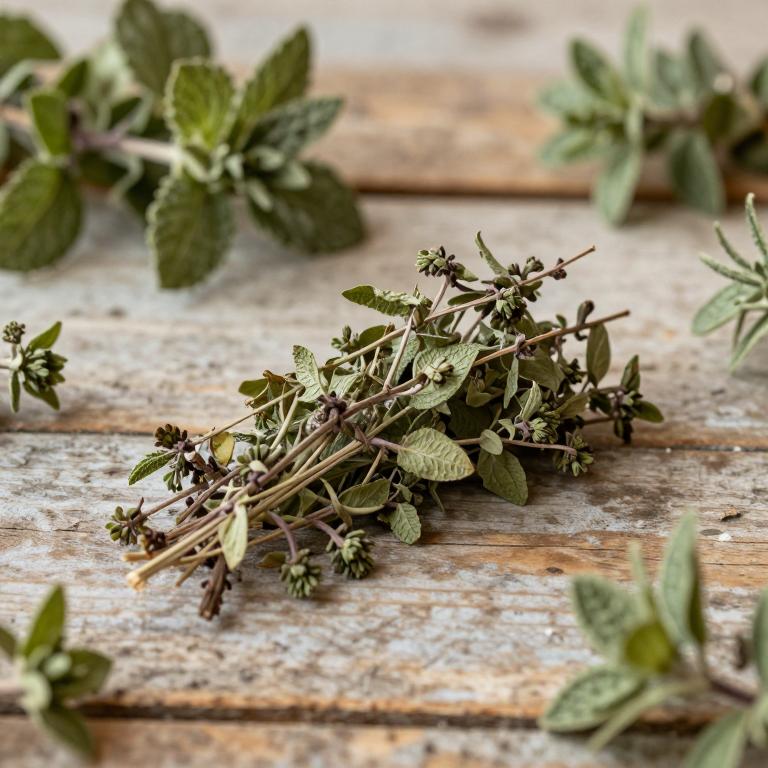
Mentha villosa, scientifically known as Mentha × villosa, is a fragrant hybrid mint species celebrated for its aromatic properties. Renowned for its refreshing scent and therapeutic potential, this plant is frequently utilized in traditional medicine to soothe digestive discomfort, alleviate headaches, and provide calming effects through its essential oils.
Names and Synonyms
Common Names
- woolly mint
- Bowles mint
- apple mint
- mojito mint
Scientific Names
Accepted name
Mentha × villosaSynonyms
- Mentha × nemorosa var. velutina
- Mentha sylvestris var. alopecuroides
- Mentha × villosa f. amaurophylla
- Mentha × malyi var. auryensis
- Mentha × controversa
- Mentha suaveolens var. posoniensis
- Mentha × rotundifolia subsp. velutina
- Mentha × villosa var. candicans
- Mentha × villosa f. lamyi
- Mentha × rotundifolia var. velutina
- Mentha × villosa var. elencta
- Mentha sylvestris var. villosa
- Mentha × cordifolia
- Mentha × villosa var. cordifolia
- Mentha × villosa var. cladodes
- Mentha sylvestris var. gratissima
- Mentha spicata var. cordifolia
- Mentha sylvestris f. nemorosa
- Mentha × villosa f. gillotii
- Mentha × villosa var. dumortieri
- Mentha × villosa f. leptodentata
- Mentha × nemorosa var. dumortieri
- Mentha × villosa var. emarginata
- Mentha × villosa var. nemorosa
- Mentha × villosa var. allieriensis
- Mentha × villosa var. amaurophylla
- Mentha × villosa var. billotiana
- Mentha × villosa var. morrenii
- Mentha × villosa var. soluta
- Mentha × nemorosa var. morrenii
- Mentha × villosa var. gnaphalophyta
- Mentha sylvestris var. origanoides
- Mentha × villosa f. hortivaga
- Mentha × villosa var. velutinella
- Mentha × villosa f. noalhatiana
- Mentha × villosa var. lamarckii
- Mentha × villosa f. chaunostachya
- Mentha × niliaca var. lamarckii
- Mentha × villosa var. alopecuroides
- Mentha longifolia var. dumortieri
- Mentha × niliaca var. microdonta
- Mentha longifolia var. mosoniensis
- Mentha × villosa var. microdonta
- Mentha × nemorosa subsp. artiglandulosa
- Mentha × velutina var. hortivaga
- Mentha × nemorosa var. incanotomentosa
- Mentha × velutina var. lithuanica
- Mentha × villosa var. incanotomentosa
- Mentha × niliaca subsp. timbalii
- Mentha mollissima f. speciosa
- Mentha × niliaca subsp. velutina
- Mentha × floccida
- Mentha × villosa var. speciosa
- Mentha × niliaca var. velutina
- Mentha × villosa var. pulchriceps
- Mentha × nemorosa subsp. timbalii
- Mentha sylvestris subsp. chloreilema
- Mentha × niliaca var. discincta
- Mentha × villosa var. similis
- Mentha × niliaca var. similis
- Mentha × villosa var. cirrita
- Mentha × niliaca var. genevensis
- Mentha × villosa var. dossiniana
- Mentha × niliaca var. nemorosa
- Mentha × villosa var. recondita
- Mentha × niliaca var. moniliformis
- Mentha viridis var. cordifolia
- Mentha × niliaca var. notarisii
- Mentha sylvestris var. nemorosa
- Mentha × niliaca var. promecophylla
- Mentha sylvestris subsp. velutina
- Mentha × villosa var. calabrica
- Mentha × villosa var. semeiodes
- Mentha × dumortieri
- Mentha × villosa var. heterochroma
- Mentha × dossiniana
- Mentha × villosa var. viridiatra
- Mentha × emarginata
- Mentha × villosa var. marginalis
- Mentha × billotiana
- Mentha × villosa var. salicetorum
- Mentha × benthamiana
- Mentha × villosa var. serrigera
- Mentha × bolzanensis
- Mentha × villosa var. albovelutina
- Mentha × amaurophylla
- Mentha sylvestris subsp. dumortieri
- Mentha × alopecuroides
- Mentha × chloreilema
- Mentha × chlorostachya
- Mentha × pulverulenta
- Mentha × rhenana
- Mentha × rigoi
- Mentha × morrenii var. latiforns
- Mentha × rotundifolia subsp. alopecuroides
- Mentha × pascuicola
- Mentha × niliaca var. alopecuroides
- Mentha × mosoniensis
- Mentha × niliaca var. nicholsoniana
- Mentha × morrenii
- Mentha × villosa f. pascuicola
- Mentha × moesiaca
- Mentha longifolia subsp. dumortieri
- Mentha × niliacea
- Mentha sylvestris subsp. nemorosa
- Mentha × nicholsoniana
- Mentha sylvestris var. longifolia
- Mentha × nemorosa
- Mentha sylvestris var. virescens
- Mentha × incanescens
- Mentha viridis f. cordifolia
- Mentha × lamarckii var. hortivaga
- Mentha × villosa var. gillotii
- Mentha × gratissima
- Mentha × gillotii
- Mentha × alopecuroides var. lamarckii
- Mentha × genevensis
- Mentha × alopecuroides var. microdonta
- Mentha × lamarckii var. lithuanica
- Mentha × villosa var. gratissima
- Mentha × latifrons
- Mentha × villosa subvar. inclusa
- Mentha × lamyi
- Mentha × villosa subvar. exserta
- Mentha × lamarckii
- Mentha × villosa var. lycopifolia
- Mentha × malyi
- Mentha longifolia var. cordifolia
- Mentha × lycopifolia
- Mentha × amaurophylla var. rugosa
- Mentha × longistachya
- Mentha viridis var. rugosa
- Mentha × similis
- Mentha × villosa f. garrontei
- Mentha × speciosa
- Mentha × thurmannii
- Mentha × timbalii
- Mentha × velutina
- Mentha × velutina var. genevensis
- Mentha × veneta
- Mentha × villosa var. cordifolia
- Mentha × villosa var. genevensis
- Mentha × villosa subsp. lamyi
- Mentha × villosa var. nicholsoniana
Regional and Traditional Names
Spanish:
- Mentha villosa
- herba buena
German:
- Hain-Minze
- Apfel-Minze
- Hain-Minze
- breitblättrige Minze
French:
- Mentha villosa
- Menthe velue
Sources: Wikidata, Catalogue of Life
Taxonomical Classification
This plant belongs to the kingdom Plantae and is classified within the phylum Streptophyta and the class Equisetopsida. Under the subclass Magnoliidae, it falls into the order Lamiales and the family Lamiaceae. Ultimately, Mentha × villosa is identified under the genus Mentha.
| Rank | Classification |
|---|---|
| Kingdom | Plantae |
| Phylum | Streptophyta |
| Class | Equisetopsida |
| Subclass | Magnoliidae |
| Order | Lamiales |
| Family | Lamiaceae |
| Genus | Mentha |
Sources: The World Checklist of Vascular Plants (WCVP)
Distribution
This plant exhibits a broad distribution across several key regions of the European continent. In Northern Europe, its presence is documented within the territories of Great Britain and Ireland. Moving toward the central part of the continent, the species can also be found throughout Middle Europe. Specifically, it inhabits the landscapes of Austria and Belgium. Finally, its geographical range extends through the Middle European regions of Czechia and Slovakia.
| Region | Area |
|---|---|
| Northern Europe | Great Britain |
| Northern Europe | Ireland |
| Middle Europe | Austria |
| Middle Europe | Belgium |
| Middle Europe | Czechia-Slovakia |
| Middle Europe | Germany |
| Middle Europe | Hungary |
| Middle Europe | Switzerland |
| Southwestern Europe | France |
| Southwestern Europe | Spain |
Sources: The World Checklist of Vascular Plants (WCVP)
Botanical Identification
Morphology
The morphology of Mentha × villosa is characterized by its growth form as a non-woody herb, which exhibits a predominantly terrestrial habit. As a self-supporting plant, it does not function as a climber, liana, or vine, maintaining its structure independently without the need for external support. The species is an independent organism, lacking any parasitic tendencies, and is strictly terrestrial rather than acting as an epiphyte. Its physical structure is defined by its non-woody nature, which is consistent with its classification as a herbaceous plant that thrives in terrestrial environments.
- Aquatic :
- terrestrial
- Climber :
- self-supporting
- Epiphyte :
- terrestrial
- Growth form :
- herb
- Parasite :
- independent
- Woodiness :
- non-woody
Physiology
The physiology of Mentha × villosa is characterized by its efficient metabolic processes and specialized adaptations for volatile organic compound production. As a member of the Lamiaceae family, its primary metabolic framework follows a C3 photosynthetic pathway, utilizing the Calvin cycle to fix atmospheric carbon dioxide through the enzyme RuBisCO. This C3 pathway is typical for temperate mint species, allowing the plant to thrive in environments where water availability is sufficient to support transpiration. Beyond carbon fixation, the plant exhibits complex physiological mechanisms related to secondary metabolism, specifically within its glandular trichomes. These specialized epidermal structures serve as the primary sites for the biosynthesis and storage of essential oils, where enzymatic pathways transform primary metabolites into complex terpenoids and phenolic compounds. The regulation of these physiological processes is closely tied to environmental stimuli, such as light intensity and temperature, which influence both the rate of photosynthesis and the metabolic flux toward the production of its characteristic aromatic constituents.
- Photosynthetic pathway :
- C3
Sources: Global Inventory of Floras and Traits (GIFT)
Chemicals
Mentha × villosa has 4 reported phytochemicals identified across 0 scientific publications and several other databases. The most consistently reported chemicals include Rotundifolone, CARVONE, Piperitenone oxide, nitric oxide.
| Chemical | Supporting sources | Consensus |
|---|---|---|
| Rotundifolone | 3 supporting sources | ★★☆☆☆ |
| CARVONE | 1 supporting sources | ★☆☆☆☆ |
| Piperitenone oxide | 1 supporting sources | ★☆☆☆☆ |
| nitric oxide | 1 supporting sources | ★☆☆☆☆ |
Rotundifolone
- Daru : journal of Faculty of Pharmacy, Tehran University of Medical Sciences
- Planta medica
- Brazilian journal of biology = Revista brasleira de biologia
CARVONE
- Frontiers in pharmacology
Piperitenone oxide
- Planta medica
nitric oxide
- Planta medica
Activities
Mentha × villosa has 5 reported activities identified across 0 scientific publications and several other databases. The most consistently reported activities include Antioxidant, Bradycardic, Chronotropic, Hypotensive, Vasorelaxant.
| Activity | Supporting sources | Consensus |
|---|---|---|
| Antioxidant | 1 supporting sources | ★☆☆☆☆ |
| Bradycardic | 1 supporting sources | ★☆☆☆☆ |
| Chronotropic | 1 supporting sources | ★☆☆☆☆ |
| Hypotensive | 1 supporting sources | ★☆☆☆☆ |
| Vasorelaxant | 1 supporting sources | ★☆☆☆☆ |
Antioxidant
- Plants (Basel, Switzerland)
Bradycardic
- Planta medica
Chronotropic
- Planta medica
Hypotensive
- Planta medica
Vasorelaxant
- Planta medica
Preparations
Mentha × villosa has 2 reported preparations identified across 0 scientific publications and several other databases. The most consistently reported preparations include essential oil, Oil Essential.
| Preparation | Supporting sources | Consensus |
|---|---|---|
| Essential oil | 2 supporting sources | ★☆☆☆☆ |
| Oil essential | 1 supporting sources | ★☆☆☆☆ |
Essential oil
- Daru : journal of Faculty of Pharmacy, Tehran University of Medical Sciences
- Planta medica
Oil essential
- Brazilian journal of biology = Revista brasleira de biologia