Mentha requienii
Mentha requienii · Accepted scientific name
Scientific literature: Very Sparse (8 studies) · ★☆☆☆☆
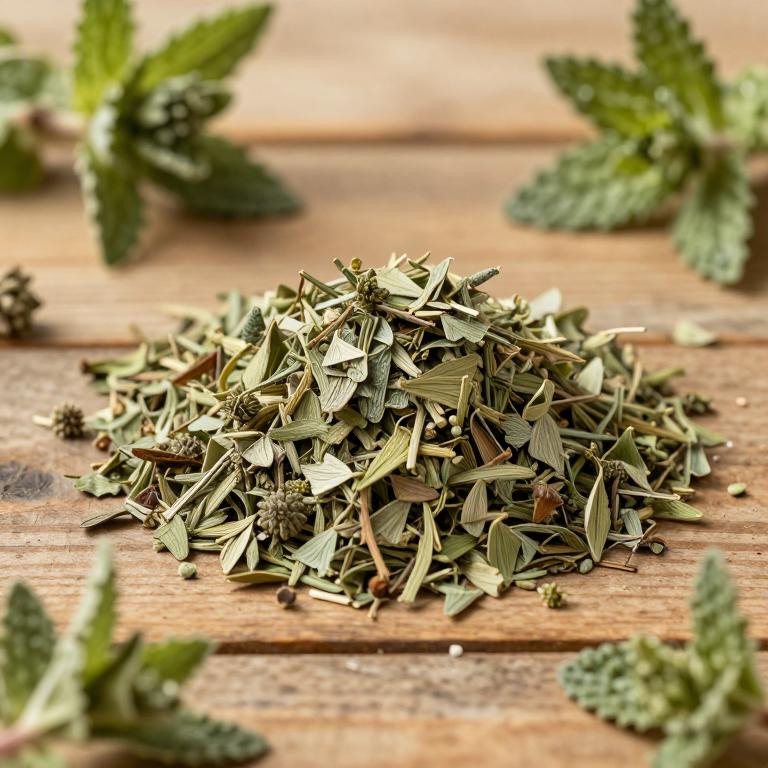
Mentha requienii, scientifically known as Mentha requienii, is a unique, aromatic mint species native to the Mediterranean region. Often referred to as "requiens mint," it is prized for its delicate flavor and soothing properties. This medicinal herb is frequently utilized in herbal teas to aid digestion and promote relaxation.
- Family
- Not available
- Native range
- Europe
- Parts used
- Not available
- Common names
- Not available
- Scientific synonyms
- Not available
Names and Synonyms
Scientific Names
Accepted name
Mentha requieniiDistribution
This plant exhibits a specific geographical distribution across several parts of Europe. In Northern Europe, its presence is noted in Great Britain and Ireland. Moving toward Southwestern Europe, it can also be found on the island of Corse. Furthermore, the species is distributed within the territory of Portugal. Finally, its range extends to the island of Sardegna in the Mediterranean region.
| Region | Area |
|---|---|
| Northern Europe | Great Britain |
| Northern Europe | Ireland |
| Southwestern Europe | Corse |
| Southwestern Europe | Portugal |
| Southwestern Europe | Sardegna |
| Southeastern Europe | Italy |
Sources: The World Checklist of Vascular Plants (WCVP)
Botanical Identification
Life history
The life history of Mentha requienii is characterized by its classification as a chamaephyte, a life form that dictates its survival strategy through low-growing perennial habits. Within this classification, it functions specifically as a chamaephyte, meaning its perennating buds are located near or just above the soil surface, allowing it to endure various environmental fluctuations. This growth habit enables the plant to maintain a compact stature, which is essential for its ecological niche. By utilizing this life form, Mentha requienii can effectively manage resource allocation between vegetative spread and reproductive efforts, ensuring its persistence across successive growing seasons.
- Life form :
- chamaephyte
Morphology
Morphologically, Mentha requienii is characterized as a non-woody plant that exhibits a growth form categorized as both a herb and a subshrub. It functions as an independent organism, showing no parasitic tendencies, and is strictly a terrestrial species rather than an epiphyte. Although it possesses a spreading habit, its climbing nature is classified as self-supporting.
- Climber :
- self-supporting
- Epiphyte :
- terrestrial
- Growth form :
- herb
- Growth form :
- subshrub
- Parasite :
- independent
- Woodiness :
- non-woody
Reproduction
The reproduction of Mentha requienii involves complex dispersal mechanisms that facilitate its spread across various environments. The plant exhibits an unspecialized dispersal syndrome, utilizing a combination of anemochorous, zoochorous, autochorous, and hydrochorous methods to distribute its genetic material. This broad range of strategies allows the species to leverage wind, animals, self-release, and water currents for movement. Furthermore, the species demonstrates an anthropochorous dispersal syndrome, indicating that human activities significantly contribute to its movement and colonization of new habitats, complementing its natural biological processes.
- Dispersal syndrome :
- unspecialized
- Dispersal syndrome :
- anthropochorous
Sources: Global Inventory of Floras and Traits (GIFT)
Chemicals
Mentha requienii has 3 reported phytochemicals identified across 0 scientific publications and several other databases. The most consistently reported chemicals include (-)-Menthone, (-)-Pulegone, (-)-isomenthol.
| Chemical | Supporting sources | Consensus |
|---|---|---|
| (-)-Menthone | 1 supporting sources | ★☆☆☆☆ |
| (-)-Pulegone | 1 supporting sources | ★☆☆☆☆ |
| (-)-isomenthol | 1 supporting sources | ★☆☆☆☆ |
(-)-Menthone
- Dr. Duke
(-)-Pulegone
- Dr. Duke
(-)-isomenthol
- Dr. Duke
Activities
Mentha requienii has 1 reported activities identified across 0 scientific publications and several other databases. The most consistently reported activities include Antiacetylcholinesterase.
| Activity | Supporting sources | Consensus |
|---|---|---|
| Antiacetylcholinesterase | 1 supporting sources | ★☆☆☆☆ |
Antiacetylcholinesterase
- Dr. Duke
Conditions
Mentha requienii has 4 reported investigations on conditions identified across 0 scientific publications and several other databases. The most consistently reported conditions include Bacillus cereus, Escherichia coli, Salmonella enterica, Staphylococcus aureus.
| Condition | Supporting sources | Consensus |
|---|---|---|
| Bacillus cereus | 1 supporting sources | ★☆☆☆☆ |
| Escherichia coli | 1 supporting sources | ★☆☆☆☆ |
| Salmonella enterica | 1 supporting sources | ★☆☆☆☆ |
| Staphylococcus aureus | 1 supporting sources | ★☆☆☆☆ |
Bacillus cereus
- Plants (Basel, Switzerland)
Escherichia coli
- Plants (Basel, Switzerland)
Salmonella enterica
- Plants (Basel, Switzerland)
Staphylococcus aureus
- Plants (Basel, Switzerland)