Horse Mint
Mentha longifolia · Accepted scientific name
Scientific literature: Very Extensive (655 studies) · ★★★★★
Horse Mint, scientifically known as Mentha longifolia, is a versatile perennial herb belonging to the Lamiaceae family. Renowned for its aromatic, minty fragrance, it thrives in moist environments. Traditionally valued in herbal medicine, this plant offers therapeutic properties, including antimicrobial and digestive benefits, making it a significant botanical resource.
- Family
- Lamiaceae
- Native range
- Europe
- Parts used
- Leaf · Flower
- Common names
- Horse Mint · Biblical Mint · 2 more
- Scientific synonyms
- Mentha Spicata Subsp. Longifolia · Mentha Spicata Var. Longifolia
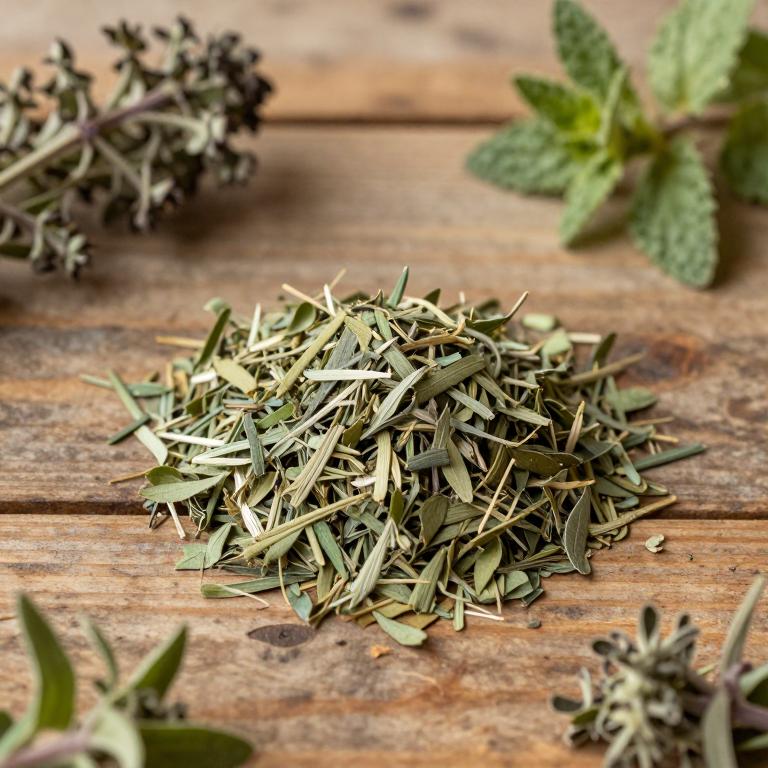
Names and Synonyms
Common Names
- Horse Mint
- Biblical mint
- silver mint
- wild mint
Scientific Names
Accepted name
Mentha longifoliaSynonyms
- Mentha spicata subsp. longifolia
- Mentha spicata var. longifolia
Regional and Traditional Names
Spanish:
- Hortelana salvaje
- Mentha bezdanensis
- Mentha spicata var longifolia
- Mentha norica
- Mentha sylvestris subsp schimperi
- Mentha mellifluens
- Mentha planitiensis
- Mastranzo fino
- Mentha syriaca
- Mentha capensis
- Mentha sylvestris subsp polyadena
- Mastranzo menor aromático
- Mentha laggeri
- Mentha sylvestris subsp kotschyana
- Mentha oblonga
- Mentha x arvensiaquatica f asperata
- Mastranzo menor aromatico
- Menta Selvatica
- Menta Selvatica
German:
- Rossminze
- Roß-Minze
- Roßminze
- Ross-Minze
- Roß-Minze
French:
- Menthe sylvestre
- Menthe à feuilles longues
- Menthe à Longues Feuilles
- Menthe Sylvestre
- Menthe Sylvestre
- Menthe à Longues Feuilles
- menthe chevaline
Sources: Wikidata, Catalogue of Life
Taxonomical Classification
This plant belongs to the kingdom Plantae and the phylum Streptophyta, falling under the class Equisetopsida and subclass Magnoliidae. Within the order Lamiales and the family Lamiaceae, it is classified under the genus Mentha. As a member of the Mentha genus, Mentha longifolia is recognized for its specific medicinal properties.
| Rank | Classification |
|---|---|
| Kingdom | Plantae |
| Phylum | Streptophyta |
| Class | Equisetopsida |
| Subclass | Magnoliidae |
| Order | Lamiales |
| Family | Lamiaceae |
| Genus | Mentha |
Sources: The World Checklist of Vascular Plants (WCVP)
Distribution
This plant exhibits a diverse range of habitats across several different European regions. In Northern Europe, its presence can be specifically noted within the country of Sweden. Moving into Middle Europe, the species is also found distributed throughout Austria and Belgium. Furthermore, its range extends across the territories of Czechia and Slovakia. Finally, the distribution continues through Germany, completing its footprint across these central landscapes.
| Region | Area |
|---|---|
| Northern Europe | Sweden |
| Middle Europe | Austria |
| Middle Europe | Belgium |
| Middle Europe | Czechia-Slovakia |
| Middle Europe | Germany |
| Middle Europe | Hungary |
| Middle Europe | Netherlands |
| Middle Europe | Poland |
| Middle Europe | Switzerland |
| Southwestern Europe | France |
Sources: The World Checklist of Vascular Plants (WCVP)
Botanical Identification
Ecology
The ecology of Mentha longifolia is characterized by its preference for highly moist and aquatic-adjacent environments, typically thriving in habitats such as canals, lakes, rivers, and swamps. This species demonstrates a broad adaptability to varying topographical positions, occupying a significant altitudinal gradient that begins at an elevation of 75 m AMSL and extends to a maximum of 3500 m AMSL. Such a wide elevational range allows the plant to colonize diverse ecological niches ranging from lowland riparian zones to high-altitude montane wetlands.
- Elevational range max:
- 3500 m AMSL
- Elevational range min:
- 75 m AMSL
- Habitat :
- canals, lakes, rivers, swamps
Life history
The life history of Mentha longifolia is characterized by its status as a perennial plant, allowing it to persist through multiple growing seasons. It functions biologically as a hemicryptophyte, a life form where the perennating buds are located at or just below the soil surface, protected by leaf litter or organic debris. This species exhibits a deciduous nature, shedding its foliage during unfavorable seasonal conditions to conserve energy and resources. Through these integrated biological traits, the plant maintains a stable presence within its ecological niche, cycling through periods of active vegetative growth and dormancy.
- Deciduousness :
- deciduous
- Life form :
- hemicryptophyte
- Lifecycle :
- perennial
Morphology
The morphology of Mentha longifolia is characterized by its growth form as a non-woody herb, manifesting as a self-supporting plant that does not function as a climber or a liana. It is an independent species, functioning neither as a parasite nor as an epiphyte, and is classified as a terrestrial plant. The stature of the plant is variable, with height measurements ranging from a minimum of 0.15 m to a maximum of 1.8 m, resulting in an average plant height of approximately 0.725 m.
- Aquatic :
- terrestrial
- Climber :
- self-supporting
- Epiphyte :
- terrestrial
- Growth form :
- herb
- Parasite :
- independent
- Plant height max:
- 1.8 m
- Plant height mean:
- 0.725 m
- Plant height min:
- 0.15 m
- Woodiness :
- non-woody
Physiology
The physiology of Mentha longifolia is characterized by a C3 photosynthetic pathway and a non-carnivorous nutritional strategy. The vegetative morphology is defined by elliptic-shaped leaves that exhibit significant dimensional variability, with leaf lengths ranging from a minimum of 1.5 cm to a maximum of 10 cm, and leaf widths spanning from 0.5 cm to 4 cm. These dimensions contribute to a mean leaf size of 17.77 cm². Furthermore, the plant demonstrates a mean Specific Leaf Area (SLA) of 286.35 cm²/g, reflecting its internal leaf structure and resource allocation efficiency.
- Carnivory :
- non-carnivorous
- Leaf form :
- elliptic
- Leaf length max:
- 10 cm
- Leaf length min:
- 1.5 cm
- Leaf size mean:
- 17.77 cm²
- Leaf width max:
- 4 cm
- Leaf width min:
- 0.5 cm
- Photosynthetic pathway :
- C3
- Specific Leaf Area (SLA) mean:
- 286.35 cm²/g
Reproduction
The reproduction of Mentha longifolia is characterized by a biotic pollination syndrome, specifically driven by insects, which facilitates the fertilization process as self-fertilization is noted to be absent. The flowering period typically begins in July and extends through September, featuring violet-colored flowers that range in length from 0.3 cm to 0.4 cm. These flowers are arranged in inflorescences with lengths varying between 0.02 m and 0.1 m. Following successful pollination, the plant produces indehiscent fruits categorized as achenes. These small fruits measure between 0.07 cm and 0.08 cm in length and 0.05 cm and 0.06 cm in width. The resulting seeds are minute, with a mean mass of approximately 6.5075e-05 g, ranging from a minimum of 1e-05 g to a maximum of 0.00012 g. Dispersal of these seeds is primarily hydrochorous, utilizing water as the medium for movement, and the plant does not exhibit asexual reproduction.
- Dehiscence :
- indehiscent
- Dispersal syndrome :
- hydrochorous
- Flower colour :
- violet
- Flower length max:
- 0.4 cm
- Flower length min:
- 0.3 cm
- Flowering time :
- Jul
- Flowering time :
- Sep
- Fruit length max:
- 0.08 cm
- Fruit length min:
- 0.07 cm
- Fruit type :
- achene
- Fruit width max:
- 0.06 cm
- Fruit width min:
- 0.05 cm
- Inflorescence length max:
- 0.1 m
- Inflorescence length min:
- 0.02 m
- Pollination syndrome :
- insect
- Pollination syndrome :
- biotic
- Reproduction asexual :
- absent
- Seed mass max:
- 0.00012 g
- Seed mass mean:
- 6.5075e-05 g
- Seed mass min:
- 1e-05 g
- Self fertilization :
- absent
Sources: Global Inventory of Floras and Traits (GIFT)
Plant Parts
Mentha longifolia has 4 reported plant parts identified across 8 scientific publications and several other databases that are studied for medicinal purposes. The most consistently reported plant part include leaf, flower, root, stem.
| Plant part | Supporting sources | Consensus |
|---|---|---|
| Leaf | 5 supporting sources | ★★★☆☆ |
| Flower | 1 supporting sources | ★☆☆☆☆ |
| Root | 1 supporting sources | ★☆☆☆☆ |
| Stem | 1 supporting sources | ★☆☆☆☆ |
Leaf
- Journal of wound care
- BioMed research international
- BMC microbiology
- Science progress
- Scientific reports
Flower
- Journal of ethnobiology and ethnomedicine
Root
- BMC microbiology
Stem
- BMC microbiology
Chemicals
Mentha longifolia has 157 reported phytochemicals identified across 8 scientific publications and several other databases. The most consistently reported chemicals include Pulegone, Flavonoids, rosmarinic acid, 1,8-Cineole, MENTHOL.
| Chemical | Supporting sources | Consensus |
|---|---|---|
| Pulegone | 9 supporting sources | ★★★★☆ |
| Flavonoids | 4 supporting sources | ★★☆☆☆ |
| rosmarinic acid | 4 supporting sources | ★★☆☆☆ |
| 1,8-Cineole | 3 supporting sources | ★★☆☆☆ |
| MENTHOL | 3 supporting sources | ★★☆☆☆ |
| Menthyl acetate | 3 supporting sources | ★★☆☆☆ |
| Piperitenone oxide | 3 supporting sources | ★★☆☆☆ |
| Piperitone oxide | 3 supporting sources | ★★☆☆☆ |
| THYMOL | 3 supporting sources | ★★☆☆☆ |
| CD | 2 supporting sources | ★☆☆☆☆ |
Pulegone
- Dr. Duke
- BioMed research international
- International journal of phytoremediation
- BMC veterinary research
- Pakistan journal of pharmaceutical sciences
View 4 additional sources
- Veterinary research forum : an international quarterly journal
- Plants (Basel, Switzerland)
- Molecules (Basel, Switzerland)
- PloS one
Flavonoids
- Scientifica
- Journal of traditional Chinese medicine = Chung i tsa chih ying wen pan
- Scientific reports
- Journal of ethnopharmacology
rosmarinic acid
- Dr. Duke
- Molecules (Basel, Switzerland)
- Frontiers in nutrition
- Chemistry & biodiversity
1,8-Cineole
- Dr. Duke
- Plants (Basel, Switzerland)
- PloS one
MENTHOL
- Dr. Duke
- Plants (Basel, Switzerland)
- BMC complementary medicine and therapies
Menthyl acetate
- Dr. Duke
- Plants (Basel, Switzerland)
- Pharmaceuticals (Basel, Switzerland)
Piperitenone oxide
- Dr. Duke
- Fitoterapia
- PloS one
Piperitone oxide
- Dr. Duke
- Fitoterapia
- Molecules (Basel, Switzerland)
THYMOL
- Dr. Duke
- Plants (Basel, Switzerland)
- Pharmaceuticals (Basel, Switzerland)
CD
- International journal of phytoremediation
- Pakistan journal of pharmaceutical sciences
Activities
Mentha longifolia has 352 reported activities identified across 8 scientific publications and several other databases. The most consistently reported activities include Antioxidant, Antibacterial, Antimicrobial, Antimutagenic, Anticancer.
| Activity | Supporting sources | Consensus |
|---|---|---|
| Antioxidant | 8 supporting sources | ★★★★☆ |
| Antibacterial | 5 supporting sources | ★★★☆☆ |
| Antimicrobial | 5 supporting sources | ★★★☆☆ |
| Antimutagenic | 3 supporting sources | ★★☆☆☆ |
| Anticancer | 2 supporting sources | ★☆☆☆☆ |
| Anticholinesterase | 2 supporting sources | ★☆☆☆☆ |
| Antifungal | 2 supporting sources | ★☆☆☆☆ |
| Antiinflammatory | 2 supporting sources | ★☆☆☆☆ |
| Antinociceptive | 2 supporting sources | ★☆☆☆☆ |
| Antitumor | 2 supporting sources | ★☆☆☆☆ |
Antioxidant
- Dr. Duke
- Scientifica
- Journal of traditional Chinese medicine = Chung i tsa chih ying wen pan
- Molecules (Basel, Switzerland)
- Plants (Basel, Switzerland)
View 3 additional sources
- Scientific reports
- Frontiers in nutrition
- Journal of ethnopharmacology
Antibacterial
- Dr. Duke
- BioMed research international
- Scientific reports
- ACS omega
- Veterinary research forum : an international quarterly journal
Antimicrobial
- Journal of traditional Chinese medicine = Chung i tsa chih ying wen pan
- Plants (Basel, Switzerland)
- Annals of clinical microbiology and antimicrobials
- Frontiers in nutrition
- ACS omega
Antimutagenic
- Dr. Duke
- Journal of traditional Chinese medicine = Chung i tsa chih ying wen pan
- Pakistan journal of biological sciences : PJBS
Anticancer
- Dr. Duke
- Pakistan journal of biological sciences : PJBS
Anticholinesterase
- Dr. Duke
- BioMed research international
Antifungal
- Scientifica
- ACS omega
Antiinflammatory
- Dr. Duke
- Journal of ethnopharmacology
Antinociceptive
- Dr. Duke
- Journal of traditional Chinese medicine = Chung i tsa chih ying wen pan
Antitumor
- Dr. Duke
- Frontiers in nutrition
Conditions
Mentha longifolia has 49 reported investigations on conditions identified across 8 scientific publications and several other databases. The most consistently reported conditions include oligomenorrhea, Escherichia coli, Staphylococcus aureus, amenorrhea, antioxidant.
| Condition | Supporting sources | Consensus |
|---|---|---|
| Oligomenorrhea | 3 supporting sources | ★★☆☆☆ |
| Escherichia coli | 2 supporting sources | ★☆☆☆☆ |
| Staphylococcus aureus | 2 supporting sources | ★☆☆☆☆ |
| Amenorrhea | 2 supporting sources | ★☆☆☆☆ |
| Antioxidant | 2 supporting sources | ★☆☆☆☆ |
| Gastrointestinal disorders | 2 supporting sources | ★☆☆☆☆ |
| Alzheimer's disease | 1 supporting sources | ★☆☆☆☆ |
| Bacillus cereus | 1 supporting sources | ★☆☆☆☆ |
| Dna damage | 1 supporting sources | ★☆☆☆☆ |
| Diabetic kidney disease | 1 supporting sources | ★☆☆☆☆ |
Oligomenorrhea
- Current drug discovery technologies
- Journal of traditional Chinese medicine = Chung i tsa chih ying wen pan
- BioMed research international
Escherichia coli
- Plants (Basel, Switzerland)
- Molecules (Basel, Switzerland)
Staphylococcus aureus
- Plants (Basel, Switzerland)
- Molecules (Basel, Switzerland)
Amenorrhea
- Journal of traditional Chinese medicine = Chung i tsa chih ying wen pan
- BioMed research international
Antioxidant
- Scientific reports
- Frontiers in nutrition
Gastrointestinal disorders
- Journal of traditional Chinese medicine = Chung i tsa chih ying wen pan
- Journal of ethnopharmacology
Alzheimer's disease
- BioMed research international
Bacillus cereus
- Plants (Basel, Switzerland)
Dna damage
- Pakistan journal of biological sciences : PJBS
Diabetic kidney disease
- Plant foods for human nutrition (Dordrecht, Netherlands)
Preparations
Mentha longifolia has 25 reported preparations identified across 8 scientific publications and several other databases. The most consistently reported preparations include essential oil, essential oils, methanolic extract, CeO
| Preparation | Supporting sources | Consensus |
|---|---|---|
| Essential oil | 4 supporting sources | ★★☆☆☆ |
| Essential oils | 3 supporting sources | ★★☆☆☆ |
| Methanolic extract | 2 supporting sources | ★☆☆☆☆ |
| Ceo |
1 supporting sources | ★☆☆☆☆ |
| Eos | 1 supporting sources | ★☆☆☆☆ |
| M extract | 1 supporting sources | ★☆☆☆☆ |
| M. longifolia essential oils | 1 supporting sources | ★☆☆☆☆ |
| Mentha longifolia extract | 1 supporting sources | ★☆☆☆☆ |
| Mentha longifolia leaf extract | 1 supporting sources | ★☆☆☆☆ |
| Aqueous fraction | 1 supporting sources | ★☆☆☆☆ |
Essential oil
- Iranian journal of microbiology
- Fitoterapia
- Molecules (Basel, Switzerland)
- BMC complementary medicine and therapies
Essential oils
- BioMed research international
- Veterinary research forum : an international quarterly journal
- Natural product communications
Methanolic extract
- Plant foods for human nutrition (Dordrecht, Netherlands)
- Pakistan journal of biological sciences : PJBS
Ceonps
- ACS omega
Eos
- Plants (Basel, Switzerland)
M extract
- Journal of wound care
M. longifolia essential oils
- Molecules (Basel, Switzerland)
Mentha longifolia extract
- Journal of wound care
Mentha longifolia leaf extract
- Journal of wound care
Aqueous fraction
- Phytotherapy research : PTR