Australian mint
Mentha australis · Accepted scientific name
Scientific literature: Very Sparse (5 studies) · ★☆☆☆☆
Australian mint, scientifically known as Mentha australis, is a native perennial herb celebrated for its refreshing aroma and therapeutic potential. Found primarily in coastal regions, this robust plant offers distinctive cooling properties. Often utilized in traditional remedies, it serves as a versatile botanical resource for wellness and natural aromatherapy.
- Family
- Lamiaceae
- Native range
- Australasia
- Parts used
- Not available
- Common names
- Australian Mint · River Mint · 1 more
- Scientific synonyms
- Micromeria Australis
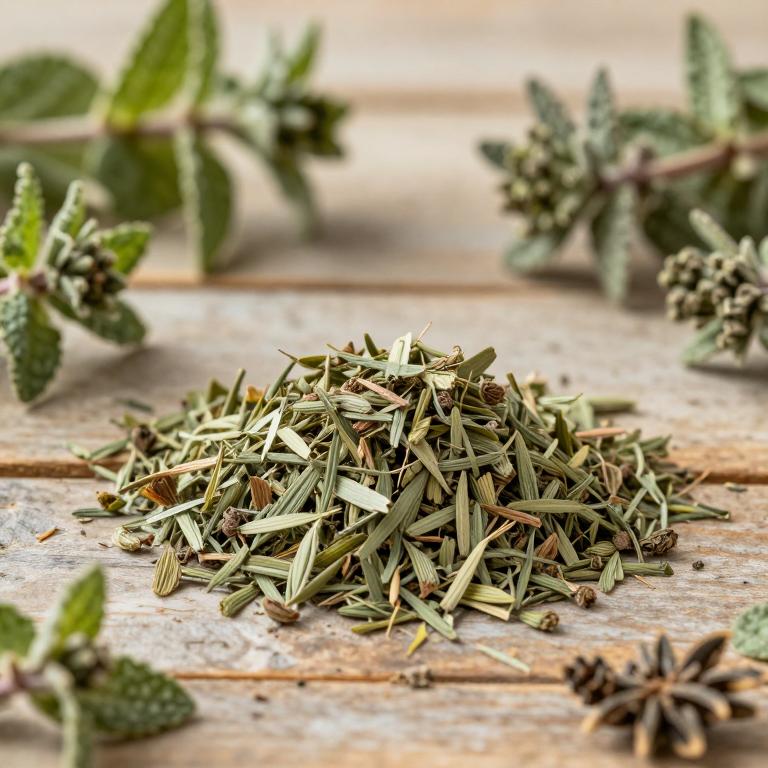
Names and Synonyms
Common Names
- Australian mint
- river mint
- Native River Mint
Scientific Names
Accepted name
Mentha australisSynonyms
- Micromeria australis
Regional and Traditional Names
Spanish:
- Micromeria australis
Sources: Wikidata, Catalogue of Life
Taxonomical Classification
This plant belongs to the kingdom Plantae within the phylum Streptophyta and the class Equisetopsida. It is further classified under the subclass Magnoliidae and the order Lamiales, falling into the family Lamiaceae. Finally, it is situated within the genus Mentha under the species name Mentha australis.
| Rank | Classification |
|---|---|
| Kingdom | Plantae |
| Phylum | Streptophyta |
| Class | Equisetopsida |
| Subclass | Magnoliidae |
| Order | Lamiales |
| Family | Lamiaceae |
| Genus | Mentha |
Sources: The World Checklist of Vascular Plants (WCVP)
Distribution
This plant is widely distributed across various regions throughout the Australian continent. Specifically, its presence is recorded within the state of New South Wales. It can also be found growing in the tropical landscapes of the Northern Territory. Furthermore, the species extends its range into the subtropical areas of Queensland. Finally, its geographical footprint includes the southern regions of South Australia and the island of Tasmania.
| Region | Area |
|---|---|
| Australia | New South Wales |
| Australia | Northern Territory |
| Australia | Queensland |
| Australia | South Australia |
| Australia | Tasmania |
| Australia | Victoria |
| New Zealand | New Zealand North |
Sources: The World Checklist of Vascular Plants (WCVP)
Botanical Identification
Ecology
The ecology of Mentha australis is characterized by its preference for lowland environments, where it typically flourishes in moist, nutrient-rich soils. This species is frequently found in riparian zones, such as the margins of rivers, streams, and wetlands, as well as in damp depressions and marshy areas. It thrives in habitats that provide consistent water availability and high humidity, often colonizing disturbed ground or edges of aquatic ecosystems. By occupying these lowland niches, the plant plays a role in stabilizing soil along watercourses and providing microhabitats for various local fauna within its damp, temperate ecological landscape.
- Habitat :
- Lowland
Life history
The life history of Mentha australis is characterized by its status as a perennial plant, allowing it to persist through multiple growing seasons. As a perennial species, it establishes a robust presence in its habitat, typically utilizing underground rhizomes or stolons to facilitate vegetative spread and ensure survival during unfavorable environmental conditions. This perennial nature enables the plant to undergo seasonal cycles of growth, flowering, and dormancy, often forming dense colonies or mats through its creeping growth habit. While the individual stems may undergo seasonal senescence, the established root systems remain active, providing the biological foundation for continuous regeneration and long-term establishment within its ecological niche.
- Lifecycle :
- perennial
Morphology
The morphology of Mentha australis is characterized by its growth form as a non-woody herb that exhibits a self-supporting structure. As a non-climber, the plant maintains a sturdy, upright, or spreading habit, reaching a maximum plant height of approximately 0.3 m. It functions as an independent organism, lacking any parasitic or epiphytic tendencies, and is primarily terrestrial in its habitat, though it can occupy semiaquatic or aquatic environments depending on local moisture levels.
- Aquatic :
- terrestrial
- Climber :
- self-supporting
- Epiphyte :
- terrestrial
- Growth form :
- herb
- Parasite :
- independent
- Plant height max:
- 0.3 m
- Woodiness :
- non-woody
Physiology
The physiological structure of Mentha australis is characterized by specific morphological parameters that define its leaf architecture and photosynthetic surface area. The foliage exhibits a consistent leaf width, maintaining a highly stable mean, minimum, and maximum value of 0.8 cm, which suggests a uniform lateral expansion across the leaf blade. In terms of longitudinal development, the leaves demonstrate a capacity for growth reaching a maximum length of 3.5 cm, providing the necessary surface area for gas exchange and light absorption essential to its metabolic processes. This specific ratio between the stabilized width and the variable length influences the plant's overall transpiration rates and its ability to optimize nutrient transport through its vascular tissues.
- Leaf length max:
- 3.5 cm
- Leaf width mean:
- 0.8 cm
Reproduction
Reproduction in Mentha australis occurs through both sexual and asexual mechanisms, though its ability for asexual reproduction is a prominent feature of its growth strategy. Asexual reproduction is present, primarily facilitated through the development of underground rhizomes and stolons that allow the plant to spread vegetatively across a substrate, forming dense colonies. This vegetative propagation enables the plant to colonize habitats effectively without the immediate need for seed production. Complementing this, sexual reproduction is also possible through the production of flowers, which, when successfully pollinated, result in the dispersal of seeds to establish new individuals. Thus, the reproductive profile of this species includes both the presence and absence of specific reliance on a single method, utilizing a dual approach to ensure both local expansion and genetic diversity.
- Reproduction asexual :
- present
Sources: Global Inventory of Floras and Traits (GIFT)
Chemicals
Mentha australis has 5 reported phytochemicals identified across 0 scientific publications and several other databases. The most consistently reported chemicals include CHLOROGENIC ACID, Sagerinic acid, caffeic acid, quinic acid, rosmarinic acid.
| Chemical | Supporting sources | Consensus |
|---|---|---|
| CHLOROGENIC ACID | 1 supporting sources | ★☆☆☆☆ |
| Sagerinic acid | 1 supporting sources | ★☆☆☆☆ |
| caffeic acid | 1 supporting sources | ★☆☆☆☆ |
| quinic acid | 1 supporting sources | ★☆☆☆☆ |
| rosmarinic acid | 1 supporting sources | ★☆☆☆☆ |
CHLOROGENIC ACID
- Plants (Basel, Switzerland)
Sagerinic acid
- Plants (Basel, Switzerland)
caffeic acid
- Plants (Basel, Switzerland)
quinic acid
- Plants (Basel, Switzerland)
rosmarinic acid
- Plants (Basel, Switzerland)