Memecylon wightii
Memecylon wightii · Accepted scientific name
Scientific literature: Very Sparse (6 studies) · ★☆☆☆☆
Memecylon wightii, is a versatile medicinal plant native to African tropical forests. Highly valued in traditional medicine, its leaves and bark possess significant bioactive properties. Often utilized to treat various ailments, including skin infections and inflammatory conditions, this species offers promising potential for modern pharmacological research and natural therapeutics.
- Family
- Melastomataceae
- Native range
- Asia-Tropical
- Parts used
- Leaf
- Common names
- Not available
- Scientific synonyms
- Memecylon Wightii Var. Cylindricum
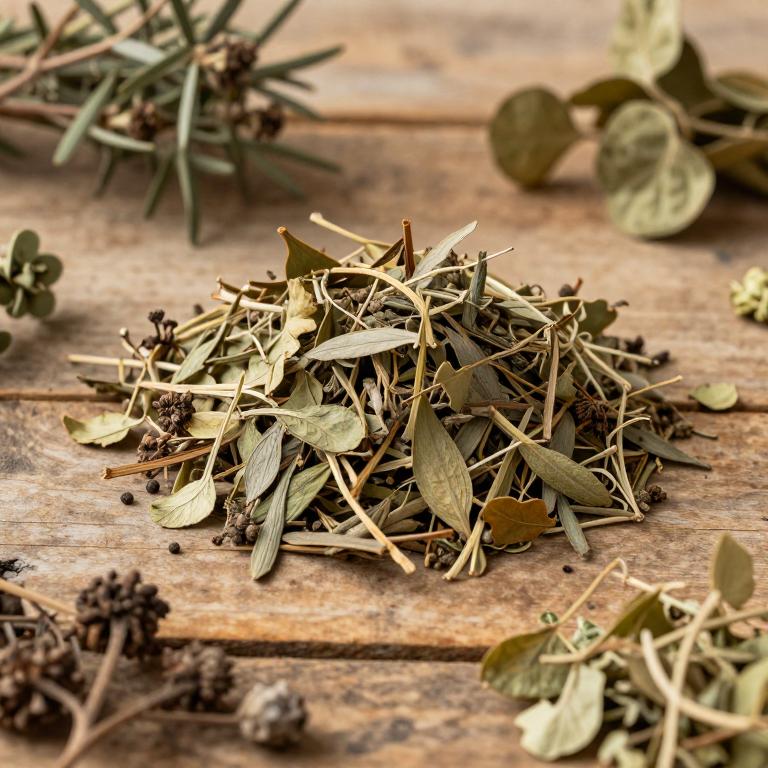
Names and Synonyms
Scientific Names
Accepted name
Memecylon wightiiSynonyms
- Memecylon wightii var. cylindricum
Sources: Wikidata
Taxonomical Classification
This plant belongs to the kingdom Plantae and the phylum Streptophyta. Within the class Equisetopsida and subclass Magnoliidae, it is categorized under the order Myrtales and the family Melastomataceae. Finally, it is classified under the genus Memecylon.
| Rank | Classification |
|---|---|
| Kingdom | Plantae |
| Phylum | Streptophyta |
| Class | Equisetopsida |
| Subclass | Magnoliidae |
| Order | Myrtales |
| Family | Melastomataceae |
| Genus | Memecylon |
Sources: The World Checklist of Vascular Plants (WCVP)
Distribution
This plant, known scientifically as Memecylon wightii, exhibits a specific distribution pattern within the Asian continent. Its presence is notably documented across the vast expanse of the Indian Subcontinent. Within this region, the species can be found growing in the diverse landscapes of India. Furthermore, its geographical range extends across the ocean to include the island nation of Sri Lanka. Consequently, these two countries represent the primary locations for its natural occurrence.
| Region | Area |
|---|---|
| Indian Subcontinent | India |
| Indian Subcontinent | Sri Lanka |
Sources: The World Checklist of Vascular Plants (WCVP)
Botanical Identification
Morphology
The morphology of Memecylon wightii is characterized by its distinct growth habit as a woody climber, functioning as both a liana and a vine. In terms of its structural support mechanisms, the plant exhibits a self-supporting nature, though it utilizes its climbing capabilities to navigate its environment. Depending on the specific ecological context and available structural hosts, its climbing behavior can be classified as both obligatory and facultative, allowing it to function as a self-supporting organism while simultaneously employing climbing strategies to ascend towards light sources.
- Climber :
- self-supporting
Sources: Global Inventory of Floras and Traits (GIFT)
Plant Parts
Memecylon wightii has 1 reported plant parts identified across 1 scientific publications and several other databases that are studied for medicinal purposes. The most consistently reported plant part include leaf.
| Plant part | Supporting sources | Consensus |
|---|---|---|
| Leaf | 1 supporting sources | ★☆☆☆☆ |
Leaf
- Pharmacognosy research
Chemicals
Memecylon wightii has 5 reported phytochemicals identified across 1 scientific publications and several other databases. The most consistently reported chemicals include Acid phosphatase, Alcohol dehydrogenase, Alkaline phosphatase, Esterase, Peroxidase.
| Chemical | Supporting sources | Consensus |
|---|---|---|
| Acid phosphatase | 1 supporting sources | ★☆☆☆☆ |
| Alcohol dehydrogenase | 1 supporting sources | ★☆☆☆☆ |
| Alkaline phosphatase | 1 supporting sources | ★☆☆☆☆ |
| Esterase | 1 supporting sources | ★☆☆☆☆ |
| Peroxidase | 1 supporting sources | ★☆☆☆☆ |
Acid phosphatase
- Pharmacognosy research
Alcohol dehydrogenase
- Pharmacognosy research
Alkaline phosphatase
- Pharmacognosy research
Esterase
- Pharmacognosy research
Peroxidase
- Pharmacognosy research
Preparations
Memecylon wightii has 1 reported preparations identified across 1 scientific publications and several other databases. The most consistently reported preparations include crude enzyme extract.
| Preparation | Supporting sources | Consensus |
|---|---|---|
| Crude enzyme extract | 1 supporting sources | ★☆☆☆☆ |
Crude enzyme extract
- Pharmacognosy research