Memecylon umbellatum
Memecylon umbellatum · Accepted scientific name
Scientific literature: Very Sparse (8 studies) · ★☆☆☆☆
Memecylon umbellatum, is a versatile evergreen shrub native to the tropical forests of Africa. Renowned in traditional medicine, this plant is widely utilized for its diverse therapeutic properties, including its ability to treat skin ailments, digestive issues, and inflammatory conditions, making it a significant botanical resource in ethnopharmacology.
- Family
- Melastomataceae
- Native range
- Asia-Tropical
- Parts used
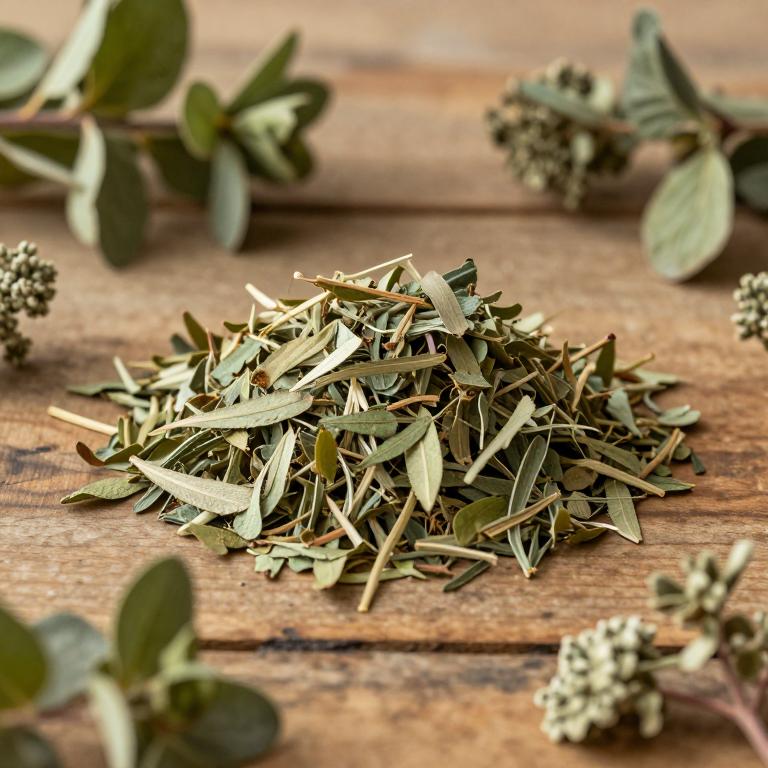
- Leaf
- Common names
- Not available
- Scientific synonyms
- Not available
Names and Synonyms
Scientific Names
Accepted name
Memecylon umbellatumSources: Wikidata, Catalogue of Life
Taxonomical Classification
This plant belongs to the kingdom Plantae and the phylum Streptophyta, falling under the class Equisetopsida and subclass Magnoliidae. It is further classified within the order Myrtales and the family Melastomataceae. Finally, it is categorized under the genus Memecylon, with the specific species name being umbellatum.
| Rank | Classification |
|---|---|
| Kingdom | Plantae |
| Phylum | Streptophyta |
| Class | Equisetopsida |
| Subclass | Magnoliidae |
| Order | Myrtales |
| Family | Melastomataceae |
| Genus | Memecylon |
Sources: The World Checklist of Vascular Plants (WCVP)
Distribution
This plant exhibits a diverse geographical distribution across several key regions of Asia. Within the Indian Subcontinent, it can be found growing in India and the state of Assam. Its presence also extends to the island nation of Sri Lanka. Moving toward the Indo-China region, the species is documented in Cambodia. Additionally, its range includes the Andaman Islands.
| Region | Area |
|---|---|
| Indian Subcontinent | Assam |
| Indian Subcontinent | India |
| Indian Subcontinent | Sri Lanka |
| Indo-China | Andaman Is. |
| Indo-China | Cambodia |
| Indo-China | Myanmar |
| Indo-China | Nicobar Is. |
| Indo-China | Vietnam |
| Malesia | Jawa |
| Malesia | Malaya |
Sources: The World Checklist of Vascular Plants (WCVP)
Botanical Identification
Morphology
The morphology of Memecylon umbellatum is characterized by its diverse growth habits and specialized physiological adaptations. It functions as a versatile plant that can exist across various moisture gradients, ranging from aquatic and semiaquatic environments to terrestrial habitats. Structurally, the plant exhibits climbing tendencies, manifesting as both a liana and a vine, though it possesses the capacity to be self-supporting rather than being an obligatory climber. In terms of its nutritional strategy, it is classified as an independent organism, meaning it does not function as an obligatory or facultative parasite, allowing it to sustain itself autonomously within its ecosystem.
- Aquatic :
- terrestrial
- Climber :
- self-supporting
- Parasite :
- independent
Sources: Global Inventory of Floras and Traits (GIFT)
Plant Parts
Memecylon umbellatum has 1 reported plant parts identified across 1 scientific publications and several other databases that are studied for medicinal purposes. The most consistently reported plant part include leaf.
| Plant part | Supporting sources | Consensus |
|---|---|---|
| Leaf | 1 supporting sources | ★☆☆☆☆ |
Leaf
- Pharmacognosy research
Chemicals
Memecylon umbellatum has 5 reported phytochemicals identified across 1 scientific publications and several other databases. The most consistently reported chemicals include Acid phosphatase, Alcohol dehydrogenase, Alkaline phosphatase, Esterase, Peroxidase.
| Chemical | Supporting sources | Consensus |
|---|---|---|
| Acid phosphatase | 1 supporting sources | ★☆☆☆☆ |
| Alcohol dehydrogenase | 1 supporting sources | ★☆☆☆☆ |
| Alkaline phosphatase | 1 supporting sources | ★☆☆☆☆ |
| Esterase | 1 supporting sources | ★☆☆☆☆ |
| Peroxidase | 1 supporting sources | ★☆☆☆☆ |
Acid phosphatase
- Pharmacognosy research
Alcohol dehydrogenase
- Pharmacognosy research
Alkaline phosphatase
- Pharmacognosy research
Esterase
- Pharmacognosy research
Peroxidase
- Pharmacognosy research
Conditions
Memecylon umbellatum has 2 reported investigations on conditions identified across 1 scientific publications and several other databases. The most consistently reported conditions include Acinetobacter baumannii, breast cancer.
| Condition | Supporting sources | Consensus |
|---|---|---|
| Acinetobacter baumannii | 1 supporting sources | ★☆☆☆☆ |
| Breast cancer | 1 supporting sources | ★☆☆☆☆ |
Acinetobacter baumannii
- Saudi journal of biological sciences
Breast cancer
- Saudi journal of biological sciences
Preparations
Memecylon umbellatum has 1 reported preparations identified across 1 scientific publications and several other databases. The most consistently reported preparations include crude enzyme extract.
| Preparation | Supporting sources | Consensus |
|---|---|---|
| Crude enzyme extract | 1 supporting sources | ★☆☆☆☆ |
Crude enzyme extract
- Pharmacognosy research