Tangkal bintenoo
Melochia umbellata · Accepted scientific name
Scientific literature: Very Sparse (13 studies) · ★☆☆☆☆
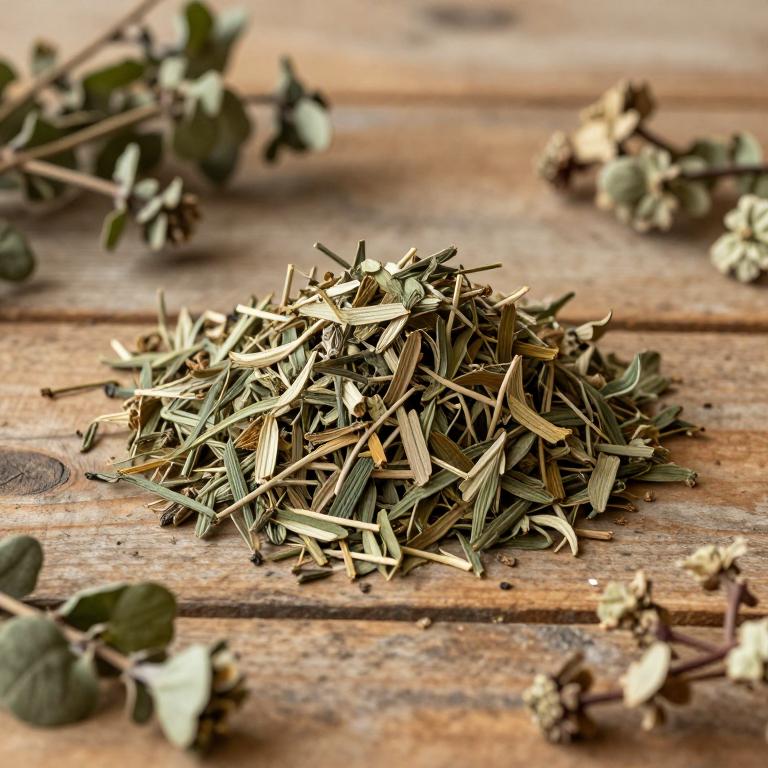
Tangkal bintenoo, scientifically known as Melochia umbellata, is a versatile tropical plant prized in traditional medicine and culinary practices. Often recognized by its broad, heart-shaped leaves, this nutritious herb offers significant antioxidant properties. It is widely utilized to support digestive health and provide essential vitamins in various regional diets.
Names and Synonyms
Common Names
- Tangkal bintenoo
- toilet paper tree
- hierba del soldado
Scientific Names
Accepted name
Melochia umbellataSynonyms
- Visenia velutina
- Riedlea velutina
- Aleurodendron album
- Visenia tiliifolia
- Melochia velutina
- Riedlea tiliifolia
- Visenia javanica
- Melochia indica
- Melochia arborea
- Riedlea aleurodendron
- Melochia indica var. deglabrata
- Melochia odorata var. schlechteri
- Visenia umbellata
- Visenia alba
- Visenia tomentosa
- Visenia indica
- Hypericum pentandrum
Regional and Traditional Names
German:
- Melochia arborea
- Melochia indica
Sources: Wikidata, Catalogue of Life
Taxonomical Classification
This plant belongs to the kingdom Plantae and is classified within the phylum Streptophyta and the class Equisetopsida. Following its taxonomic descent through the subclass Magnoliidae and the order Malvales, it is a member of the family Malvaceae. It is specifically identified under the genus Melochia as Melochia umbellata.
| Rank | Classification |
|---|---|
| Kingdom | Plantae |
| Phylum | Streptophyta |
| Class | Equisetopsida |
| Subclass | Magnoliidae |
| Order | Malvales |
| Family | Malvaceae |
| Genus | Melochia |
Sources: The World Checklist of Vascular Plants (WCVP)
Distribution
This plant exhibits a widespread distribution across several key regions of South and Southeast Asia. Within the Indian Subcontinent, it can be found growing in Bangladesh, India, and Sri Lanka. Its range also extends into the Indo-China region, where it is documented in Cambodia. Additionally, the species is known to inhabit parts of Laos. These locations highlight the plant's preference for the tropical environments found across these specific territories.
| Region | Area |
|---|---|
| Indian Subcontinent | Bangladesh |
| Indian Subcontinent | India |
| Indian Subcontinent | Sri Lanka |
| Indo-China | Cambodia |
| Indo-China | Laos |
| Indo-China | Myanmar |
| Indo-China | Nicobar Is. |
| Indo-China | Thailand |
| Indo-China | Vietnam |
| Malesia | Borneo |
Sources: The World Checklist of Vascular Plants (WCVP)
Botanical Identification
Life history
The life history of Meloichia umbellaata is characterized by its status as a perennial plant, though its growth patterns can exhibit variable tendencies depending on environmental conditions. As a perennial species, it possesses the capacity to persist through multiple growing seasons, establishing a robust presence in its habitat. Throughout its life cycle, the plant undergoes various developmental stages, transitioning from initial seedling establishment to a mature reproductive phase where it produces its characteristic umbel-like inflorescences. Its longevity allows it to adapt to seasonal fluctuations, maintaining its biological functions over an extended period compared to strictly annual or biennial species.
- Lifecycle :
- perennial
Morphology
The morphology of Meloia umbellata is characterized by a woody growth form that can manifest as either a shrub or a tree. This species is primarily terrestrial in its habitat, though it can occupy niches ranging from semiaquatic to aquatic environments. As a self-supporting plant, it does not function as a climber or an epiphyte, maintaining a terrestrial existence rather than growing upon other structures. It is an independent organism, exhibiting no parasitic tendencies. In terms of stature, the plant exhibits significant variation in size, with a minimum height of 1.5 meters and a maximum potential height reaching up to 15 meters.
- Aquatic :
- terrestrial
- Climber :
- self-supporting
- Epiphyte :
- terrestrial
- Growth form :
- tree
- Growth form :
- shrub
- Parasite :
- independent
- Plant height max:
- 15 m
- Plant height min:
- 1.5 m
- Woodiness :
- woody
Physiology
The physiology of Melochia umbellata is characterized by a C3 photosynthetic pathway, which dictates its carbon fixation processes and metabolic efficiency within its ecological niche. Morphologically, its foliar development exhibits significant variability in size, with leaf length typically ranging from a minimum of 9 cm to a maximum of 30 cm. This variation in leaf dimensions reflects the plant's adaptive capacity to manage surface area for light interception and transpiration regulation throughout its growth stages.
- Leaf length max:
- 30 cm
- Leaf length min:
- 9 cm
- Photosynthetic pathway :
- C3
Reproduction
The reproduction of Meloia umbellata is characterized by the production of small fruits that typically measure between 0.8 cm and 1 cm in length. Within these fruits, the plant produces seeds that range in size from a minimum of 2 mm to a maximum of 3.5 mm in length. Regarding the movement of its offspring, the species exhibits an anemochorous dispersal syndrome, relying on wind currents to facilitate the distribution of its reproductive units across the environment.
- Dispersal syndrome :
- anemochorous
- Fruit length max:
- 1 cm
- Fruit length min:
- 0.8 cm
- Seed length max:
- 3.5 mm
- Seed length min:
- 2 mm
Sources: Global Inventory of Floras and Traits (GIFT)
Plant Parts
Melochia umbellata has 1 reported plant parts identified across 2 scientific publications and several other databases that are studied for medicinal purposes. The most consistently reported plant part include leaf.
| Plant part | Supporting sources | Consensus |
|---|---|---|
| Leaf | 2 supporting sources | ★☆☆☆☆ |
Leaf
- Chemistry & biodiversity
- Pharmaceutical science advances
Chemicals
Melochia umbellata has 5 reported phytochemicals identified across 2 scientific publications and several other databases. The most consistently reported chemicals include Flavonoids, Phenols, Pyrimidones, Saponins, Terpenoids.
| Chemical | Supporting sources | Consensus |
|---|---|---|
| Flavonoids | 1 supporting sources | ★☆☆☆☆ |
| Phenols | 1 supporting sources | ★☆☆☆☆ |
| Pyrimidones | 1 supporting sources | ★☆☆☆☆ |
| Saponins | 1 supporting sources | ★☆☆☆☆ |
| Terpenoids | 1 supporting sources | ★☆☆☆☆ |
Flavonoids
- Pharmaceutical science advances
Phenols
- Pharmaceutical science advances
Pyrimidones
- Chemistry & biodiversity
Saponins
- Pharmaceutical science advances
Terpenoids
- Chemistry & biodiversity
Activities
Melochia umbellata has 3 reported activities identified across 2 scientific publications and several other databases. The most consistently reported activities include Antioxidant, Antiplasmodial, Cytotoxic.
| Activity | Supporting sources | Consensus |
|---|---|---|
| Antioxidant | 1 supporting sources | ★☆☆☆☆ |
| Antiplasmodial | 1 supporting sources | ★☆☆☆☆ |
| Cytotoxic | 1 supporting sources | ★☆☆☆☆ |
Antioxidant
- Chemistry & biodiversity
Antiplasmodial
- Chemistry & biodiversity
Cytotoxic
- Chemistry & biodiversity
Conditions
Melochia umbellata has 3 reported investigations on conditions identified across 2 scientific publications and several other databases. The most consistently reported conditions include Plasmodium falciparum, malaria, parasitemia.
| Condition | Supporting sources | Consensus |
|---|---|---|
| Plasmodium falciparum | 1 supporting sources | ★☆☆☆☆ |
| Malaria | 1 supporting sources | ★☆☆☆☆ |
| Parasitemia | 1 supporting sources | ★☆☆☆☆ |
Plasmodium falciparum
- Chemistry & biodiversity
Malaria
- Pharmaceutical science advances
Parasitemia
- Pharmaceutical science advances
Preparations
Melochia umbellata has 3 reported preparations identified across 2 scientific publications and several other databases. The most consistently reported preparations include MULAE, aqueous leaf extract, leaf extract.
| Preparation | Supporting sources | Consensus |
|---|---|---|
| Mulae | 1 supporting sources | ★☆☆☆☆ |
| Aqueous leaf extract | 1 supporting sources | ★☆☆☆☆ |
| Leaf extract | 1 supporting sources | ★☆☆☆☆ |
Mulae
- Chemistry & biodiversity
Aqueous leaf extract
- Pharmaceutical science advances
Leaf extract
- Chemistry & biodiversity