bee herb
Melissa officinalis subsp. officinalis · Accepted scientific name
Scientific literature: Very Sparse (15 studies) · ★☆☆☆☆
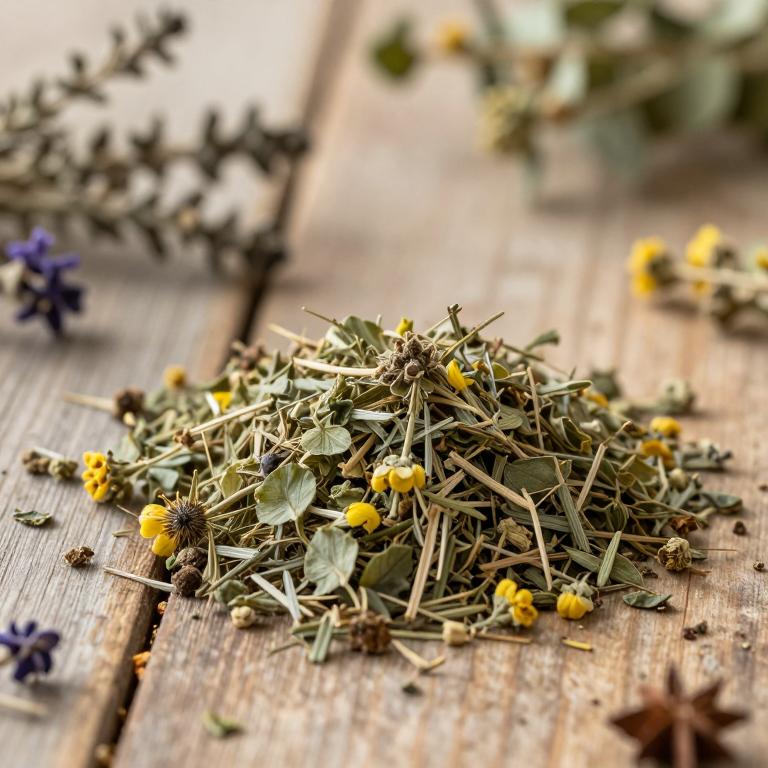
Bee herb, scientifically known as Melissa officinalis subsp. officinalis, is a fragrant perennial herb belonging to the mint family. Renowned for its calming properties, it is widely used in traditional medicine to alleviate anxiety and digestive issues. Its bright leaves and citrus scent make it a staple in herbal teas.
Names and Synonyms
Common Names
- bee herb
- common balm
- garden balm
- lemon balm
- sweet balm
- tea balm
Scientific Names
Accepted name
Melissa officinalis subsp. officinalisSynonyms
- Melissa officinalis var. romana
- Melissa romana
- Melissa altissima
- Melissa bicornis
- Melissa officinalis subvar. altissima
- Melissa officinalis var. cordifolia
- Melissa cordifolia
- Melissa officinalis var. hirsuta
- Melissa corsica
- Melissa officinalis var. altissima
- Melissa foliosa
- Melissa officinalis var. villosa
- Melissa officinalis f. verticillata
- Melissa vulgaris variegata
- Melissa officinalis subsp. altissima
- Melissa occidentalis
- Melissa taurica
- Melissa officinalis var. graveolens
- Melissa officinalis var. foliosa
- Melissa officinalis var. vulgaris
Regional and Traditional Names
French:
- mélisse officinale
Sources: Wikidata, Catalogue of Life
Taxonomical Classification
This plant belongs to the kingdom Plantae and is classified under the phylum Streptophyta and the class Equisetopsida. Within the subclass Magnoliidae, it falls under the order Lamiales and the family Lamiaceae. Ultimately, this specific subspecies is categorized under the genus Melissa.
| Rank | Classification |
|---|---|
| Kingdom | Plantae |
| Phylum | Streptophyta |
| Class | Equisetopsida |
| Subclass | Magnoliidae |
| Order | Lamiales |
| Family | Lamiaceae |
| Genus | Melissa |
Sources: The World Checklist of Vascular Plants (WCVP)
Distribution
This plant exhibits a wide distribution across several regions within the European continent. In Northern Europe, it can be found growing in Denmark, Great Britain, and Ireland. Its presence also extends further north into the country of Sweden. Additionally, the species is documented within the borders of Middle Europe. Specifically, it is known to inhabit the landscape of Austria.
| Region | Area |
|---|---|
| Northern Europe | Denmark |
| Northern Europe | Great Britain |
| Northern Europe | Ireland |
| Northern Europe | Sweden |
| Middle Europe | Austria |
| Middle Europe | Belgium |
| Middle Europe | Czechia-Slovakia |
| Middle Europe | Germany |
| Middle Europe | Hungary |
| Middle Europe | Netherlands |
Sources: The World Checklist of Vascular Plants (WCVP)
Plant Parts
Melissa officinalis subsp. officinalis has 1 reported plant parts identified across 1 scientific publications and several other databases that are studied for medicinal purposes. The most consistently reported plant part include leaf.
| Plant part | Supporting sources | Consensus |
|---|---|---|
| Leaf | 1 supporting sources | ★☆☆☆☆ |
Leaf
- Fitoterapia
Chemicals
Melissa officinalis subsp. officinalis has 7 reported phytochemicals identified across 1 scientific publications and several other databases. The most consistently reported chemicals include rosmarinic acid, CHLOROGENIC ACID, Germacrene D, Luteolin 3'-glucuronide, Luteolin 3'-o-beta-D-glucuronide.
| Chemical | Supporting sources | Consensus |
|---|---|---|
| rosmarinic acid | 2 supporting sources | ★☆☆☆☆ |
| CHLOROGENIC ACID | 1 supporting sources | ★☆☆☆☆ |
| Germacrene D | 1 supporting sources | ★☆☆☆☆ |
| Luteolin 3'-glucuronide | 1 supporting sources | ★☆☆☆☆ |
| Luteolin 3'-o-beta-D-glucuronide | 1 supporting sources | ★☆☆☆☆ |
| caffeic acid | 1 supporting sources | ★☆☆☆☆ |
| caftaric acid | 1 supporting sources | ★☆☆☆☆ |
rosmarinic acid
- Plant biology (Stuttgart, Germany)
- Food & function
CHLOROGENIC ACID
- Food & function
Germacrene D
- Food & function
Luteolin 3'-glucuronide
- Fitoterapia
Luteolin 3'-o-beta-D-glucuronide
- Fitoterapia
caffeic acid
- Food & function
caftaric acid
- Food & function
Activities
Melissa officinalis subsp. officinalis has 3 reported activities identified across 1 scientific publications and several other databases. The most consistently reported activities include Antimicrobial, Antioxidant, Neuroprotective.
| Activity | Supporting sources | Consensus |
|---|---|---|
| Antimicrobial | 1 supporting sources | ★☆☆☆☆ |
| Antioxidant | 1 supporting sources | ★☆☆☆☆ |
| Neuroprotective | 1 supporting sources | ★☆☆☆☆ |
Antimicrobial
- Food & function
Antioxidant
- Food & function
Neuroprotective
- Food & function
Preparations
Melissa officinalis subsp. officinalis has 2 reported preparations identified across 1 scientific publications and several other databases. The most consistently reported preparations include essential oils, hydroalcoholic extract.
| Preparation | Supporting sources | Consensus |
|---|---|---|
| Essential oils | 1 supporting sources | ★☆☆☆☆ |
| Hydroalcoholic extract | 1 supporting sources | ★☆☆☆☆ |
Essential oils
- Food & function
Hydroalcoholic extract
- Food & function