Melicope lunu-ankenda
Melicope lunu-ankenda · Accepted scientific name
Scientific literature: Very Sparse (21 studies) · ★☆☆☆☆
, scientifically known as Melicope lunu-ankenda, is a significant medicinal shrub native to Sri Lanka. Renowned in traditional Ayurvedic medicine, this plant is highly valued for its potent bioactive compounds. It is frequently utilized to treat various ailments, including skin conditions, inflammatory issues, and various digestive disorders.
- Family
- Rutaceae
- Native range
- Asia-Temperate
- Parts used
- Leaf · Flower
- Common names
- Not available
- Scientific synonyms
- Euodia Lepta Var. Roxburghiana · Euodia Lucida · 17 more
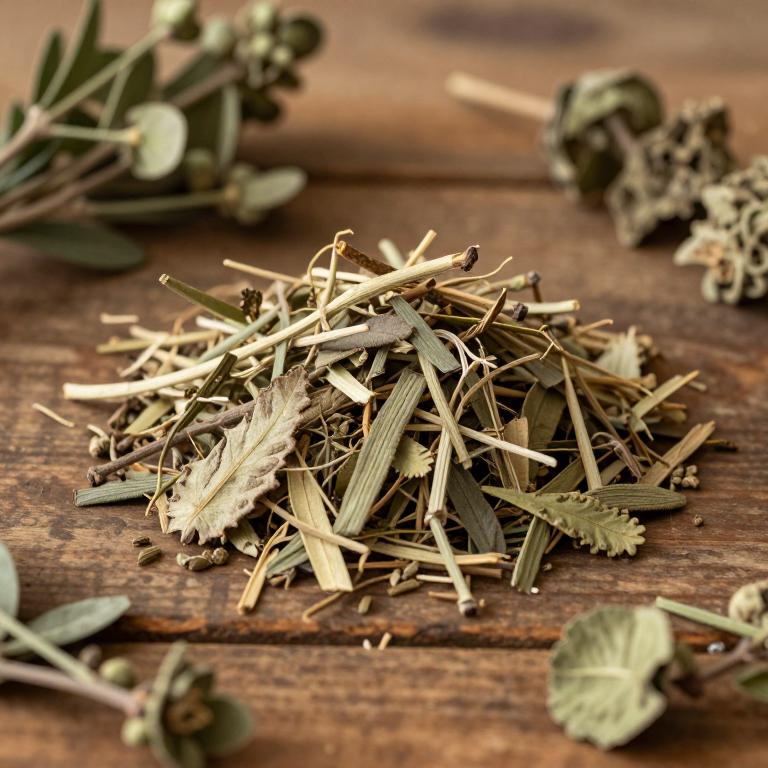
Names and Synonyms
Scientific Names
Accepted name
Melicope lunu-ankendaSynonyms
- Euodia lepta var. roxburghiana
- Euodia lucida
- Euodia lunu-ankenda
- Euodia lunu-ankenda var. tirunelvelica
- Euodia punctata
- Euodia roxburghiana
- Euodia triphylla var. pubescens
- Euodia arborea
- Euodia arborescens
- Euodia concinna
- Ampacus roxburghiana
- Ampacus aromatica
- Zanthoxylum zeylanicum
- Euodia marambong
- Fagara lunu-ankenda
- Fagara zeylanica
- Zanthoxylum nilagiricum
- Zanthoxylum roxburghianum
- Zanthoxylum marambong
Regional and Traditional Names
Spanish:
- Evodia lunur-ankenda
French:
- Evodia lunur-ankenda
Sources: Wikidata, Catalogue of Life
Taxonomical Classification
This plant belongs to the kingdom Plantae and the phylum Streptophyta, falling under the class Equisetopsida and subclass Magnoliidae. Within the order Sapindales, it is classified under the family Rutaceae. Finally, it is identified by the genus Melicope, specifically as the species Melicope lunu-ankenda.
| Rank | Classification |
|---|---|
| Kingdom | Plantae |
| Phylum | Streptophyta |
| Class | Equisetopsida |
| Subclass | Magnoliidae |
| Order | Sapindales |
| Family | Rutaceae |
| Genus | Melicope |
Sources: The World Checklist of Vascular Plants (WCVP)
Distribution
This plant exhibits a broad geographical range across several key regions of Asia. In the Chinese territory, it is specifically documented within the Tibet region. Moving to the Indian Subcontinent, its distribution extends across the state of Assam and throughout the country of India. It is also commonly found within the unique ecosystem of the East Himalaya. Furthermore, its presence is confirmed within the borders of Nepal.
| Region | Area |
|---|---|
| China | Tibet |
| Indian Subcontinent | Assam |
| Indian Subcontinent | East Himalaya |
| Indian Subcontinent | India |
| Indian Subcontinent | Nepal |
| Indian Subcontinent | Sri Lanka |
| Indo-China | Andaman Is. |
| Indo-China | Cambodia |
| Indo-China | Myanmar |
| Indo-China | Thailand |
Sources: The World Checklist of Vascular Plants (WCVP)
Botanical Identification
Ecology
The ecology of Melicope lunu-ankenda is closely tied to specific altitudinal gradients within its native habitat, thriving primarily in mid-elevation montane ecosystems. This species is ecologically restricted to a specialized vertical niche, occurring within an elevational range that begins at 600 m AMSL and extends up to a maximum of 900 m AMSL. This specific altitudinal belt suggests an adaptation to the distinct microclimates, moisture levels, and temperature regimes characteristic of these intermediate elevations, which likely influence its distribution and growth patterns within the forest canopy or understory.
- Elevational range max:
- 900 m AMSL
- Elevational range min:
- 600 m AMSL
Life history
The life history of Melicope lunu-ankenda is characterized by its status as a perennial organism, allowing it to maintain its presence within its ecological niche over many successive years. Throughout its developmental stages, the plant exhibits an evergreen growth habit, ensuring that its foliage remains functional and green regardless of seasonal shifts, rather than undergoing a period of dormancy through leaf shedding. This combination of a long-lived lifecycle and continuous leaf retention supports its sustained biological activity and ongoing contribution to its habitat.
- Deciduousness :
- evergreen
- Lifecycle :
- perennial
Morphology
The morphology of Melicope lunu-ankenda is characterized by its stature as a woody tree, reaching a mean height of approximately 22 m, with a maximum recorded height of up to 20 m. As a self-supporting growth form, it does not function as a climber, liana, or vine, and it maintains an independent existence rather than acting as a parasite. The plant is strictly terrestrial in its habitat, lacking any aquatic or semiaquatic tendencies, and it does not exhibit epiphytic behavior, remaining grounded as a terrestrial organism.
- Aquatic :
- terrestrial
- Climber :
- self-supporting
- Epiphyte :
- terrestrial
- Growth form :
- tree
- Parasite :
- independent
- Plant height max:
- 20 m
- Plant height mean:
- 22 m
- Woodiness :
- woody
Physiology
The physiology of Melicope lunu-ankenda is characterized by a standard C3 photosynthetic pathway, utilizing the Calvin cycle to fix atmospheric carbon dioxide through the enzyme Rubisco. As a C3 plant, it does not possess the specialized Kranz anatomy or temporal separation mechanisms found in C4 or CAM species, making its carbon fixation processes highly dependent on specific light intensities and moisture availability. Furthermore, this species is not a nitrogen fixer; it lacks the symbiotic relationship with diazotrophic bacteria, such as Rhizobium or Frankia, required to convert atmospheric nitrogen into biologically available forms, and therefore relies on the uptake of mineral nitrogen from the soil through its root system.
- Nitrogen fixer :
- no
- Photosynthetic pathway :
- C3
Reproduction
The reproduction of Melicope lunu-ankenda is characterized by specific sexual processes within its flowering cycle. Regarding its reproductive mechanisms, the trait of self-fertilization is notably absent, indicating that the species relies on cross-pollination to ensure genetic diversity. This absence of self-fertilization suggests a biological dependency on external vectors, such as insects or wind, to facilitate the transfer of pollen between different individuals. Consequently, the reproductive success of the plant is closely tied to the presence of effective pollinators and the spatial distribution of compatible mates within its habitat.
- Self fertilization :
- absent
Sources: Global Inventory of Floras and Traits (GIFT)
Plant Parts
Melicope lunu-ankenda has 2 reported plant parts identified across 6 scientific publications and several other databases that are studied for medicinal purposes. The most consistently reported plant part include leaf, flower.
| Plant part | Supporting sources | Consensus |
|---|---|---|
| Leaf | 5 supporting sources | ★★★☆☆ |
| Flower | 1 supporting sources | ★☆☆☆☆ |
Leaf
- Molecules (Basel, Switzerland)
- Journal of ethnopharmacology
- Journal of food science
- Applied radiation and isotopes : including data, instrumentation and methods for use in agriculture, industry and medicine
- BMC complementary and alternative medicine
Flower
- BMC complementary and alternative medicine
Chemicals
Melicope lunu-ankenda has 5 reported phytochemicals identified across 6 scientific publications and several other databases. The most consistently reported chemicals include Buchapine, Melicarpinone, OPF, Skimmianine, scopoletin.
| Chemical | Supporting sources | Consensus |
|---|---|---|
| Buchapine | 1 supporting sources | ★☆☆☆☆ |
| Melicarpinone | 1 supporting sources | ★☆☆☆☆ |
| OPF | 1 supporting sources | ★☆☆☆☆ |
| Skimmianine | 1 supporting sources | ★☆☆☆☆ |
| scopoletin | 1 supporting sources | ★☆☆☆☆ |
Buchapine
- Journal of natural products
Melicarpinone
- Journal of food science
OPF
- Journal of ethnopharmacology
Skimmianine
- Journal of food science
scopoletin
- Journal of food science
Activities
Melicope lunu-ankenda has 2 reported activities identified across 6 scientific publications and several other databases. The most consistently reported activities include Antidiabetic, Antioxidant.
| Activity | Supporting sources | Consensus |
|---|---|---|
| Antidiabetic | 1 supporting sources | ★☆☆☆☆ |
| Antioxidant | 1 supporting sources | ★☆☆☆☆ |
Antidiabetic
- Journal of food science
Antioxidant
- Journal of food science
Conditions
Melicope lunu-ankenda has 5 reported investigations on conditions identified across 6 scientific publications and several other databases. The most consistently reported conditions include Breast Cancer, Colon Cancer, Diabetes mellitus, diabetes mellitus, diabetic complications.
| Condition | Supporting sources | Consensus |
|---|---|---|
| Breast cancer | 1 supporting sources | ★☆☆☆☆ |
| Colon cancer | 1 supporting sources | ★☆☆☆☆ |
| Diabetes mellitus | 1 supporting sources | ★☆☆☆☆ |
| Diabetes mellitus | 1 supporting sources | ★☆☆☆☆ |
| Diabetic complications | 1 supporting sources | ★☆☆☆☆ |
Breast cancer
- Molecules (Basel, Switzerland)
Colon cancer
- Molecules (Basel, Switzerland)
Diabetes mellitus
- Journal of food science
Diabetes mellitus
- BMC complementary and alternative medicine
Diabetic complications
- Journal of ethnopharmacology
Preparations
Melicope lunu-ankenda has 8 reported preparations identified across 6 scientific publications and several other databases. The most consistently reported preparations include CH2Cl2-MeOH extract, Dried leaf powder, Melicope lunu-ankenda leaf extract, crude extracts, dried leaves.
| Preparation | Supporting sources | Consensus |
|---|---|---|
| Ch2cl2-meoh extract | 1 supporting sources | ★☆☆☆☆ |
| Dried leaf powder | 1 supporting sources | ★☆☆☆☆ |
| Melicope lunu-ankenda leaf extract | 1 supporting sources | ★☆☆☆☆ |
| Crude extracts | 1 supporting sources | ★☆☆☆☆ |
| Dried leaves | 1 supporting sources | ★☆☆☆☆ |
| Leaves | 1 supporting sources | ★☆☆☆☆ |
| Methanol leaf extracts | 1 supporting sources | ★☆☆☆☆ |
| Petroleum ether extract | 1 supporting sources | ★☆☆☆☆ |
Ch2cl2-meoh extract
- Journal of natural products
Dried leaf powder
- Molecules (Basel, Switzerland)
Melicope lunu-ankenda leaf extract
- BMC complementary and alternative medicine
Crude extracts
- Molecules (Basel, Switzerland)
Dried leaves
- Applied radiation and isotopes : including data, instrumentation and methods for use in agriculture, industry and medicine
Leaves
- Journal of ethnopharmacology
Methanol leaf extracts
- Applied radiation and isotopes : including data, instrumentation and methods for use in agriculture, industry and medicine
Petroleum ether extract
- Molecules (Basel, Switzerland)