Melicope frutescens
Melicope frutescens · Accepted scientific name
Scientific literature: Very Sparse (5 studies) · ★☆☆☆☆
Melicope frutescens, scientifically known as Melicope frutescens, is a versatile evergreen shrub native to Pacific islands. Highly valued in traditional medicine, it is frequently used to treat various ailments, including inflammation, skin conditions, and digestive issues. This botanical species holds significant ethnobotanical importance across diverse indigenous cultures.
- Family
- Rutaceae
- Native range
- Asia-Tropical
- Parts used
- Leaf
- Common names
- Not available
- Scientific synonyms
- Melicope Confusa · Euodia Confusa · 1 more
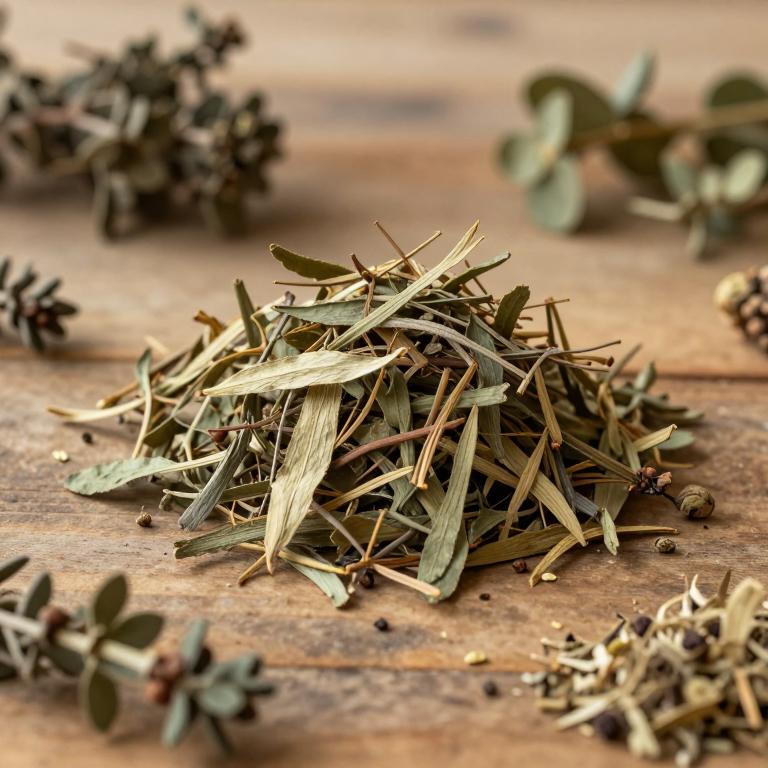
Names and Synonyms
Scientific Names
Accepted name
Melicope frutescensSynonyms
- Melicope confusa
- Euodia confusa
- Cissus frutescens
Sources: Wikidata
Taxonomical Classification
This plant belongs to the kingdom Plantae and the phylum Streptophyta, specifically classified within the class Equisetopsida and subclass Magnoliidae. It is further organized under the order Sapindales and the family Rutaceae. Finally, it is identified by the genus Melicope, which encompasses the species Melicope frutescens.
| Rank | Classification |
|---|---|
| Kingdom | Plantae |
| Phylum | Streptophyta |
| Class | Equisetopsida |
| Subclass | Magnoliidae |
| Order | Sapindales |
| Family | Rutaceae |
| Genus | Melicope |
Sources: The World Checklist of Vascular Plants (WCVP)
Distribution
This plant is widely distributed across several key regions within the Malesian botanical zone. It can be found growing naturally on the island of Borneo. Its presence extends eastward to the Maluku islands. Additionally, the species is documented throughout the Philippines. Finally, its geographical range includes the island of Sulawesi.
| Region | Area |
|---|---|
| Malesia | Borneo |
| Malesia | Maluku |
| Malesia | Philippines |
| Malesia | Sulawesi |
Sources: The World Checklist of Vascular Plants (WCVP)
Botanical Identification
Life history
The life history of Melicope frutescens is characterized by its status as a perennial species, allowing it to maintain its presence in its natural habitat over many successive growing seasons. As an evergreen plant, it does not undergo a period of seasonal leaf shedding, instead maintaining a consistent canopy of foliage throughout the year. This combination of a long-lived lifecycle and continuous leaf retention enables the plant to sustain physiological processes and respond to environmental changes steadily over time.
- Deciduousness :
- evergreen
- Lifecycle :
- perennial
Morphology
The morphology of Melicope frutescens is characterized by its robust growth form as a tree, reaching an impressive mean plant height of approximately 25 m. This species exhibits a woody structure, providing the necessary stability for its stature. While it possesses a sturdy, self-supporting habit, its growth characteristics align with a self-supporting classification, distinguishing it from obligatory or facultative climbers such as lianas or vines.
- Climber :
- self-supporting
- Growth form :
- tree
- Plant height mean:
- 25 m
- Woodiness :
- woody
Physiology
The physiology of Melicope frutescens is characterized by a standard C3 photosynthetic pathway, meaning it utilizes the Calvin cycle to fix carbon dioxide through the enzyme Rubisco, a common metabolic strategy among most woody tropical and subtropical species. This pathway involves the direct fixation of CO2 into a three-carbon compound during the initial carboxylation step. Furthermore, the plant does not function as a nitrogen fixer; it lacks the specialized symbiotic relationships with nitrogen-fixing bacteria, such as rhizobia, required to convert atmospheric nitrogen into usable forms, and instead relies on the uptake of nitrates and ammonium from the soil to satisfy its nutritional requirements.
- Nitrogen fixer :
- no
- Photosynthetic pathway :
- C3
Reproduction
The reproduction of Melicope frutescens is driven by biotic processes, as evidenced by its reliance on biological agents for successful fertilization. The plant exhibits a pollination syndrome characterized by biotic interactions, specifically utilizing insects as the primary vectors for pollen transfer. Within this framework, the pollination mechanism is categorized under insect-mediated pathways, which ensures the movement of genetic material between individual plants. Furthermore, the species demonstrates a reproductive strategy where self-fertilization is absent, indicating a reliance on cross-pollination to maintain genetic diversity.
- Pollination syndrome :
- insect
- Pollination syndrome :
- biotic
- Self fertilization :
- absent
Sources: Global Inventory of Floras and Traits (GIFT)
Plant Parts
Melicope frutescens has 1 reported plant parts identified across 1 scientific publications and several other databases that are studied for medicinal purposes. The most consistently reported plant part include leaf.
| Plant part | Supporting sources | Consensus |
|---|---|---|
| Leaf | 1 supporting sources | ★☆☆☆☆ |
Leaf
- Planta medica
Chemicals
Melicope frutescens has 4 reported phytochemicals identified across 1 scientific publications and several other databases. The most consistently reported chemicals include Confusameline, Kokusaginine, O-Methylconfusameline, Skimmianine.
| Chemical | Supporting sources | Consensus |
|---|---|---|
| Confusameline | 1 supporting sources | ★☆☆☆☆ |
| Kokusaginine | 1 supporting sources | ★☆☆☆☆ |
| O-Methylconfusameline | 1 supporting sources | ★☆☆☆☆ |
| Skimmianine | 1 supporting sources | ★☆☆☆☆ |
Confusameline
- Planta medica
Kokusaginine
- Planta medica
O-Methylconfusameline
- Planta medica
Skimmianine
- Planta medica