Touch-me-not
Melianthus comosus · Accepted scientific name
Scientific literature: Very Sparse (12 studies) · ★☆☆☆☆
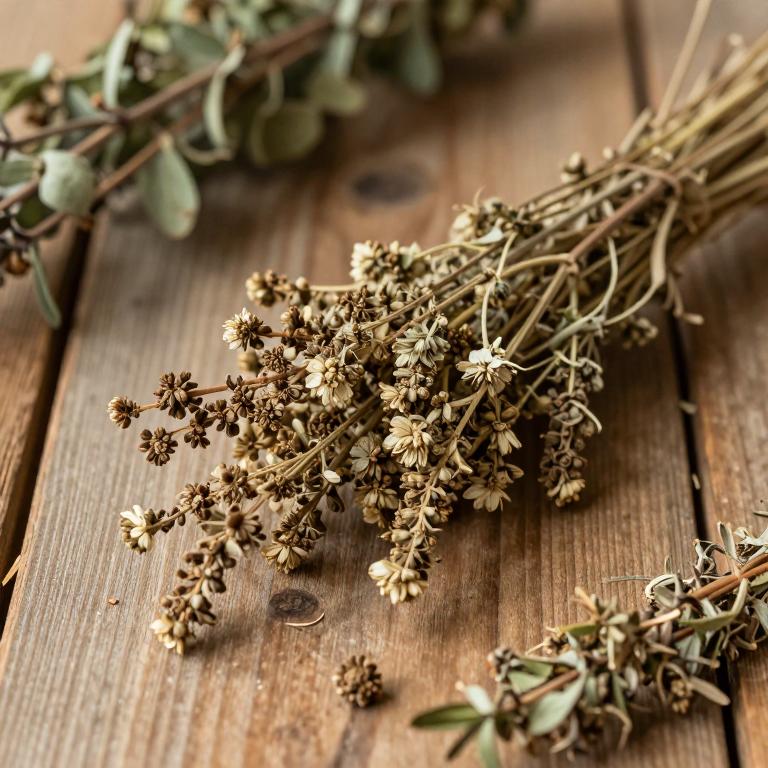
Touch-me-not, scientifically known as Melianthus comoesus, is a striking perennial shrub native to South Africa. Characterized by its large, serrated leaves and unique, nectar-rich red flowers, it is highly ornamental. While celebrated for its beauty, it contains toxic compounds, requiring careful handling and consideration in medicinal applications.
- Family
- Francoaceae
- Native range
- Africa
- Parts used
- Leaf
- Common names
- Touch-Me-Not · Tufted Honey-Flower · 4 more
- Scientific synonyms
- Diplerisma Comosum
Names and Synonyms
Common Names
- Touch-me-not
- tufted honey-flower
- Cape Honey Flower
- Crown Honeyflower
- Honeyflower
- Touch Me Not
Scientific Names
Accepted name
Melianthus comosusSynonyms
- Diplerisma comosum
Sources: Wikidata, Catalogue of Life
Taxonomical Classification
This plant belongs to the kingdom Plantae and the phylum Streptophyta, falling under the class Equisetopsida and subclass Magnoliidae. Within the order Geraniales, it is classified under the family Francoaceae. Ultimately, it is identified by the genus Melianthus, specifically as the species Melianthus comoosus.
| Rank | Classification |
|---|---|
| Kingdom | Plantae |
| Phylum | Streptophyta |
| Class | Equisetopsida |
| Subclass | Magnoliidae |
| Order | Geraniales |
| Family | Francoaceae |
| Genus | Melianthus |
Sources: The World Checklist of Vascular Plants (WCVP)
Distribution
This plant is primarily found across various regions within Southern Africa. Its distribution includes the diverse landscapes of the Cape Provinces. It can also be located in the mountainous terrain of Lesotho. Furthermore, the species extends its range into parts of Namibia. Finally, it is documented within the Free State and the Northern Provinces.
| Region | Area |
|---|---|
| Southern Africa | Cape Provinces |
| Southern Africa | Lesotho |
| Southern Africa | Namibia |
| Southern Africa | Free State |
| Southern Africa | Northern Provinces |
Sources: The World Checklist of Vascular Plants (WCVP)
Botanical Identification
Ecology
The ecology of Melianthus comoosus is defined by its ability to inhabit diverse topographical landscapes, spanning a significant altitudinal gradient. This species is found across an elevational range that begins at 120 m AMSL and extends to a maximum of 2230 m AMSL. This broad vertical distribution allows the plant to occupy various ecological niches, from lower-lying coastal or valley regions to more temperate, high-altitude montane environments. Such a wide range suggests a high degree of adaptability to varying temperature regimes and atmospheric pressures encountered throughout its habitat.
- Elevational range max:
- 2230 m AMSL
- Elevational range min:
- 120 m AMSL
Life history
The life history of Melianthus comoosus is characterized by its nature as a perennial plant, allowing it to persist through multiple growing seasons. Throughout its existence, the species maintains an evergreen status, retaining its foliage year-round rather than undergoing a period of dormancy marked by leaf loss.
- Deciduousness :
- evergreen
- Lifecycle :
- perennial
Morphology
The morphology of Melianthus comoosus is characterized by a woody, shrubby growth form that is entirely self-supporting and independent, functioning neither as a parasite nor an epiphyte. As a terrestrial species, it typically reaches a mean height of 1.5 m, though its stature can vary significantly, ranging from a minimum of 0.69 m to a maximum height of 3 m.
- Aquatic :
- terrestrial
- Climber :
- self-supporting
- Epiphyte :
- terrestrial
- Growth form :
- shrub
- Parasite :
- independent
- Plant height max:
- 3 m
- Plant height mean:
- 1.5 m
- Plant height min:
- 0.69 m
- Woodiness :
- woody
Physiology
The physiology of Melianthus comoosus is characterized by specialized metabolic processes adapted to its specific ecological niche, though it lacks the symbiotic relationship with rhizobia necessary to function as a nitrogen fixer. Unlike legumes, this species does not possess the physiological mechanisms to convert atmospheric nitrogen into ammonia; therefore, its nitrogen fixation status is a definitive no. The plant relies on the uptake of inorganic nitrogen, such as nitrates and ammonium, directly from the soil through its root system to support protein synthesis and cellular growth. Its physiological processes include standard photosynthetic pathways to convert light energy into chemical energy, alongside complex secondary metabolic pathways that produce characteristic chemical compounds. These metabolic activities are finely tuned to its environmental interactions, managing water regulation and nutrient assimilation without the aid of biological nitrogen fixation.
- Nitrogen fixer :
- no
Reproduction
The reproduction of Melianthus comoosus is characterized by a biotic pollination syndrome, specifically adapted for interaction with avian pollinators. This bird-mediated pollination process ensures the transfer of pollen between flowers, facilitating genetic exchange within the species. Following successful fertilization, the plant produces seeds that exhibit specific morphological variations in mass. The seed mass ranges from a minimum of 0.01651 g to a maximum of 0.0233 g, with the average seed mass calculated at approximately 0.019905 g. These quantitative traits in seed production are integral to the plant's reproductive strategy and its ability to colonize its natural habitat.
- Pollination syndrome :
- bird
- Pollination syndrome :
- biotic
- Seed mass max:
- 0.0233 g
- Seed mass mean:
- 0.019905 g
- Seed mass min:
- 0.01651 g
Sources: Global Inventory of Floras and Traits (GIFT)
Plant Parts
Melianthus comosus has 1 reported plant parts identified across 1 scientific publications and several other databases that are studied for medicinal purposes. The most consistently reported plant part include leaf.
| Plant part | Supporting sources | Consensus |
|---|---|---|
| Leaf | 1 supporting sources | ★☆☆☆☆ |
Leaf
- Bioorganic chemistry
Chemicals
Melianthus comosus has 6 reported phytochemicals identified across 1 scientific publications and several other databases. The most consistently reported chemicals include 2-hydroxynonanoic acid, Crassolide, Hexadecanoic acid, NEOPHYTADIENE, deoxylimonoic acid D-ring-lactone.
| Chemical | Supporting sources | Consensus |
|---|---|---|
| 2-hydroxynonanoic acid | 1 supporting sources | ★☆☆☆☆ |
| Crassolide | 1 supporting sources | ★☆☆☆☆ |
| Hexadecanoic acid | 1 supporting sources | ★☆☆☆☆ |
| NEOPHYTADIENE | 1 supporting sources | ★☆☆☆☆ |
| deoxylimonoic acid D-ring-lactone | 1 supporting sources | ★☆☆☆☆ |
| guanosine | 1 supporting sources | ★☆☆☆☆ |
2-hydroxynonanoic acid
- Inflammopharmacology
Crassolide
- Inflammopharmacology
Hexadecanoic acid
- Antibiotics (Basel, Switzerland)
NEOPHYTADIENE
- Antibiotics (Basel, Switzerland)
deoxylimonoic acid D-ring-lactone
- Inflammopharmacology
guanosine
- Antibiotics (Basel, Switzerland)
Activities
Melianthus comosus has 1 reported activities identified across 1 scientific publications and several other databases. The most consistently reported activities include Cytotoxic.
| Activity | Supporting sources | Consensus |
|---|---|---|
| Cytotoxic | 1 supporting sources | ★☆☆☆☆ |
Cytotoxic
- Bioorganic chemistry
Conditions
Melianthus comosus has 4 reported investigations on conditions identified across 1 scientific publications and several other databases. The most consistently reported conditions include Pseudomonas aeruginosa infections, inflammation, pain, skin diseases.
| Condition | Supporting sources | Consensus |
|---|---|---|
| Pseudomonas aeruginosa infections | 1 supporting sources | ★☆☆☆☆ |
| Inflammation | 1 supporting sources | ★☆☆☆☆ |
| Pain | 1 supporting sources | ★☆☆☆☆ |
| Skin diseases | 1 supporting sources | ★☆☆☆☆ |
Pseudomonas aeruginosa infections
- Antibiotics (Basel, Switzerland)
Inflammation
- Inflammopharmacology
Pain
- Inflammopharmacology
Skin diseases
- Skin pharmacology and physiology
Preparations
Melianthus comosus has 4 reported preparations identified across 1 scientific publications and several other databases. The most consistently reported preparations include aqueous extracts, extracts, methanol extracts, three extracts.
| Preparation | Supporting sources | Consensus |
|---|---|---|
| Aqueous extracts | 1 supporting sources | ★☆☆☆☆ |
| Extracts | 1 supporting sources | ★☆☆☆☆ |
| Methanol extracts | 1 supporting sources | ★☆☆☆☆ |
| Three extracts | 1 supporting sources | ★☆☆☆☆ |
Aqueous extracts
- Skin pharmacology and physiology
Extracts
- Journal of ethnopharmacology
Methanol extracts
- Skin pharmacology and physiology
Three extracts
- Antibiotics (Basel, Switzerland)