Melia volkensii
Melia volkensii · Accepted scientific name
Scientific literature: Very Sparse (13 studies) · ★☆☆☆☆
Melia volkensii, scientifically known as Melia volkensii, is a versatile deciduous tree native to the arid regions of East Africa. Renowned for its resilience, this medicinal powerhouse offers various therapeutic benefits, with its leaves and bark frequently utilized in traditional practices to treat diverse ailments and promote holistic wellness.
- Family
- Meliaceae
- Native range
- Africa
- Parts used
- Root · Seed
- Common names
- Not available
- Scientific synonyms
- Not available
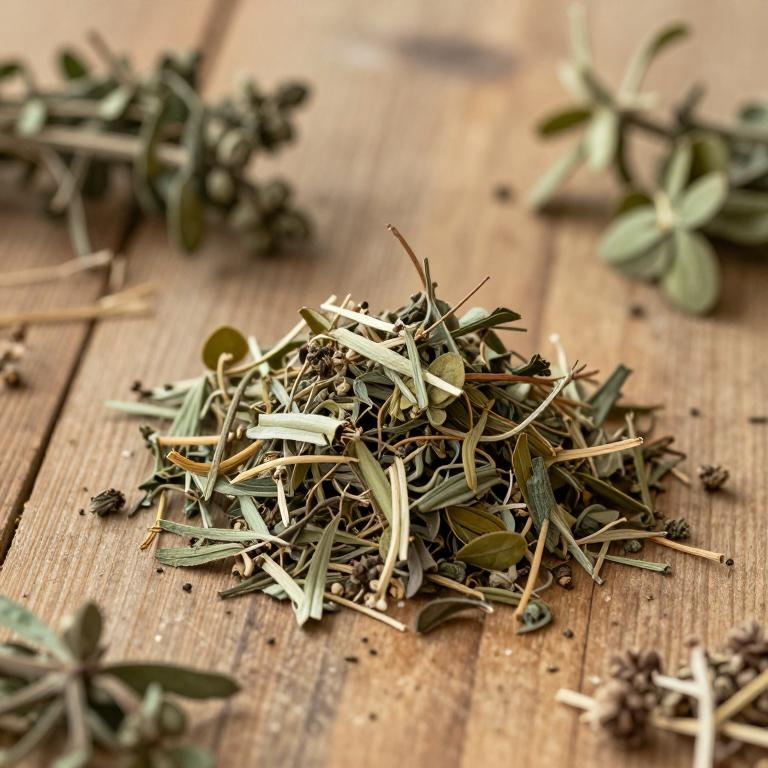
Names and Synonyms
Scientific Names
Accepted name
Melia volkensiiSources: Wikidata, Catalogue of Life
Taxonomical Classification
This plant belongs to the kingdom Plantae and is classified under the phylum Streptophyta and class Equisetopsida. Within the subclass Magnoliidae, it falls under the order Sapindales and the family Meliaceae. Finally, it is categorized under the genus Melia.
| Rank | Classification |
|---|---|
| Kingdom | Plantae |
| Phylum | Streptophyta |
| Class | Equisetopsida |
| Subclass | Magnoliidae |
| Order | Sapindales |
| Family | Meliaceae |
| Genus | Melia |
Sources: The World Checklist of Vascular Plants (WCVP)
Distribution
This plant is widely distributed across several key regions within the Northeast and East Tropical Africa sectors. Specifically, it can be found growing in the landscapes of Ethiopia and Somalia within Northeast Tropical Africa. Moving further south, its range extends into the East Tropical Africa region. Within this eastern zone, the species is notably present in both Kenya and Tanzania. Consequently, its geographical footprint covers a significant portion of the Horn of Africa and its neighboring territories.
| Region | Area |
|---|---|
| Northeast Tropical Africa | Ethiopia |
| Northeast Tropical Africa | Somalia |
| East Tropical Africa | Kenya |
| East Tropical Africa | Tanzania |
Sources: The World Checklist of Vascular Plants (WCVP)
Botanical Identification
Life history
The life history of Melia volkensii is characterized by its existence as a perennial species, allowing it to persist in its ecosystem over many years. Throughout its developmental stages, the plant exhibits a deciduous growth habit, shedding its leaves periodically, which is often an adaptive strategy to manage water loss in its natural environment.
- Deciduousness :
- deciduous
- Lifecycle :
- perennial
Morphology
The morphology of Melia volkensii is characterized by its growth form as a tree, which exhibits a woody structure throughout its development. This species typically reaches a plant height with a mean value of approximately 15 m. Regarding its structural habit, it is classified as a self-supporting plant, rather than functioning as an obligatory or facultative climber.
- Climber :
- self-supporting
- Growth form :
- tree
- Plant height mean:
- 15 m
- Woodiness :
- woody
Physiology
The physiology of Melia volkensii is characterized by specialized adaptations to arid and semi-arid environments, particularly regarding its metabolic efficiency and resource acquisition. A key physiological distinction of this species is that it is not a nitrogen fixer, meaning it lacks the symbiotic relationship with nitrogen-fixing bacteria required to convert atmospheric nitrogen into a usable form; instead, it relies on the uptake of mineralized nitrogen from the soil through its extensive root system. To survive in nutrient-poor and water-limited landscapes, the plant exhibits significant drought-tolerance mechanisms, including optimized stomatal control to minimize transpiration and a robust carbon assimilation process that allows for sustained growth during intermittent periods of moisture. Its physiological framework is further defined by a deep taproot system that facilitates access to lower soil horizons, supporting a high water-use efficiency and maintaining cellular turgor during prolonged dry seasons.
- Nitrogen fixer :
- no
Reproduction
The reproduction of Melia volkensii is characterized by biotic pollination mechanisms, specifically relying on animal vectors to facilitate fertilization. The pollination syndrome is primarily driven by insects, with bees playing a significant role in the transfer of pollen. Following successful fertilization, the plant produces seeds that exhibit considerable variability in size. The seed mass ranges from a minimum of 0.0212 g to a maximum of 0.70225 g, with an overall mean seed mass of approximately 0.361725 g.
- Pollination syndrome :
- insect
- Pollination syndrome :
- bee
- Pollination syndrome :
- biotic
- Seed mass max:
- 0.70225 g
- Seed mass mean:
- 0.361725 g
- Seed mass min:
- 0.0212 g
Sources: Global Inventory of Floras and Traits (GIFT)
Plant Parts
Melia volkensii has 2 reported plant parts identified across 3 scientific publications and several other databases that are studied for medicinal purposes. The most consistently reported plant part include root, seed.
| Plant part | Supporting sources | Consensus |
|---|---|---|
| Root | 2 supporting sources | ★☆☆☆☆ |
| Seed | 1 supporting sources | ★☆☆☆☆ |
Root
- Journal of natural products
- Bioorganic & medicinal chemistry
Seed
- Journal of natural products
Chemicals
Melia volkensii has 9 reported phytochemicals identified across 3 scientific publications and several other databases. The most consistently reported chemicals include 1,3-diacetylvilasinin, 12beta-hydroxykulactone, 16,23,24-triketomelianin B, 6beta-hydroxykulactone, KULACTONE.
| Chemical | Supporting sources | Consensus |
|---|---|---|
| 1,3-diacetylvilasinin | 1 supporting sources | ★☆☆☆☆ |
| 12beta-hydroxykulactone | 1 supporting sources | ★☆☆☆☆ |
| 16,23,24-triketomelianin B | 1 supporting sources | ★☆☆☆☆ |
| 6beta-hydroxykulactone | 1 supporting sources | ★☆☆☆☆ |
| KULACTONE | 1 supporting sources | ★☆☆☆☆ |
| Kulonate | 1 supporting sources | ★☆☆☆☆ |
| melianin B | 1 supporting sources | ★☆☆☆☆ |
| melianin C | 1 supporting sources | ★☆☆☆☆ |
| meliavolkinin | 1 supporting sources | ★☆☆☆☆ |
1,3-diacetylvilasinin
- Journal of natural products
12beta-hydroxykulactone
- Journal of natural products
16,23,24-triketomelianin B
- Journal of natural products
6beta-hydroxykulactone
- Journal of natural products
KULACTONE
- Journal of natural products
Kulonate
- Journal of natural products
melianin B
- Journal of natural products
melianin C
- Journal of natural products
meliavolkinin
- Journal of natural products
Conditions
Melia volkensii has 1 reported investigations on conditions identified across 3 scientific publications and several other databases. The most consistently reported conditions include Mycobacterium tuberculosis.
| Condition | Supporting sources | Consensus |
|---|---|---|
| Mycobacterium tuberculosis | 1 supporting sources | ★☆☆☆☆ |
Mycobacterium tuberculosis
- Journal of natural products
Preparations
Melia volkensii has 2 reported preparations identified across 3 scientific publications and several other databases. The most consistently reported preparations include root bark, methanolic extracts of seeds.
| Preparation | Supporting sources | Consensus |
|---|---|---|
| Root bark | 2 supporting sources | ★☆☆☆☆ |
| Methanolic extracts of seeds | 1 supporting sources | ★☆☆☆☆ |
Root bark
- Journal of natural products
- Bioorganic & medicinal chemistry
Methanolic extracts of seeds
- Journal of natural products