creek bottlebrush
Melaleuca viminalis · Accepted scientific name
Scientific literature: Very Sparse (11 studies) · ★☆☆☆☆
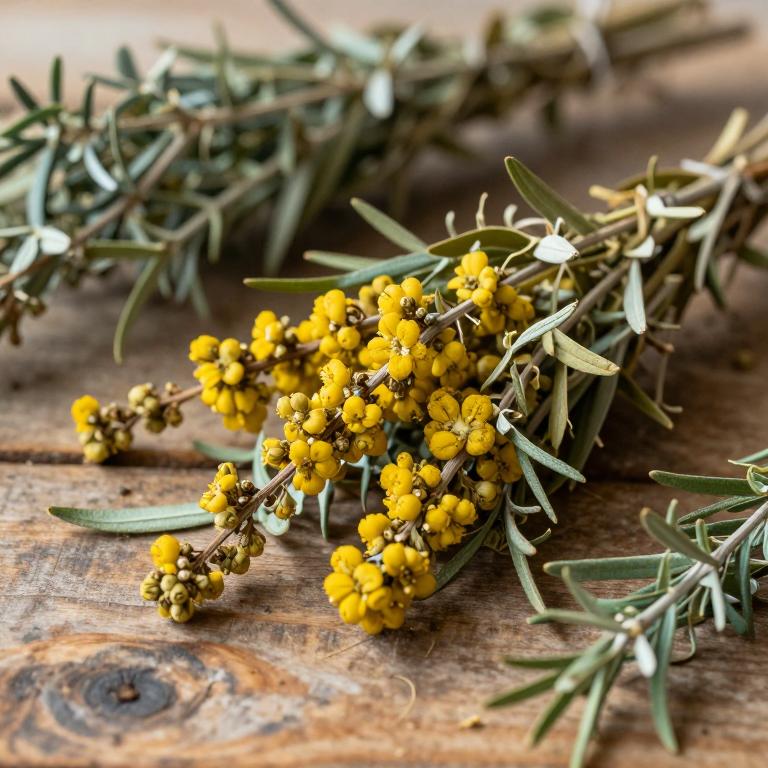
Creek bottlebrush, scientifically known as Melaleuca viminalis, is a versatile Australian riparian shrub renowned for its therapeutic properties. Characterized by delicate, feathery foliage and white, brush-like blooms, it is traditionally utilized for its antimicrobial and anti-inflammatory qualities, offering natural healing benefits through its potent essential oils and extracts.
- Family
- Myrtaceae
- Native range
- Europe
- Parts used
- Leaf · Flower
- Common names
- Dwarf Bottlebrush · Little John · 1 more
- Scientific synonyms
- Callistemon Viminalis · Metrosideros Viminalis
Names and Synonyms
Common Names
- Dwarf Bottlebrush
- Little John
- weeping bottlebrush
Scientific Names
Accepted name
Melaleuca viminalisSynonyms
- Callistemon viminalis
- Metrosideros viminalis
Regional and Traditional Names
Spanish:
- Calistemo
- Limpiabotellas australiana
French:
- Rince-bouteille pleureur
Sources: Wikidata, Catalogue of Life
Taxonomical Classification
This plant belongs to the kingdom Plantae and the phylum Streptophyta within the class Equisetopsida. Classified under the subclass Magnoliidae and the order Myrtoales, it is a member of the family Myrtaceae. Specifically, it is identified by the genus Melaleuca.
| Rank | Classification |
|---|---|
| Kingdom | Plantae |
| Phylum | Streptophyta |
| Class | Equisetopsida |
| Subclass | Magnoliidae |
| Order | Myrtales |
| Family | Myrtaceae |
| Genus | Melaleuca |
Sources: The World Checklist of Vascular Plants (WCVP)
Distribution
This plant exhibits a wide-ranging geographical distribution across several distinct regions. In Southwestern Europe, its presence is noted specifically within the Baleares. Its range extends into Macaronesia, where it can be found on both the Canary Islands and Madeira. Furthermore, the species is located in East Tropical Africa, specifically within Kenya. Finally, its distribution continues through the neighboring territory of Tanzania.
| Region | Area |
|---|---|
| Southwestern Europe | Baleares |
| Macaronesia | Canary Is. |
| Macaronesia | Madeira |
| East Tropical Africa | Kenya |
| East Tropical Africa | Tanzania |
| Indian Subcontinent | India |
| Australia | New South Wales |
| Australia | Queensland |
| Southwestern U.S.A. | California |
| Southeastern U.S.A. | Florida |
Sources: The World Checklist of Vascular Plants (WCVP)
Botanical Identification
Ecology
The ecology of Melaleuca viminalis is characterized by its adaptation to diverse wetland and riparian environments, where it often thrives in moist to seasonally inundated soils. This species is typically found in swampy areas, along the margins of watercourses, and within coastal or lowland heathlands, demonstrating a high tolerance for waterlogged conditions that would inhibit many other woody plants. In terms of its vertical distribution, the species occupies a specific topographic niche with an elevational range that reaches a mean of 800 m AMSL. This positioning allows it to colonize various hydrological zones, from low-lying alluvial plains to mid-elevation slopes, where it plays a critical role in stabilizing banks and providing complex structural habitats for local fauna. Its presence is often indicative of specific soil moisture regimes and plays a significant part in the nutrient cycling and hydrological regulation of its native ecosystems.
- Elevational range mean:
- 800 m AMSL
Life history
The life history of Melaleuca viminalis is characterized by its growth as a phanerophyte, typically manifesting as a woody shrub or small tree where the perennating buds are located on aerial branches well above the ground. Depending on the specific environmental conditions and maturity of the individual, its stature may also align with the nanophanerophyte classification, representing a smaller woody form. As a perennial woody species, it undergoes a seasonal cycle of vegetative growth and flowering, often thriving in riparian or wetland habitats where it establishes a robust root system to withstand fluctuating water levels. The plant progresses through developmental stages from seed germination in moist substrates to the establishment of a permanent woody structure, eventually reaching reproductive maturity to produce small, nectar-rich flowers and woody capsules that facilitate long-term survival and dispersal within its ecosystem.
- Life form :
- nanophanerophyte
- Life form :
- phanerophyte
Morphology
The morphology of Melaleuca viminalis is characterized by a woody growth form that can manifest as either a tree or a shrub. As a self-supporting plant, it does not function as a climber, liana, or vine, and it remains an independent organism rather than a parasite. It is a terrestrial species, lacking aquatic or semiaquatic tendencies, and does not exhibit epiphytic behavior, existing instead as a terrestrial plant. The structural integrity of the species is defined by its woody nature, and it can reach a maximum plant height of 8 meters.
- Aquatic :
- terrestrial
- Climber :
- self-supporting
- Epiphyte :
- terrestrial
- Growth form :
- tree
- Growth form :
- shrub
- Parasite :
- independent
- Plant height max:
- 8 m
- Woodiness :
- woody
Physiology
The physiology of Melaleuca viminalis is characterized by a C3 photosynthetic pathway, a common metabolic strategy that allows the plant to fix carbon dioxide through the Calvin cycle. Its foliar morphology is highly specialized, featuring linear leaf forms that optimize surface area for gas exchange and light absorption. The dimensions of these leaves vary significantly, with a length ranging from a minimum of 3 cm to a maximum of 7 cm. Concurrently, the leaf width is relatively narrow, maintaining a minimum of 0.3 cm and reaching a maximum of 0.7 cm, a structural adaptation that likely assists in regulating transpiration and managing water loss within its ecological niche.
- Leaf form :
- linear
- Leaf length max:
- 7 cm
- Leaf length min:
- 3 cm
- Leaf width max:
- 0.7 cm
- Leaf width min:
- 0.3 cm
- Photosynthetic pathway :
- C3
Reproduction
The reproduction of Melaleuca viminalis is characterized by its distinct flowering and fruiting processes. The plant produces red flowers arranged in a spike-type inflorescence, which can vary in length from a minimum of 0.05 m to a maximum of 0.15 m. The flowering period typically begins in March and concludes in June, though the timing can be variable across different months of the year. Following pollination, the plant develops fruit in the form of a capsule. These capsules are relatively small, with a width ranging between 0.5 cm and 0.6 cm. The fruit is dehiscent, meaning it opens at maturity to release its seeds. The seeds produced are extremely fine, with a consistent mass of approximately 0.00035 g.
- Dehiscence :
- dehiscent
- Flower colour :
- red
- Flowering time :
- Mar
- Flowering time :
- Jun
- Fruit type :
- capsule
- Fruit width max:
- 0.6 cm
- Fruit width min:
- 0.5 cm
- Inflorescence :
- spike
- Inflorescence length max:
- 0.15 m
- Inflorescence length min:
- 0.05 m
- Seed mass mean:
- 0.00035 g
Sources: Global Inventory of Floras and Traits (GIFT)
Plant Parts
Melaleuca viminalis has 3 reported plant parts identified across 4 scientific publications and several other databases that are studied for medicinal purposes. The most consistently reported plant part include leaf, flower, fruit.
| Plant part | Supporting sources | Consensus |
|---|---|---|
| Leaf | 2 supporting sources | ★☆☆☆☆ |
| Flower | 1 supporting sources | ★☆☆☆☆ |
| Fruit | 1 supporting sources | ★☆☆☆☆ |
Leaf
- Asian Pacific journal of tropical medicine
- Fitoterapia
Flower
- Asian Pacific journal of tropical medicine
Fruit
- Asian Pacific journal of tropical medicine
Activities
Melaleuca viminalis has 4 reported activities identified across 4 scientific publications and several other databases. The most consistently reported activities include Antibacterial, Antifungal, Antioxidant, Cytotoxic.
| Activity | Supporting sources | Consensus |
|---|---|---|
| Antibacterial | 1 supporting sources | ★☆☆☆☆ |
| Antifungal | 1 supporting sources | ★☆☆☆☆ |
| Antioxidant | 1 supporting sources | ★☆☆☆☆ |
| Cytotoxic | 1 supporting sources | ★☆☆☆☆ |
Antibacterial
- Asian Pacific journal of tropical medicine
Antifungal
- Asian Pacific journal of tropical medicine
Antioxidant
- Asian Pacific journal of tropical medicine
Cytotoxic
- BMC complementary medicine and therapies
Preparations
Melaleuca viminalis has 2 reported preparations identified across 4 scientific publications and several other databases. The most consistently reported preparations include Aqueous extracts, floral extracts.
| Preparation | Supporting sources | Consensus |
|---|---|---|
| Aqueous extracts | 2 supporting sources | ★☆☆☆☆ |
| Floral extracts | 1 supporting sources | ★☆☆☆☆ |
Aqueous extracts
- Antimicrobial agents and chemotherapy
- Journal of medical microbiology
Floral extracts
- Journal of biomolecular structure & dynamics