Melaleuca subulata
Melaleuca subulata · Accepted scientific name
Scientific literature: Very Sparse (16 studies) · ★☆☆☆☆
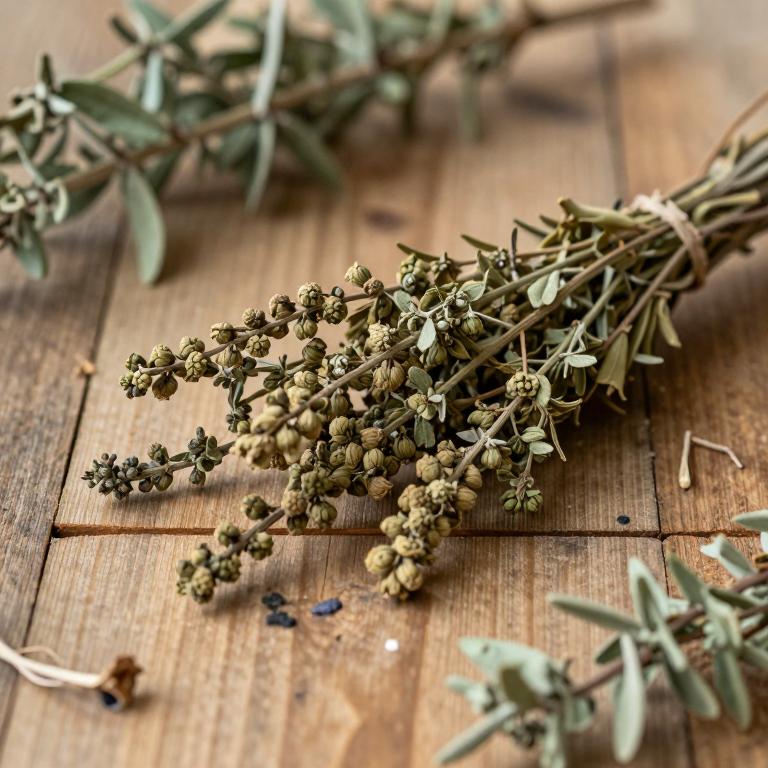
, scientifically known as Melaleuca subulata, is a resilient Australian shrub celebrated for its therapeutic potential. Often found in coastal regions, this botanical gem offers unique bioactive compounds. Traditionally used in holistic practices, it serves as a fascinating subject for studying natural antimicrobial properties and supporting diverse ecological wellness.
- Family
- Myrtaceae
- Native range
- Australasia
- Parts used
- Leaf · Flower
- Common names
- Not available
- Scientific synonyms
- Callistemon Subulatus
Names and Synonyms
Scientific Names
Accepted name
Melaleuca subulataSynonyms
- Callistemon subulatus
Sources: Wikidata, Catalogue of Life
Taxonomical Classification
This plant belongs to the kingdom Plantae and the phylum Streptophyta within the class Equisetopsida. It is further classified under the subclass Magnoliidae and the order Myrtales, falling into the family Myrtaceae. Ultimately, its specific taxonomic placement is within the genus Melaleuca.
| Rank | Classification |
|---|---|
| Kingdom | Plantae |
| Phylum | Streptophyta |
| Class | Equisetopsida |
| Subclass | Magnoliidae |
| Order | Myrtales |
| Family | Myrtaceae |
| Genus | Melaleuca |
Sources: The World Checklist of Vascular Plants (WCVP)
Distribution
This plant is native to the Australian continent, where it occupies specific regional niches. Its primary geographical distribution is concentrated within the state of New South Wales. Additionally, the species can be found growing in parts of Victoria. These two states represent the core areas where the plant naturally thrives in the wild. Consequently, its presence is limited to these particular southern coastal and inland regions of Australia.
| Region | Area |
|---|---|
| Australia | New South Wales |
| Australia | Victoria |
Sources: The World Checklist of Vascular Plants (WCVP)
Botanical Identification
Life history
The life history of Melaleuca subulata is characterized by its status as a perennial organism, allowing it to persist through multiple growing seasons and maintain its presence within its ecological niche. Regarding its structural growth patterns and life forms, this species exhibits characteristics consistent with both phanerophyte and nanophanerophyte classifications, depending on the specific environmental conditions and the development of its woody stems. As a phanerophyte, it maintains its buds well above the ground level, while its nanophanerophytic tendencies reflect a growth habit where the stems remain relatively short, typically staying close to the substrate while still presenting visible buds.
- Life form :
- nanophanerophyte
- Life form :
- phanerophyte
- Lifecycle :
- perennial
Morphology
The morphology of Melaleuca subulata is characterized by a self-supporting growth form, primarily manifesting as a woody shrub or small tree. It is a terrestrial species, functioning as an independent organism rather than a parasite or an epiphyte. The plant exhibits a sturdy, woody structure, reaching a maximum plant height of approximately 1 meter. It does not possess climbing habits such as lianas or vines, nor does it require support, maintaining a self-supporting stature in its natural habitat.
- Aquatic :
- terrestrial
- Climber :
- self-supporting
- Epiphyte :
- terrestrial
- Growth form :
- shrub
- Growth form :
- tree
- Parasite :
- independent
- Plant height max:
- 1 m
- Woodiness :
- woody
Physiology
The physiology of Melaleuca subulata is characterized by a specialized morphological structure and a specific metabolic framework adapted to its environmental niche. The plant utilizes the C3 photosynthetic pathway, a common carbon fixation mechanism that relies on the enzyme RuBisCO to facilitate the conversion of atmospheric carbon dioxide into organic compounds. Complementing its metabolic process is a distinct leaf morphology designed for efficient resource management; the leaves are notably linear and narrow, with a width ranging from a minimum of 0.2 cm to a maximum of 0.3 cm. Furthermore, the longitudinal dimension of the leaves is regulated within a specific growth range, featuring a minimum leaf length of 2 cm and reaching a maximum leaf length of 4 cm.
- Leaf length max:
- 4 cm
- Leaf length min:
- 2 cm
- Leaf width max:
- 0.3 cm
- Leaf width min:
- 0.2 cm
- Photosynthetic pathway :
- C3
Reproduction
The reproduction of Melaleuca subulata is characterized by the production of highly specialized seeds that exhibit significant variation in physical dimensions. These seeds are notably minute, with a measured mean seed mass of 4.31e-05 g. The distribution of seed weights within the species shows a distinct range, spanning from a minimum mass of 2e-05 g to a maximum mass of 6.62e-05 g. This variation in seed mass suggests a reproductive strategy centered on producing small, lightweight units that facilitate dispersal, which is critical for the colonization of its natural habitats.
- Seed mass max:
- 6.62e-05 g
- Seed mass mean:
- 4.31e-05 g
- Seed mass min:
- 2e-05 g
Sources: Global Inventory of Floras and Traits (GIFT)
Plant Parts
Melaleuca subulata has 4 reported plant parts identified across 6 scientific publications and several other databases that are studied for medicinal purposes. The most consistently reported plant part include leaf, flower, fruit, stem.
| Plant part | Supporting sources | Consensus |
|---|---|---|
| Leaf | 3 supporting sources | ★★☆☆☆ |
| Flower | 1 supporting sources | ★☆☆☆☆ |
| Fruit | 1 supporting sources | ★☆☆☆☆ |
| Stem | 1 supporting sources | ★☆☆☆☆ |
Leaf
- Frontiers in pharmacology
- Journal of enzyme inhibition and medicinal chemistry
- Natural product research
Flower
- Frontiers in pharmacology
Fruit
- Frontiers in pharmacology
Stem
- Frontiers in pharmacology
Chemicals
Melaleuca subulata has 8 reported phytochemicals identified across 6 scientific publications and several other databases. The most consistently reported chemicals include Eucalyptol, Arugosin C, Diorcinol, ERGOSTEROL, Epiisoshamixanthone.
| Chemical | Supporting sources | Consensus |
|---|---|---|
| Eucalyptol | 2 supporting sources | ★☆☆☆☆ |
| Arugosin C | 1 supporting sources | ★☆☆☆☆ |
| Diorcinol | 1 supporting sources | ★☆☆☆☆ |
| ERGOSTEROL | 1 supporting sources | ★☆☆☆☆ |
| Epiisoshamixanthone | 1 supporting sources | ★☆☆☆☆ |
| METHYLLINOLEATE | 1 supporting sources | ★☆☆☆☆ |
| Norlichexanthone | 1 supporting sources | ★☆☆☆☆ |
| STERIGMATOCYSTIN | 1 supporting sources | ★☆☆☆☆ |
Eucalyptol
- Frontiers in pharmacology
- Journal of enzyme inhibition and medicinal chemistry
Arugosin C
- Natural product research
Diorcinol
- Natural product research
ERGOSTEROL
- Natural product research
Epiisoshamixanthone
- Natural product research
METHYLLINOLEATE
- Natural product research
Norlichexanthone
- Natural product research
STERIGMATOCYSTIN
- Natural product research
Activities
Melaleuca subulata has 1 reported activities identified across 6 scientific publications and several other databases. The most consistently reported activities include Cytotoxic.
| Activity | Supporting sources | Consensus |
|---|---|---|
| Cytotoxic | 1 supporting sources | ★☆☆☆☆ |
Cytotoxic
- BMC complementary medicine and therapies
Preparations
Melaleuca subulata has 4 reported preparations identified across 6 scientific publications and several other databases. The most consistently reported preparations include essential oils, flower oil, leaf oil, stem and fruit oils.
| Preparation | Supporting sources | Consensus |
|---|---|---|
| Essential oils | 1 supporting sources | ★☆☆☆☆ |
| Flower oil | 1 supporting sources | ★☆☆☆☆ |
| Leaf oil | 1 supporting sources | ★☆☆☆☆ |
| Stem and fruit oils | 1 supporting sources | ★☆☆☆☆ |
Essential oils
- Frontiers in pharmacology
Flower oil
- Frontiers in pharmacology
Leaf oil
- Frontiers in pharmacology
Stem and fruit oils
- Frontiers in pharmacology