prickly paperbark
Melaleuca styphelioides · Accepted scientific name
Scientific literature: Very Sparse (5 studies) · ★☆☆☆☆
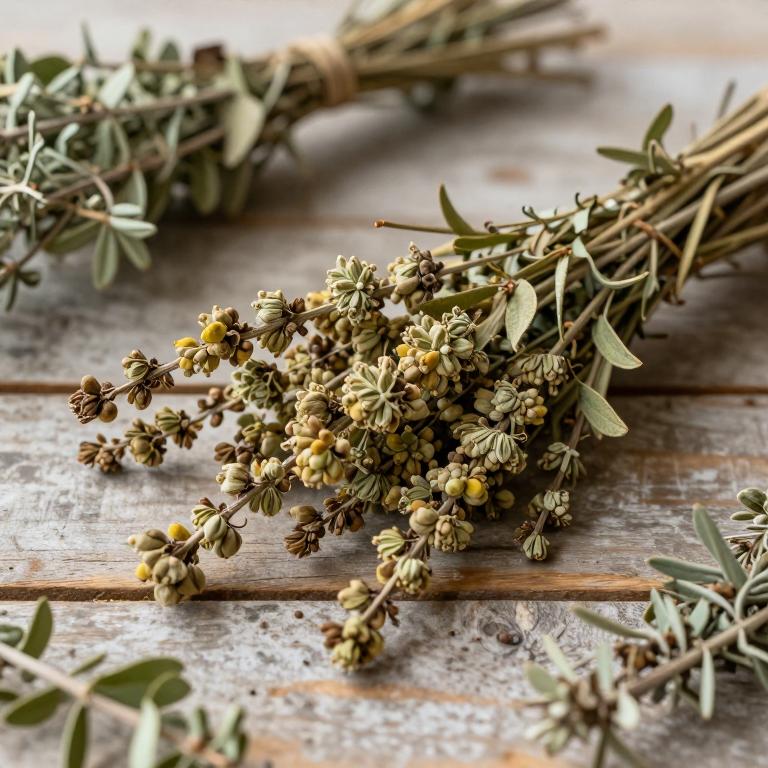
Prickly paperbark, scientifically known as Melaleuca stythelioides, is a resilient Australian shrub renowned for its medicinal properties. Traditionally used by Indigenous communities, its leaves and bark contain bioactive compounds with antimicrobial and anti-inflammatory potential. This versatile plant offers fascinating insights into natural healing and biodiversity within unique ecosystems.
Names and Synonyms
Common Names
- prickly paperbark
- prickly-leaf paperbark
- prickly-leaf teatree
- Prickly-leaved Paperbark
Scientific Names
Accepted name
Melaleuca styphelioidesSynonyms
- Myrtoleucodendron styphelioides
- Melaleuca obliqua
- Leptospermum styphelioides
Sources: Wikidata, Catalogue of Life
Taxonomical Classification
This plant belongs to the kingdom Plantae and is classified under the phylum Streptophyta within the class Equisetopsida. As a member of the subclass Magnoliidae and order Myrtales, it falls into the family Myrtaceae. Finally, its specific taxonomic designation is placed within the genus Melaleuca.
| Rank | Classification |
|---|---|
| Kingdom | Plantae |
| Phylum | Streptophyta |
| Class | Equisetopsida |
| Subclass | Magnoliidae |
| Order | Myrtales |
| Family | Myrtaceae |
| Genus | Melaleuca |
Sources: The World Checklist of Vascular Plants (WCVP)
Distribution
This plant is native to the Australian continent. Its natural range is primarily concentrated within the eastern regions of the country. Specifically, it can be found growing in the state of New South Wales. Additionally, the species is widely distributed throughout Queensland. These two states represent the primary geographical locations for this medicinal plant.
| Region | Area |
|---|---|
| Australia | New South Wales |
| Australia | Queensland |
Sources: The World Checklist of Vascular Plants (WCVP)
Botanical Identification
Ecology
The ecology of Melaleuca styphelioides is fundamentally characterized by its preference for lowland environments, where it thrives in specific hydrological and soil conditions. As a component of lowland ecosystems, it is frequently associated with riparian zones, seasonally inundated wetlands, and swamp margins where water availability is consistent but may fluctuate. This plant is well-adapted to nutrient-poor, sandy, or peaty soils that are often subject to periodic wetting and drying cycles. Its presence in these low-lying areas plays a crucial role in the structural complexity of the habitat, providing stabilization to soil margins and creating microhabitats for diverse fauna. The species is highly resilient to the shifting moisture levels typical of lowland drainage basins, allowing it to persist in transitional zones between permanent water bodies and drier terrestrial landscapes.
- Habitat :
- Lowland
Life history
The life history of Melaleuca styphelioides is characterized by its status as a perennial species, allowing it to persist in its environment over multiple growing seasons. In terms of its structural growth strategy, the plant is classified as a phanerophyte, specifically exhibiting traits of a phanerophyte and a nanophanerophyte, which indicates that its perennating buds are borne on aerial stems well above the ground level. This life form enables the plant to maintain a stable presence within its ecological niche throughout its extended lifespan.
- Life form :
- phanerophyte
- Lifecycle :
- perennial
Morphology
The morphology of Melaleuca styphelioides is characterized by its growth form as a woody tree, which can reach a significant plant height ranging from a minimum of 3 meters to a maximum of 20 meters. As a self-supporting species, it does not exhibit climbing behavior such as a liana or vine, nor does it function as an epiphyte, maintaining a strictly terrestrial existence. The plant is an independent organism, functioning without parasitic dependencies. While its habitat can vary across aquatic, semiaquatic, and terrestrial environments, its structural development is defined by its robust, woody nature and upright, self-supporting stature.
- Aquatic :
- terrestrial
- Climber :
- self-supporting
- Epiphyte :
- terrestrial
- Growth form :
- tree
- Parasite :
- independent
- Plant height max:
- 20 m
- Plant height min:
- 3 m
- Woodiness :
- woody
Physiology
The physiology of Melaleuca styphelioides is characterized by a C3 photosynthetic pathway, which governs its carbon fixation processes and metabolic efficiency. The plant's vegetative morphology is defined by its leaf dimensions, which exhibit specific structural constraints. The leaves typically measure a minimum length of 0.7 cm and can reach a maximum length of 1.5 cm. In terms of lateral expansion, the leaf width ranges from a minimum of 0.25 cm to a maximum of 0.6 cm, reflecting a narrow, linear leaf architecture consistent with its physiological adaptations.
- Leaf length max:
- 1.5 cm
- Leaf length min:
- 0.7 cm
- Leaf width max:
- 0.6 cm
- Leaf width min:
- 0.25 cm
- Photosynthetic pathway :
- C3
Reproduction
The reproduction of Melaleuca styphelioides is characterized by a biotic pollination syndrome, primarily relying on insects to facilitate the transfer of pollen. The plant produces seeds that exhibit significant variation in size, with individual seed masses ranging from a minimum of 0.00006 g to a maximum of 0.0003 g. On average, the seed mass for this species is approximately 0.00018 g, a characteristic that influences its dispersal and germination potential within its natural habitat.
- Pollination syndrome :
- insect
- Pollination syndrome :
- biotic
- Seed mass max:
- 3e-04 g
- Seed mass mean:
- 0.00018 g
- Seed mass min:
- 6e-05 g
Sources: Global Inventory of Floras and Traits (GIFT)
Chemicals
Melaleuca styphelioides has 5 reported phytochemicals identified across 0 scientific publications and several other databases. The most consistently reported chemicals include Ellagitannins, Pedunculagin, Pentagalloyl glucose, Tellimagrandin I, Tellimagrandin II.
| Chemical | Supporting sources | Consensus |
|---|---|---|
| Ellagitannins | 1 supporting sources | ★☆☆☆☆ |
| Pedunculagin | 1 supporting sources | ★☆☆☆☆ |
| Pentagalloyl glucose | 1 supporting sources | ★☆☆☆☆ |
| Tellimagrandin I | 1 supporting sources | ★☆☆☆☆ |
| Tellimagrandin II | 1 supporting sources | ★☆☆☆☆ |
Ellagitannins
- Pharmaceutical biology
Pedunculagin
- Pharmaceutical biology
Pentagalloyl glucose
- Pharmaceutical biology
Tellimagrandin I
- Pharmaceutical biology
Tellimagrandin II
- Pharmaceutical biology