flax-leaf paperbark
Melaleuca linariifolia · Accepted scientific name
Scientific literature: Sparse (85 studies) · ★★☆☆☆
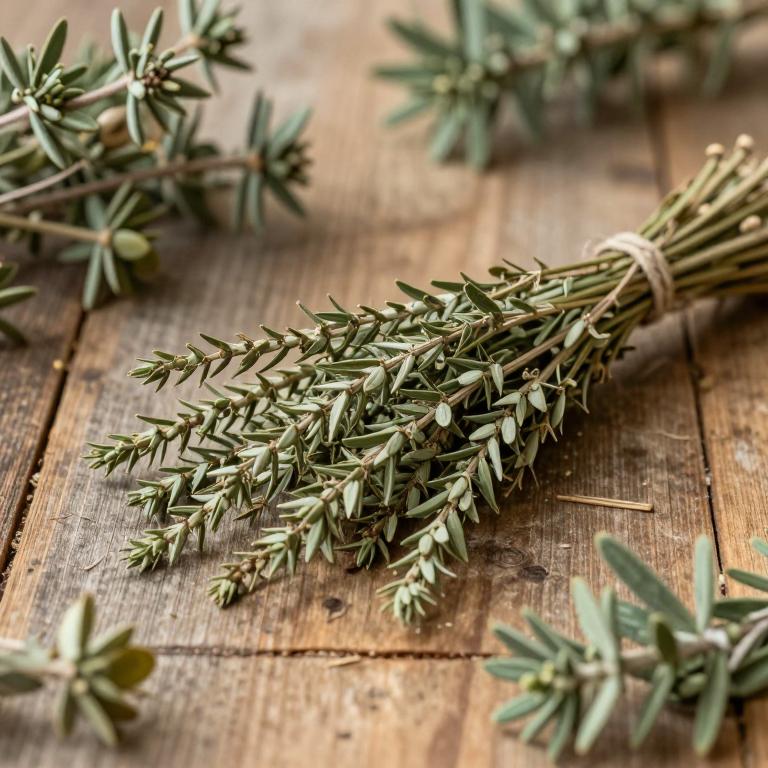
Flax-leaf paperbark, scientifically known as Melaleuca linariifolia, is a versatile Australian native shrub celebrated for its medicinal properties. Renowned for its aromatic foliage, it is frequently utilized in traditional and modern remedies to treat skin conditions and respiratory issues, offering powerful antiseptic and anti-inflammatory benefits through its essential oils.
Names and Synonyms
Common Names
- flax-leaf paperbark
- narrow-leaf paperbark
- narrow-leaf teatree
- snow-in-summer
Scientific Names
Accepted name
Melaleuca linariifoliaSynonyms
- Ozandra hyssopifolia
- Melaleuca hyssopifolia
- Myrtoleucodendron linariifolium
Regional and Traditional Names
Spanish:
- Myrtoleucodendron linariifolium
- Ozandra hyssopifolia
- Metrosideros hyssopifolia
- Melaleuca stricta
- Melaleuca hyssopifolia
- Mirto
French:
- Mélaleuque à feuilles linéaires
Sources: Wikidata, Catalogue of Life
Taxonomical Classification
This plant belongs to the kingdom Plantae and the phylum Streptophyta, placing it within the class Equisetopsida and subclass Magnoliidae. It is further classified under the order Myrtales and the family Myrtaceae. Finally, it is identified by the genus Melaleuca.
| Rank | Classification |
|---|---|
| Kingdom | Plantae |
| Phylum | Streptophyta |
| Class | Equisetopsida |
| Subclass | Magnoliidae |
| Order | Myrtales |
| Family | Myrtaceae |
| Genus | Melaleuca |
Sources: The World Checklist of Vascular Plants (WCVP)
Distribution
This plant, commonly known as tea tree, exhibits a specific geographical distribution across several regions. In its native habitat, it is widely found throughout various parts of Australia. Specifically, it thrives within the coastal and inland areas of New South Wales. The species also populates significant portions of Queensland, where the climate supports its growth. Beyond its native range, it has been introduced to the Southeastern United States, particularly in Florida.
| Region | Area |
|---|---|
| Australia | New South Wales |
| Australia | Queensland |
| Southeastern U.S.A. | Florida |
Sources: The World Checklist of Vascular Plants (WCVP)
Botanical Identification
Life history
The life history of Melaleuca linariifolia is characterized by a perennial lifecycle, ensuring its long-term presence within its native ecosystem. As a phanerophyte, the plant maintains its photosynthetic organs on elevated woody stems, a structural adaptation that defines its primary life form. Additionally, it exhibits a nanophanerophyte growth habit in certain developmental stages or environmental contexts, where the shoots remain relatively low to the ground. Throughout its existence, the species remains evergreen, maintaining its foliage year-round rather than undergoing a deciduous phase, which allows for continuous physiological activity.
- Deciduousness :
- evergreen
- Life form :
- nanophanerophyte
- Life form :
- phanerophyte
- Lifecycle :
- perennial
Morphology
The morphology of Melaleuca linariifolia is characterized by its stature as a woody tree, exhibiting a self-supporting growth form that is neither a climber nor a vine. As a terrestrial species, it does not function as an epiphyte or an aquatic plant, and it maintains an independent life cycle without parasitic behavior. The plant's height varies significantly depending on environmental conditions, with a minimum height of 2 m and a maximum height reaching up to 10 m, resulting in a mean plant height of approximately 10 m.
- Aquatic :
- terrestrial
- Climber :
- self-supporting
- Epiphyte :
- terrestrial
- Growth form :
- tree
- Parasite :
- independent
- Plant height mean:
- 10 m
- Plant height min:
- 2 m
- Woodiness :
- woody
Physiology
The physiology of Melaleuca linariifolia is characterized by a specialized photosynthetic strategy and distinct morphological leaf dimensions. The plant utilizes the C3 photosynthetic pathway, a common mechanism for carbon fixation in many woody shrubs. Its foliage consists of narrow, linear leaves that exhibit specific dimensional variations, ranging in length from a minimum of 2 cm to a maximum of 4.5 cm. The width of these leaves is notably slender, maintaining a minimum measurement of 0.2 cm and reaching a maximum width of only 0.35 cm. Furthermore, regarding its nutrient acquisition processes, the plant does not function as a nitrogen fixer, relying instead on the soil for available nitrogen rather than symbiotic nitrogen-fixing bacteria.
- Leaf length max:
- 4.5 cm
- Leaf length min:
- 2 cm
- Leaf width max:
- 0.35 cm
- Leaf width min:
- 0.2 cm
- Nitrogen fixer :
- no
- Photosynthetic pathway :
- C3
Reproduction
The reproduction of Melaleuca linariifolia is characterized by a biotic pollination syndrome, primarily relying on insects to facilitate the transfer of pollen. This insect-driven process is a critical component of its reproductive cycle, ensuring genetic diversity through biological vectors. Once fertilization is successful, the plant produces seeds that are notably minute, maintaining a highly consistent size across its population. The seed mass is extremely small, with a mean, maximum, and minimum value all recorded at $1 \times 10^{-5}$ g, indicating a strategy of producing a high volume of very lightweight seeds for dispersal.
- Pollination syndrome :
- insect
- Pollination syndrome :
- biotic
- Seed mass mean:
- 1e-05 g
Sources: Global Inventory of Floras and Traits (GIFT)
Chemicals
Melaleuca linariifolia has 18 reported phytochemicals identified across 0 scientific publications and several other databases. The most consistently reported chemicals include ALPHA-PINENE, ALPHA-THUJENE, Aromadendrene, BETA-PINENE, Dipentene.
| Chemical | Supporting sources | Consensus |
|---|---|---|
| ALPHA-PINENE | 1 supporting sources | ★☆☆☆☆ |
| ALPHA-THUJENE | 1 supporting sources | ★☆☆☆☆ |
| Aromadendrene | 1 supporting sources | ★☆☆☆☆ |
| BETA-PINENE | 1 supporting sources | ★☆☆☆☆ |
| Dipentene | 1 supporting sources | ★☆☆☆☆ |
| EO | 1 supporting sources | ★☆☆☆☆ |
| GAMMA-TERPINENE | 1 supporting sources | ★☆☆☆☆ |
| MYRCENE | 1 supporting sources | ★☆☆☆☆ |
| Methyl eugenol | 1 supporting sources | ★☆☆☆☆ |
| P-CYMENE | 1 supporting sources | ★☆☆☆☆ |
ALPHA-PINENE
- Dr. Duke
ALPHA-THUJENE
- Dr. Duke
Aromadendrene
- Dr. Duke
BETA-PINENE
- Dr. Duke
Dipentene
- Dr. Duke
EO
- Dr. Duke
GAMMA-TERPINENE
- Dr. Duke
MYRCENE
- Dr. Duke
Methyl eugenol
- Chemistry & biodiversity
P-CYMENE
- Dr. Duke
Activities
Melaleuca linariifolia has 67 reported activities identified across 0 scientific publications and several other databases. The most consistently reported activities include ACE-Inhibitor, Acaricide, Aldose-Reductase-Inhibitor, Allelochemic, Allelopathic.
| Activity | Supporting sources | Consensus |
|---|---|---|
| ACE-Inhibitor | 1 supporting sources | ★☆☆☆☆ |
| Acaricide | 1 supporting sources | ★☆☆☆☆ |
| Aldose-Reductase-Inhibitor | 1 supporting sources | ★☆☆☆☆ |
| Allelochemic | 1 supporting sources | ★☆☆☆☆ |
| Allelopathic | 1 supporting sources | ★☆☆☆☆ |
| Allergenic | 1 supporting sources | ★☆☆☆☆ |
| Analgesic | 1 supporting sources | ★☆☆☆☆ |
| Antiacetylcholinesterase | 1 supporting sources | ★☆☆☆☆ |
| Antiacne | 1 supporting sources | ★☆☆☆☆ |
| Antiallergic | 1 supporting sources | ★☆☆☆☆ |
ACE-Inhibitor
- Dr. Duke
Acaricide
- Dr. Duke
Aldose-Reductase-Inhibitor
- Dr. Duke
Allelochemic
- Dr. Duke
Allelopathic
- Dr. Duke
Allergenic
- Dr. Duke
Analgesic
- Dr. Duke
Antiacetylcholinesterase
- Dr. Duke
Antiacne
- Dr. Duke
Antiallergic
- Dr. Duke