bracelet honey myrtle
Melaleuca armillaris · Accepted scientific name
Scientific literature: Very Sparse (2 studies) · ★☆☆☆☆
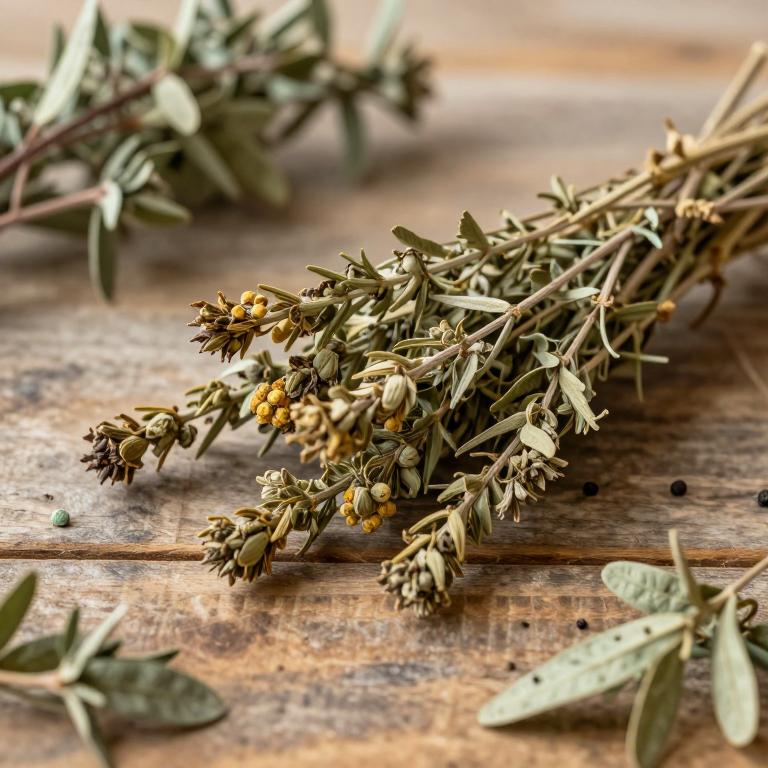
Bracelet honey myrtle, scientifically known as Melaleuca armillaris, is a resilient Australian shrub prized for its aromatic foliage. Native to coastal regions, this medicinal plant contains potent essential oils with antimicrobial properties. Often used in traditional healing, it offers therapeutic benefits for skin health and respiratory support through natural essences.
- Family
- Myrtaceae
- Native range
- Africa
- Parts used
- Not available
- Common names
- Bracelet Honey Myrtle · Giant Honey Myrtle · 1 more
- Scientific synonyms
- Metrosideros Armillaris · Myrtoleucodendron Armillare
Names and Synonyms
Common Names
- bracelet honey myrtle
- giant honey myrtle
- Bracelet Honey-myrtle
Scientific Names
Accepted name
Melaleuca armillarisSynonyms
- Metrosideros armillaris
- Myrtoleucodendron armillare
Sources: Wikidata, Catalogue of Life
Taxonomical Classification
This plant belongs to the kingdom Plantae within the phylum Streptophyta and the class Equisetopsida. It is further classified under the subclass Magnoliidae in the order Myrtales and the family Myrtaceae. Finally, it is identified by the genus Melaleuca as Melaleuca armillaris.
| Rank | Classification |
|---|---|
| Kingdom | Plantae |
| Phylum | Streptophyta |
| Class | Equisetopsida |
| Subclass | Magnoliidae |
| Order | Myrtales |
| Family | Myrtaceae |
| Genus | Melaleuca |
Sources: The World Checklist of Vascular Plants (WCVP)
Distribution
This plant exhibits a wide geographical distribution that spans across different hemispheres. In the Macaronesian region, it can be found growing in Madeira. Its presence is also significantly noted throughout various parts of Australia. Specifically, it inhabits the states of New South Wales, South Australia, and Victoria. Furthermore, the species is also documented growing in Tasmania.
| Region | Area |
|---|---|
| Macaronesia | Madeira |
| Australia | New South Wales |
| Australia | South Australia |
| Australia | Tasmania |
| Australia | Victoria |
| North-Central Pacific | Hawaii |
Sources: The World Checklist of Vascular Plants (WCVP)
Botanical Identification
Ecology
The ecology of Melaleuca armillaris is defined by its adaptation to high-altitude environments, where it thrives within specific altitudinal niches. This species is primarily characterized by its significant elevational range, which reaches a mean altitude of 2800 m AMSL. Occupying these montane or subalpine zones, the plant must contend with unique environmental pressures such as lower temperatures, increased UV exposure, and potentially thinner soils compared to lowland vegetation. Its distribution within these high-elevation habitats suggests a specialized ecological role, likely functioning within stable, cool-climate ecosystems where it contributes to the structural complexity and biodiversity of the high-altitude landscape.
- Elevational range mean:
- 2800 m AMSL
Life history
The life history of Melaleuca armillaris is characterized by its status as a perennial species, ensuring its long-term persistence within its natural ecosystem through multiple growing seasons. In terms of its structural growth habit and ecological classification, the plant exhibits dual life form characteristics, functioning as both a phanerophyte, where its stem is elevated well above the ground, and a nanophanerophyte, reflecting its specific stature and branching patterns. This combination of a perennial lifecycle and its distinct phanerophyte/nanophanerophyte life forms dictates its developmental strategy and its ability to occupy its specific niche over time.
- Life form :
- nanophanerophyte
- Life form :
- phanerophyte
- Lifecycle :
- perennial
Morphology
The morphology of Melaleuca armillaris is characterized by its growth form, which primarily manifests as a woody tree or shrub. As a self-supporting plant, it does not function as a climber, liana, or vine, and it maintains an independent lifestyle rather than acting as a parasite. The species is strictly terrestrial, lacking aquatic, semiaquatic, or epiphytic tendencies. Structurally, the plant is defined by its woody nature and can reach a maximum plant height of 8 meters.
- Aquatic :
- terrestrial
- Climber :
- self-supporting
- Epiphyte :
- terrestrial
- Growth form :
- tree
- Growth form :
- shrub
- Parasite :
- independent
- Plant height max:
- 8 m
- Woodiness :
- woody
Physiology
The physiology of Melaleuca armillaris is characterized by a specialized photosynthetic process and distinct morphological adaptations of its foliage. The plant utilizes the C3 photosynthetic pathway, a mechanism typical of many woody shrubs that optimizes carbon fixation under specific environmental conditions. Its leaves are notably linear and narrow, with a maximum leaf width of only 0.1 cm, reflecting an adaptation likely intended to minimize transpirational water loss. In terms of longitudinal development, the leaf dimensions vary significantly, with lengths ranging from a minimum of 1.2 cm to a maximum of 2.5 cm.
- Leaf length max:
- 2.5 cm
- Leaf length min:
- 1.2 cm
- Leaf width max:
- 0.1 cm
- Photosynthetic pathway :
- C3
Reproduction
The reproduction of Melaleuca armillaris is characterized by the production of seeds that exhibit significant morphological variation in weight. These seeds are notably minute, with a mean seed mass of approximately 0.000313833333333333 g. The distribution of seed size across the population shows a wide range, as indicated by a minimum seed mass of 0.000038 g and a maximum seed mass of 0.000645 g. This variability in mass suggests a diverse range of seed development or potential adaptations within the reproductive cycle of the species.
- Seed mass max:
- 0.000645 g
- Seed mass mean:
- 0.000313833333333333 g
- Seed mass min:
- 3.8e-05 g
Sources: Global Inventory of Floras and Traits (GIFT)
Chemicals
Melaleuca armillaris has 2 reported phytochemicals identified across 0 scientific publications and several other databases. The most consistently reported chemicals include 1,8-Cineole, TERPINOLENE.
| Chemical | Supporting sources | Consensus |
|---|---|---|
| 1,8-Cineole | 1 supporting sources | ★☆☆☆☆ |
| TERPINOLENE | 1 supporting sources | ★☆☆☆☆ |
1,8-Cineole
- Environmental science and pollution research international
TERPINOLENE
- Environmental science and pollution research international
Preparations
Melaleuca armillaris has 1 reported preparations identified across 0 scientific publications and several other databases. The most consistently reported preparations include EOs.
| Preparation | Supporting sources | Consensus |
|---|---|---|
| Eos | 1 supporting sources | ★☆☆☆☆ |
Eos
- Journal of food science