Meistera koenigii
Meistera koenigii · Accepted scientific name
Scientific literature: Very Sparse (12 studies) · ★☆☆☆☆
Meistera koenigii, scientifically known as Meistera koenigii, is a vital medicinal plant widely utilized in traditional Ayurvedic practices. Often referred to as the "Curry Tree," it is celebrated for its potent antioxidant, anti-inflammatory, and antimicrobial properties, offering significant therapeutic benefits for managing metabolic health and promoting overall wellness.
- Family
- Zingiberaceae
- Native range
- Asia-Temperate
- Parts used
- Fruit · Leaf
- Common names
- Not available
- Scientific synonyms
- Cardamomum Corynostachyum · Cardamomum Koenigii · 7 more
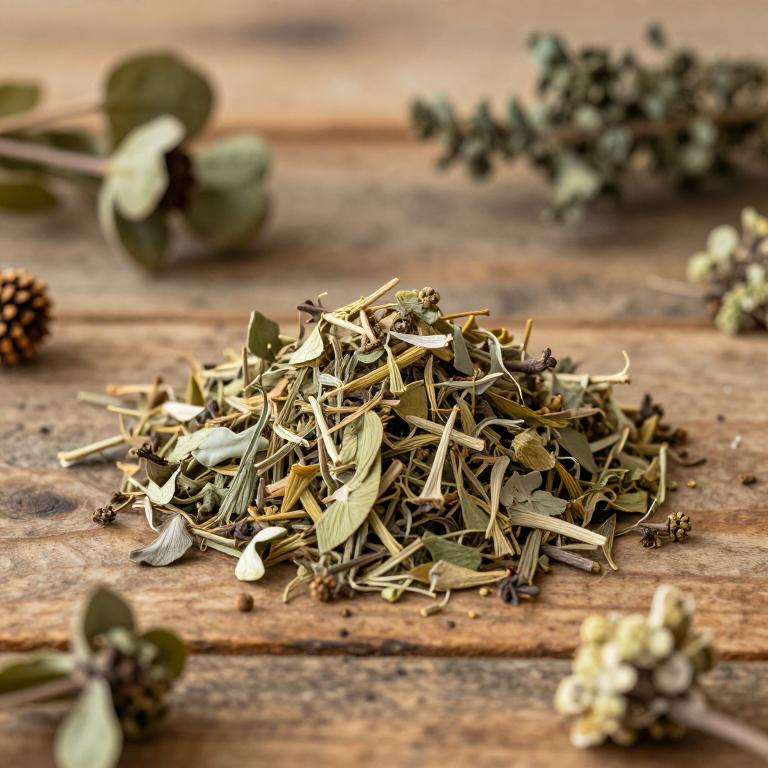
Names and Synonyms
Scientific Names
Accepted name
Meistera koenigiiSynonyms
- Cardamomum corynostachyum
- Cardamomum koenigii
- Zingiber corynostachyum
- Amomum vermanum
- Amomum corynostachyum
- Amomum deorianum
- Amomum koenigii
- Meistera vermana
- Meistera deoriana
Sources: Wikidata
Taxonomical Classification
This plant belongs to the kingdom Plantae and is classified under the phylum Streptophyta and the class Equisetopsida. Within the subclass Magnoliidae, it is placed in the order Zingiberales and the family Zingiberaceae. It is formally identified by the genus Meistera, specifically as the species Meistera koeinigii.
| Rank | Classification |
|---|---|
| Kingdom | Plantae |
| Phylum | Streptophyta |
| Class | Equisetopsida |
| Subclass | Magnoliidae |
| Order | Zingiberales |
| Family | Zingiberaceae |
| Genus | Meistera |
Sources: The World Checklist of Vascular Plants (WCVP)
Distribution
This plant exhibits a specific geographical distribution across several key regions in Asia. In China, it can be found spanning from the South-Central areas to the Southeast provinces. Its range extends into the Indian Subcontinent, where it is notably present in Assam. Additionally, the species is documented growing within the territory of Bangladesh. Finally, the plant is also distributed throughout the East Himalaya region.
| Region | Area |
|---|---|
| China | China South-Central |
| China | China Southeast |
| Indian Subcontinent | Assam |
| Indian Subcontinent | Bangladesh |
| Indian Subcontinent | East Himalaya |
| Indo-China | Laos |
| Indo-China | Myanmar |
| Indo-China | Thailand |
| Indo-China | Vietnam |
Sources: The World Checklist of Vascular Plants (WCVP)
Botanical Identification
Life history
The life history of Meistera koenigii is characterized by its specific survival strategies and growth habits, classified fundamentally as a cryptophyte. Within this biological framework, it functions as a geophyte, meaning it relies on underground storage organs to endure unfavorable environmental conditions or seasonal changes. This strategy allows the plant to protect its vital nutrients and regenerative tissues beneath the soil surface, facilitating rapid regrowth when optimal growing conditions return. By utilizing these specialized life forms, the plant effectively manages its life cycle to ensure persistence in its natural habitat.
- Life form :
- geophyte
- Life form :
- cryptophyte
Morphology
The morphology of Meistera koeinigii is characterized by its growth habit as a self-supporting climber, meaning it possesses the structural integrity to ascend or spread without being strictly dependent on external hosts for primary structural stability. It functions as an independent organism, exhibiting no parasitic tendencies toward other plants, and maintains a terrestrial existence rather than growing as an epiphyte.
- Climber :
- self-supporting
- Epiphyte :
- terrestrial
- Parasite :
- independent
Sources: Global Inventory of Floras and Traits (GIFT)
Plant Parts
Meistera koenigii has 2 reported plant parts identified across 2 scientific publications and several other databases that are studied for medicinal purposes. The most consistently reported plant part include fruit, leaf.
| Plant part | Supporting sources | Consensus |
|---|---|---|
| Fruit | 1 supporting sources | ★☆☆☆☆ |
| Leaf | 1 supporting sources | ★☆☆☆☆ |
Fruit
- Foods (Basel, Switzerland)
Leaf
- Foods (Basel, Switzerland)
Chemicals
Meistera koenigii has 7 reported phytochemicals identified across 2 scientific publications and several other databases. The most consistently reported chemicals include (+)-Nerolidol, (D)-Limonene, (Z)-2-Decenal, 2-NONANOL, 2-NONANONE.
| Chemical | Supporting sources | Consensus |
|---|---|---|
| (+)-Nerolidol | 1 supporting sources | ★☆☆☆☆ |
| (D)-Limonene | 1 supporting sources | ★☆☆☆☆ |
| (Z)-2-Decenal | 1 supporting sources | ★☆☆☆☆ |
| 2-NONANOL | 1 supporting sources | ★☆☆☆☆ |
| 2-NONANONE | 1 supporting sources | ★☆☆☆☆ |
| Linalool | 1 supporting sources | ★☆☆☆☆ |
| cineole | 1 supporting sources | ★☆☆☆☆ |
(+)-Nerolidol
- Analytica chimica acta
(D)-Limonene
- Foods (Basel, Switzerland)
(Z)-2-Decenal
- Foods (Basel, Switzerland)
2-NONANOL
- Analytica chimica acta
2-NONANONE
- Analytica chimica acta
Linalool
- Foods (Basel, Switzerland)
cineole
- Foods (Basel, Switzerland)
Activities
Meistera koenigii has 2 reported activities identified across 2 scientific publications and several other databases. The most consistently reported activities include Anticholinesterase, Antioxidant.
| Activity | Supporting sources | Consensus |
|---|---|---|
| Anticholinesterase | 1 supporting sources | ★☆☆☆☆ |
| Antioxidant | 1 supporting sources | ★☆☆☆☆ |
Anticholinesterase
- Natural product research
Antioxidant
- Natural product research
Conditions
Meistera koenigii has 1 reported investigations on conditions identified across 2 scientific publications and several other databases. The most consistently reported conditions include Alzheimer's disease.
| Condition | Supporting sources | Consensus |
|---|---|---|
| Alzheimer's disease | 1 supporting sources | ★☆☆☆☆ |
Alzheimer's disease
- Natural product research
Preparations
Meistera koenigii has 4 reported preparations identified across 2 scientific publications and several other databases. The most consistently reported preparations include ethanolic extracts, fruits, leaves, medicinal solutions AK.
| Preparation | Supporting sources | Consensus |
|---|---|---|
| Ethanolic extracts | 1 supporting sources | ★☆☆☆☆ |
| Fruits | 1 supporting sources | ★☆☆☆☆ |
| Leaves | 1 supporting sources | ★☆☆☆☆ |
| Medicinal solutions ak | 1 supporting sources | ★☆☆☆☆ |
Ethanolic extracts
- Natural product research
Fruits
- Foods (Basel, Switzerland)
Leaves
- Foods (Basel, Switzerland)
Medicinal solutions ak
- Journal of pharmaceutical and biomedical analysis