Medinilla arboricola
Medinilla arboricola · Accepted scientific name
Scientific literature: Very Sparse (2 studies) · ★☆☆☆☆
, scientifically known as Medinilla arboricola, is a remarkable medicinal plant valued for its diverse therapeutic properties. Native to specific tropical regions, this woody species offers unique phytochemical compounds used in traditional healing practices. Its bioactive constituents provide significant potential for pharmacological research, particularly in treating various inflammatory conditions.
- Family
- Melastomataceae
- Native range
- Asia-Temperate
- Parts used
- Not available
- Common names
- Not available
- Scientific synonyms
- Not available
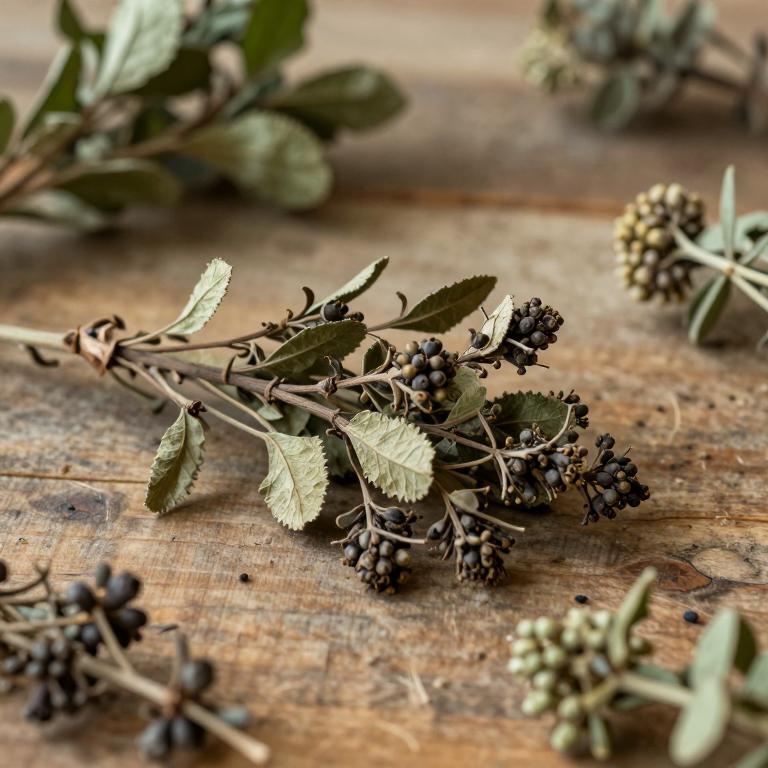
Names and Synonyms
Scientific Names
Accepted name
Medinilla arboricolaSources: Wikidata
Taxonomical Classification
This plant, Medinilla arboricola, belongs to the kingdom Plantae and is classified within the phylum Streptophyta. It is further categorized under the class Equisetopsida and the subclass Magnoliidae, falling within the order Myrtales. Ultimately, it is a member of the family Melastomataceae and the genus Medinilla.
| Rank | Classification |
|---|---|
| Kingdom | Plantae |
| Phylum | Streptophyta |
| Class | Equisetopsida |
| Subclass | Magnoliidae |
| Order | Myrtales |
| Family | Melastomataceae |
| Genus | Medinilla |
Sources: The World Checklist of Vascular Plants (WCVP)
Distribution
This plant, known scientifically as Medinilla arboricola, possesses a very specific and limited natural range. Its presence is geographically restricted to a single region within East Asia. Specifically, the species is found inhabiting the tropical environments of China. Within this country, its distribution is localized to the island province of Hainan. Consequently, this plant is considered an endemic species to this particular island location.
| Region | Area |
|---|---|
| China | Hainan |
Sources: The World Checklist of Vascular Plants (WCVP)
Botanical Identification
Life history
The life history of Medinilla arboricola is characterized by its classification as a perennial species, meaning it persists through multiple growing seasons rather than completing its life cycle in a single year. This long-lived growth habit allows the plant to establish a robust presence within its ecological niche, undergoing successive cycles of vegetative growth and seasonal maturation. As a perennial, it possesses the biological capacity for sustained development, often involving the strengthening of its structural systems over time to support its arboreal or shrub-like form. This extended lifecycle enables the plant to navigate varying environmental conditions across several years, maintaining stability and reproductive potential throughout its lifespan.
- Lifecycle :
- perennial
Morphology
The morphology of Medi nilia arboricola is characterized by a woody structure, exhibiting a distinct growth form categorized as a shrub. Although it possesses the structural characteristics of a shrub, its developmental habit includes a self-supporting climbing mechanism, allowing it to navigate its environment through a self-supporting climbing method rather than relying on obligatory or facultative attachment to other structures.
- Climber :
- self-supporting
- Growth form :
- shrub
- Woodiness :
- woody
Physiology
The physiology of Medinilla arboricola is characterized by specific morphological dimensions of its foliage that reflect its metabolic and structural adaptations. The leaves exhibit a distinct range of longitudinal development, with a minimum leaf length of 6 cm and a mean length of 7 cm, reaching a maximum capacity of 8 cm. This variation in length is complemented by a proportional transverse expansion, where leaf width fluctuates from a minimum of 3 cm to a maximum of 4.5 cm. These precise dimensional parameters suggest a regulated growth pattern designed to optimize surface area for photosynthetic efficiency while maintaining structural integrity through consistent leaf sizing.
- Leaf length max:
- 8 cm
- Leaf length mean:
- 7 cm
- Leaf length min:
- 6 cm
- Leaf width max:
- 4.5 cm
- Leaf width min:
- 3 cm
Reproduction
The reproduction of Medi nilia arboricola is facilitated through the development of specialized reproductive structures known as inflorescences. These flowering structures are relatively compact in size, typically measuring between a minimum of 0.02 m and a maximum of 0.03 m in length. The production of these small inflorescences is a critical stage in the plant's life cycle, serving as the primary mechanism for facilitating pollination and subsequent seed development.
- Inflorescence length max:
- 0.03 m
- Inflorescence length min:
- 0.02 m
Sources: Global Inventory of Floras and Traits (GIFT)
Chemicals
Medinilla arboricola has 2 reported phytochemicals identified across 0 scientific publications and several other databases. The most consistently reported chemicals include D-Limonene, acetone.
| Chemical | Supporting sources | Consensus |
|---|---|---|
| D-Limonene | 1 supporting sources | ★☆☆☆☆ |
| acetone | 1 supporting sources | ★☆☆☆☆ |
D-Limonene
- Zhong yao cai = Zhongyaocai = Journal of Chinese medicinal materials
acetone
- Zhong yao cai = Zhongyaocai = Journal of Chinese medicinal materials
Preparations
Medinilla arboricola has 1 reported preparations identified across 0 scientific publications and several other databases. The most consistently reported preparations include volatile oils.
| Preparation | Supporting sources | Consensus |
|---|---|---|
| Volatile oils | 1 supporting sources | ★☆☆☆☆ |
Volatile oils
- Zhong yao cai = Zhongyaocai = Journal of Chinese medicinal materials