Strong-Spined Medick
Medicago truncatula · Accepted scientific name
Scientific literature: Very Sparse (11 studies) · ★☆☆☆☆
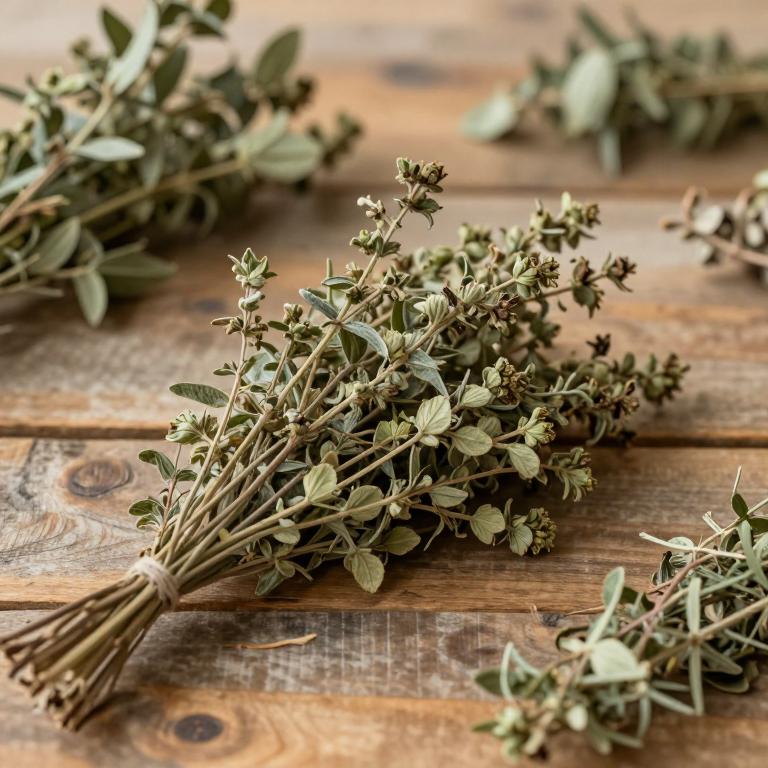
Strong-Spined Medick, scientifically known as Medicago truncatula, is a resilient, prostrate herb native to Africa. Characterized by its distinctive prickly stems and small yellow flowers, this plant is widely utilized in traditional medicine. It is valued for its diverse therapeutic properties, particularly in treating various ailments across various cultures.
Names and Synonyms
Common Names
- Strong-Spined Medick
- Barrel Clover
- Barrel Medic
- barrel-clover
- caltrop medic
- cylindrical bur medic
- strong-spine medick
- barrel medick
Scientific Names
Accepted name
Medicago truncatulaSynonyms
- Medicago truncatula var. cosyrensis
- Medicago tribuloides var. truncatula
- Medicago polymorpha var. tribuloides
- Medicago tribuloides var. muricata
- Medicago truncatula var. longeaculeata
- Medicago tentaculata
- Medicago tribuloides f. longepedunculata
- Medicago tribuloides var. cosyrensis
- Medicago tribuloides var. heteracantha
- Medicago truncatula f. laxicycla
- Medicago truncatula var. uncinata
- Medicago tribuloides var. loneiaculeata
- Medicago tribuloides
- Medicago tribuloides var. subinermis
- Medicago truncatula subsp. longeaculeata
- Medicago tribuloides var. rectiuscula
- Medicago truncatula f. uncinata
- Medicago tribuloides var. uncinata
- Medicago uncinata
- Medicago truncatula var. breviaculeata
- Medica tribuloides
- Medicago truncatula var. laciniata
- Medicago crassispina
- Medicago truncatula var. narbonensis
- Medicago hornemanniana
- Medicago truncatula var. rugosissima
- Medicago glabella
- Medicago truncatula var. tentaculata
- Medicago tribuloides subsp. truncatula
- Medicago tribuloides var. breviaculeata
- Medicago truncatula f. dextrorsa
- Medicago truncatula f. dextrorsa
- Medicago tribuloides var. narbonensis
- Medicago truncatula var. rectiuscula
- Medicago truncatula f. sinistrorsa
- Medicago truncatula f. sinistrorsa
- Medicago tribuloides proles tentaculata
- Medicago tribuloides var. tentaculata
- Medicago truncatula var. tribuloides
- Medicago truncatula var. tricycla
- Medicago truncatula f. tricycla
- Medicago truncatula var. laxicycla
Regional and Traditional Names
Spanish:
- Trébol Barril
German:
- Gestutzter Schneckenklee
French:
- Luzerne tronquée
- Luzerne tronquée
Sources: Wikidata, Catalogue of Life
Taxonomical Classification
This plant belongs to the kingdom Plantae and the phylum Streptophyta, falling under the class Equisetopsida and subclass Magnoliidae. Within the order Fabales, it is classified under the family Fabaceae. Finally, its taxonomic identity is defined by the genus Medicago, specifically the species Medicago truncatula.
| Rank | Classification |
|---|---|
| Kingdom | Plantae |
| Phylum | Streptophyta |
| Class | Equisetopsida |
| Subclass | Magnoliidae |
| Order | Fabales |
| Family | Fabaceae |
| Genus | Medicago |
Sources: The World Checklist of Vascular Plants (WCVP)
Distribution
This plant exhibits a diverse distribution across several regions of the European continent. In Northern Europe, its presence can be documented within Great Britain. Moving into Middle Europe, the species is found in both Austria and Germany. The distribution extends further south to Southwestern Europe, specifically encompassing the Baleares. Finally, its range in the southwestern region also includes the island of Corse.
| Region | Area |
|---|---|
| Northern Europe | Great Britain |
| Middle Europe | Austria |
| Middle Europe | Germany |
| Southwestern Europe | Baleares |
| Southwestern Europe | Corse |
| Southwestern Europe | France |
| Southwestern Europe | Portugal |
| Southwestern Europe | Sardegna |
| Southwestern Europe | Spain |
| Southeastern Europe | Greece |
Sources: The World Checklist of Vascular Plants (WCVP)
Botanical Identification
Ecology
The ecology of Medicaego truncatula is characterized by its ability to thrive across a broad altitudinal gradient, ranging from sea level (0 m AMSL) up to a maximum elevation of 1500 m AMSL. It is typically found in specific microhabitats, showing a preference for riparian environments such as rivers and rocky, stony places where drainage and soil composition meet its physiological needs. To survive within these ecological niches, the plant possesses active defense mechanisms, indicating an evolutionary adaptation to mitigate herbivory or environmental stressors encountered in its natural range.
- Defense :
- yes
- Elevational range max:
- 1500 m AMSL
- Elevational range min:
- 0 m AMSL
- Habitat :
- rivers, stony places
Life history
The life history of Medicago truncatula is characterized by an annual lifecycle, meaning the plant completes its entire biological development from germination to seed production within a single growing season. In terms of its ecological growth habit, it is classified as a therophyte, a life form where the majority of the plant's vegetative structure dies back after flowering, leaving only seeds to endure unfavorable environmental conditions. This specific life form, identified both as a therophyte in its primary classification and as its specific growth strategy, ensures that the species can rapidly colonize available niches and persist through dormancy before emerging again in subsequent seasons.
- Life form :
- therophyte
- Lifecycle :
- annual
Morphology
The morphology of Medicaigo truncatula is characterized by its growth form as a non-woody herb and forb, exhibiting a primarily terrestrial habitat that can transition through semiaquatic or aquatic environments. As an independent plant that does not function as a parasite or an epiphyte, it maintains a self-supporting structure rather than acting as an obligatory or facultative climber, though its stems display an ascending shoot orientation. The plant is relatively small in stature, reaching a maximum plant height of 0.5 m, with individual shoots extending to a maximum length of 60 cm.
- Aquatic :
- terrestrial
- Climber :
- self-supporting
- Epiphyte :
- terrestrial
- Growth form :
- herb
- Parasite :
- independent
- Plant height max:
- 0.5 m
- Shoot length max:
- 60 cm
- Shoot orientation :
- ascending
- Woodiness :
- non-woody
Physiology
The physiology of Medicago truncatula is characterized by a C3 photosynthetic pathway, which dictates its carbon fixation processes and metabolic efficiency. Its vegetative morphology is defined by leaf structures that exhibit specific dimensional variability, with leaf lengths ranging from a minimum of 0.6 cm to a maximum of 2.5 cm. The leaves possess an ovate form, with widths varying between a minimum of 0.4 cm and a maximum of 2 cm, parameters that influence the plant's surface area for gas exchange and light interception.
- Leaf form :
- ovate
- Leaf length max:
- 2.5 cm
- Leaf length min:
- 0.6 cm
- Leaf width max:
- 2 cm
- Leaf width min:
- 0.4 cm
- Photosynthetic pathway :
- C3
Reproduction
The reproduction of Medicago truncatula is characterized by a bisexual sexual reproductive system, where pollination is primarily a biotic process driven by an insect pollination syndrome. The flowering period typically begins in March and extends through June, producing yellow flowers that measure between 0.6 cm and 0.8 cm in length. Self-fertilization is noted as absent, emphasizing the importance of external agents for successful reproduction. Following fertilization, the plant develops fruit in the form of a pod, which typically ranges from 0.65 cm to 1 cm in length and 0.5 cm to 0.8 cm in width. These pods are highly prolific, containing more than 1000 seeds per fruit. The individual seeds are quite small, with a mean mass of approximately 0.00403 g, ranging from a minimum of 0.00373 g to a maximum of 0.0045 g. For dispersal, the plant utilizes a zoochorous strategy, specifically through epizoochory, allowing the seeds to be transported by animals.
- Dispersal syndrome :
- zoochorous
- Dispersal syndrome :
- epizoochorous
- Flower colour :
- yellow
- Flower length max:
- 0.8 cm
- Flower length min:
- 0.6 cm
- Flowering time :
- Mar
- Flowering time :
- Jun
- Fruit length max:
- 1 cm
- Fruit length min:
- 0.65 cm
- Fruit type :
- pod
- Fruit width max:
- 0.8 cm
- Fruit width min:
- 0.5 cm
- Pollination syndrome :
- insect
- Pollination syndrome :
- biotic
- Reproduction sexual :
- bisexual
- Seed mass max:
- 0.0045 g
- Seed mass mean:
- 0.00403095233333333 g
- Seed mass min:
- 0.00373 g
- Seeds_per_fruit :
- >1000
- Self fertilization :
- absent
Sources: Global Inventory of Floras and Traits (GIFT)
Chemicals
Medicago truncatula has 10 reported phytochemicals identified across 0 scientific publications and several other databases. The most consistently reported chemicals include ABSCISIC ACID, Anthocyanins, Isoflavonoids, Jasmonic acid, LIGNIN.
| Chemical | Supporting sources | Consensus |
|---|---|---|
| ABSCISIC ACID | 1 supporting sources | ★☆☆☆☆ |
| Anthocyanins | 1 supporting sources | ★☆☆☆☆ |
| Isoflavonoids | 1 supporting sources | ★☆☆☆☆ |
| Jasmonic acid | 1 supporting sources | ★☆☆☆☆ |
| LIGNIN | 1 supporting sources | ★☆☆☆☆ |
| Medicarpin | 1 supporting sources | ★☆☆☆☆ |
| Ursolic acid | 1 supporting sources | ★☆☆☆☆ |
| cellulose | 1 supporting sources | ★☆☆☆☆ |
| pectin | 1 supporting sources | ★☆☆☆☆ |
| salicylic acid | 1 supporting sources | ★☆☆☆☆ |
ABSCISIC ACID
- Plants (Basel, Switzerland)
Anthocyanins
- Journal of experimental botany
Isoflavonoids
- Molecular plant pathology
Jasmonic acid
- Molecular plant pathology
LIGNIN
- Plants (Basel, Switzerland)
Medicarpin
- Molecular plant pathology
Ursolic acid
- Plant biotechnology (Tokyo, Japan)
cellulose
- Plants (Basel, Switzerland)
pectin
- Plants (Basel, Switzerland)
salicylic acid
- Molecular plant pathology
Preparations
Medicago truncatula has 1 reported preparations identified across 0 scientific publications and several other databases. The most consistently reported preparations include roots.
| Preparation | Supporting sources | Consensus |
|---|---|---|
| Roots | 1 supporting sources | ★☆☆☆☆ |
Roots
- Plant biotechnology journal