Medicago monantha
Medicago monantha · Accepted scientific name
Scientific literature: Very Sparse (8 studies) · ★☆☆☆☆
Medicago monantha, scientifically known as Medicago monantha, is a versatile legume widely recognized for its significant therapeutic potential. Native to various tropical regions, this plant is deeply rooted in traditional medicine, where its bioactive compounds are utilized to treat diverse ailments, offering promising insights for modern pharmacological research.
- Family
- Fabaceae
- Native range
- Europe
- Parts used
- Not available
- Common names
- Not available
- Scientific synonyms
- Trigonella Incisa F. Multiflora · Trigonella Noeana Var. Minor · 33 more
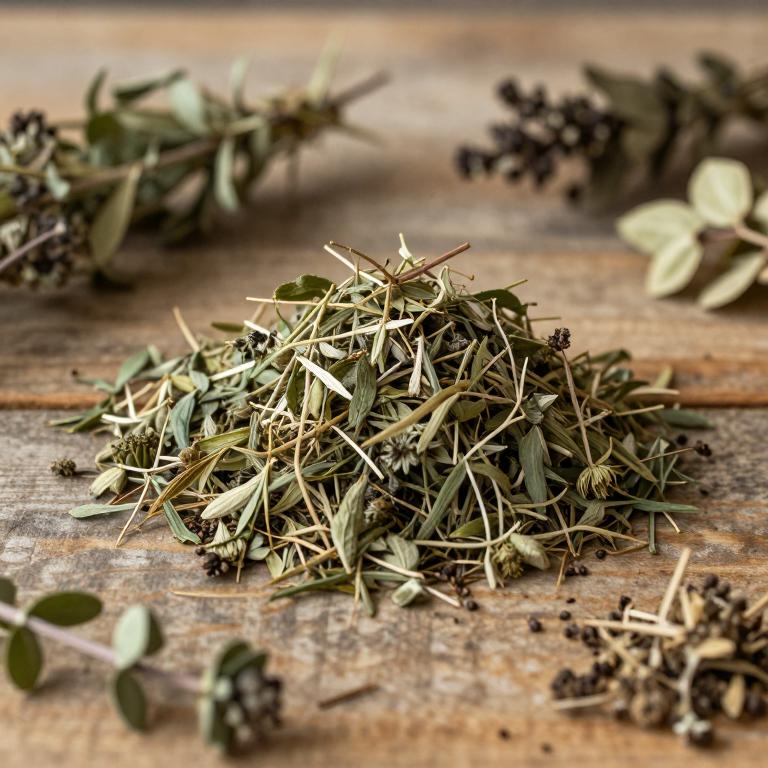
Names and Synonyms
Scientific Names
Accepted name
Medicago monanthaSynonyms
- Trigonella incisa f. multiflora
- Trigonella noeana var. minor
- Trigonella monantha f. pinnatifida
- Trigonella noeana f. pinnatifida
- Trigonella noeana f. pedunculata
- Trigonella noeana f. reticulata
- Trigonella monantha subsp. incisa
- Trigonella noeana var. tricarpa
- Trigonella monantha subsp. noeana
- Medicago monantha subsp. noeana
- Trigonella monantha subsp. geminiflora
- Telis noeana
- Telis monantha
- Telis brahuica
- Trigonella incisa var. geminiflora
- Trigonella noeana f. brachycarpa
- Trigonella noeana f. tricarpa
- Trigonella monantha var. macroglochin
- Medicago monantha subsp. incisa
- Telis incisa
- Trigonella monantha f. integrata
- Trigonella noeana var. aleppica
- Trigonella monantha var. brachycarpa
- Trigonella geminiflora var. curvata
- Trigonella noeana f. integrata
- Trigonella dicarpa
- Trigonella hamaticarpa
- Trigonella geminiflora
- Trigonella brahuica
- Trigonella macroglochin
- Trigonella noeana
- Trigonella monantha
- Medicago psilocarpa
- Medicago dicarpa
- Trigonella incisa
Sources: Wikidata, Catalogue of Life
Taxonomical Classification
This plant, known scientifically as Medicago monantha, belongs to the kingdom Plantae within the phylum Streptophyta. It is classified under the class Equisetopsida and subclass Magnoliidae, following the order Fabales. Ultimately, it is a member of the Fabaceae family within the genus Medicago.
| Rank | Classification |
|---|---|
| Kingdom | Plantae |
| Phylum | Streptophyta |
| Class | Equisetopsida |
| Subclass | Magnoliidae |
| Order | Fabales |
| Family | Fabaceae |
| Genus | Medicago |
Sources: The World Checklist of Vascular Plants (WCVP)
Distribution
This plant exhibits a wide-ranging geographical distribution that spans several different continents and climate zones. In Middle Europe, it can be found specifically within the borders of Germany. Its presence extends into Eastern Europe, where it inhabits the Baltic States. Within the Central Asian region, the species is documented in both Kazakhstan and Kirgizstan. Additionally, the plant reaches as far south as East Tropical Africa, specifically in Kenya.
| Region | Area |
|---|---|
| Middle Europe | Germany |
| Eastern Europe | Baltic States |
| East Tropical Africa | Kenya |
| Central Asia | Kazakhstan |
| Central Asia | Kirgizstan |
| Central Asia | Turkmenistan |
| Central Asia | Tadzhikistan |
| Central Asia | Uzbekistan |
| Caucasus | Transcaucasus |
| Western Asia | Afghanistan |
Sources: The World Checklist of Vascular Plants (WCVP)
Botanical Identification
Ecology
The ecology of Medicago monantha is characterized by its presence in specific altitudinal gradients and varied land cover types. This species thrives within an elevational range extending from a minimum of 400 m AMSL to a maximum of 2600 m AMSL. Within these lower and middle mountain zones, it occupies diverse habitats, specifically colonizing dry stony slopes, fallows, and plowfields.
- Elevational range max:
- 2600 m AMSL
- Elevational range min:
- 400 m AMSL
- Habitat :
- dry stony slopes, fallows, and plowfields in the lower and middle mountain zones
Life history
The life history of Medicago monantha is characterized by a lifecycle that is classified as annual, meaning it completes its entire biological development from germination to seed production within a single growing season. In terms of its ecological life form, the plant functions as a therophyte, a strategy where the vegetative body dies off at the end of the growing season, leaving only seeds to persist through unfavorable conditions to ensure the survival of the next generation. This developmental pattern is consistent across its structural classifications, as it maintains a therophyte status, avoiding the long-term woody or perennial structures found in other growth forms.
- Life form :
- therophyte
- Lifecycle :
- annual
Morphology
The morphology of Medicago monantha is characterized by its growth form as a non-woody herb and forb, exhibiting a primarily terrestrial habit rather than an aquatic or semiaquatic one. As an independent species, it does not function as a parasite or an epiphyte, maintaining a terrestrial existence. The plant is relatively small in stature, with a height ranging from a minimum of 0.05 m to a maximum of 0.2 m. Furthermore, it is a self-supporting plant rather than an obligatory or facultative climber, such as a liana or vine, allowing it to maintain its structure without external support.
- Aquatic :
- terrestrial
- Climber :
- self-supporting
- Epiphyte :
- terrestrial
- Growth form :
- herb
- Growth form :
- forb
- Parasite :
- independent
- Plant height max:
- 0.2 m
- Plant height min:
- 0.05 m
- Woodiness :
- non-woody
Reproduction
The reproduction of Medicaego monantha is characterized by a flexible flowering phenology that can span a significant portion of the year. The flowering period is highly variable, with the onset of blooming typically occurring as early as January or February, though it can manifest in any month depending on environmental conditions. The peak flowering window often encompasses the spring months, with a significant period of floral activity observed between March and April. However, due to its variable nature, the flowering cycle can extend through various months of the year, ensuring a broad reproductive window that adapts to seasonal shifts.
- Flowering time :
- Mar
- Flowering time :
- Apr
Sources: Global Inventory of Floras and Traits (GIFT)
Chemicals
Medicago monantha has 8 reported phytochemicals identified across 0 scientific publications and several other databases. The most consistently reported chemicals include 4-Hydroxyisoleucine, Antioxidant Activity, Flavonoid, Trigonelline, fructose.
| Chemical | Supporting sources | Consensus |
|---|---|---|
| 4-Hydroxyisoleucine | 1 supporting sources | ★☆☆☆☆ |
| Antioxidant Activity | 1 supporting sources | ★☆☆☆☆ |
| Flavonoid | 1 supporting sources | ★☆☆☆☆ |
| Trigonelline | 1 supporting sources | ★☆☆☆☆ |
| fructose | 1 supporting sources | ★☆☆☆☆ |
| glucose | 1 supporting sources | ★☆☆☆☆ |
| phenol | 1 supporting sources | ★☆☆☆☆ |
| sucrose | 1 supporting sources | ★☆☆☆☆ |
4-Hydroxyisoleucine
- BMC plant biology
Antioxidant Activity
- BMC plant biology
Flavonoid
- BMC plant biology
Trigonelline
- BMC plant biology
fructose
- BMC plant biology
glucose
- BMC plant biology
phenol
- BMC plant biology
sucrose
- BMC plant biology