Koko Trees
Maytenus · Accepted scientific name
Scientific literature: Very Sparse (7 studies) · ★☆☆☆☆
Koko Trees, scientifically known as Maytenus, is a diverse genus of shrubs and trees valued in traditional medicine. Renowned for their bioactive compounds, including alkaloids and terpenoids, these plants offer significant therapeutic potential. They are frequently studied for their antimicrobial, anti-inflammatory, and antioxidant properties in various medicinal applications.
- Family
- Celastraceae
- Native range
- Africa
- Parts used
- Leaf · Root
- Common names
- Koko Trees
- Scientific synonyms
- Tricerma · Euthalis · 4 more
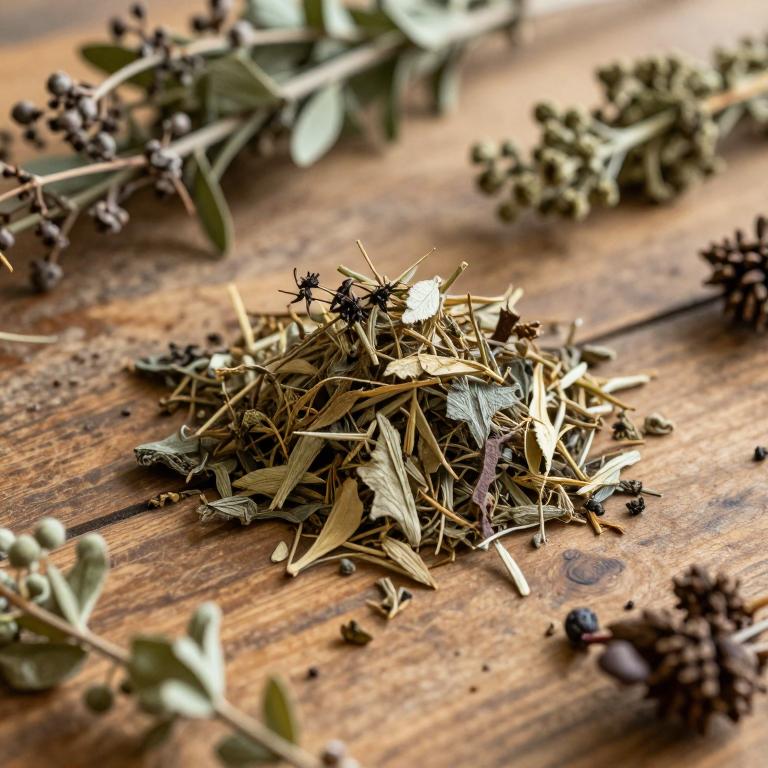
Names and Synonyms
Common Names
- Koko Trees
Scientific Names
Accepted name
MaytenusSynonyms
- Tricerma
- Euthalis
- Scytophyllum
- Boaria
- Moya
- Monteverdia
Regional and Traditional Names
Spanish:
- Tricerma
- Gymnosporia
- Boaria
- Maitenes
Sources: Wikidata, Catalogue of Life
Taxonomical Classification
This plant belongs to the kingdom Plantae and the phylum Streptophyta, falling under the class Equisetopsida within the subclass Magnoliidae. It is classified under the order Celastrales and the family Celastraceae. Ultimately, its taxonomic identity is defined by the genus Maytenus.
| Rank | Classification |
|---|---|
| Kingdom | Plantae |
| Phylum | Streptophyta |
| Class | Equisetopsida |
| Subclass | Magnoliidae |
| Order | Celastrales |
| Family | Celastraceae |
| Genus | Maytenus |
Sources: The World Checklist of Vascular Plants (WCVP)
Distribution
This plant exhibits a diverse geographical range spanning several distinct regions. In the Macaronesian islands, it can be found specifically in Madeira. Its presence extends into West Tropical Africa, where it is located in Guinea, the Ivory Coast, and Nigeria. Furthermore, the species reaches into West-Central Tropical Africa, specifically within Burundi. This distribution highlights the plant's ability to thrive across various tropical and island environments.
| Region | Area |
|---|---|
| Macaronesia | Madeira |
| West Tropical Africa | Guinea |
| West Tropical Africa | Ivory Coast |
| West Tropical Africa | Nigeria |
| West-Central Tropical Africa | Burundi |
| West-Central Tropical Africa | Central African Republic |
| West-Central Tropical Africa | Cameroon |
| West-Central Tropical Africa | Congo |
| West-Central Tropical Africa | Gabon |
| West-Central Tropical Africa | Gulf of Guinea Is. |
Sources: The World Checklist of Vascular Plants (WCVP)
Plant Parts
Maytenus has 2 reported plant parts identified across 2 scientific publications and several other databases that are studied for medicinal purposes. The most consistently reported plant part include leaf, root.
| Plant part | Supporting sources | Consensus |
|---|---|---|
| Leaf | 1 supporting sources | ★☆☆☆☆ |
| Root | 1 supporting sources | ★☆☆☆☆ |
Leaf
- Inflammopharmacology
Root
- Inflammopharmacology
Chemicals
Maytenus has 1 reported phytochemicals identified across 2 scientific publications and several other databases. The most consistently reported chemicals include MAYTANSINE.
| Chemical | Supporting sources | Consensus |
|---|---|---|
| MAYTANSINE | 1 supporting sources | ★☆☆☆☆ |
MAYTANSINE
- Molecules (Basel, Switzerland)
Activities
Maytenus has 1 reported activities identified across 2 scientific publications and several other databases. The most consistently reported activities include Anticancer.
| Activity | Supporting sources | Consensus |
|---|---|---|
| Anticancer | 1 supporting sources | ★☆☆☆☆ |
Anticancer
- Translational cancer research
Conditions
Maytenus has 2 reported investigations on conditions identified across 2 scientific publications and several other databases. The most consistently reported conditions include HIV, tumor.
| Condition | Supporting sources | Consensus |
|---|---|---|
| Hiv | 1 supporting sources | ★☆☆☆☆ |
| Tumor | 1 supporting sources | ★☆☆☆☆ |
Hiv
- Molecules (Basel, Switzerland)
Tumor
- Molecules (Basel, Switzerland)
Preparations
Maytenus has 1 reported preparations identified across 2 scientific publications and several other databases. The most consistently reported preparations include insF fraction.
| Preparation | Supporting sources | Consensus |
|---|---|---|
| Insf fraction | 1 supporting sources | ★☆☆☆☆ |
Insf fraction
- Journal of ethnopharmacology