Maytenus undata
Maytenus undata · Accepted scientific name
Scientific literature: Very Sparse (12 studies) · ★☆☆☆☆
Maytenus undata, scientifically known as Maytenus undata, is a versatile medicinal shrub native to various tropical regions. Renowned for its diverse pharmacological properties, this plant is traditionally utilized in folk medicine to treat inflammatory conditions, skin ailments, and digestive issues, offering significant potential for contemporary therapeutic research and development.
- Family
- Celastraceae
- Native range
- Africa
- Parts used
- Not available
- Common names
- Not available
- Scientific synonyms
- Maytenus Goetzeana · Gymnosporia Undata · 34 more
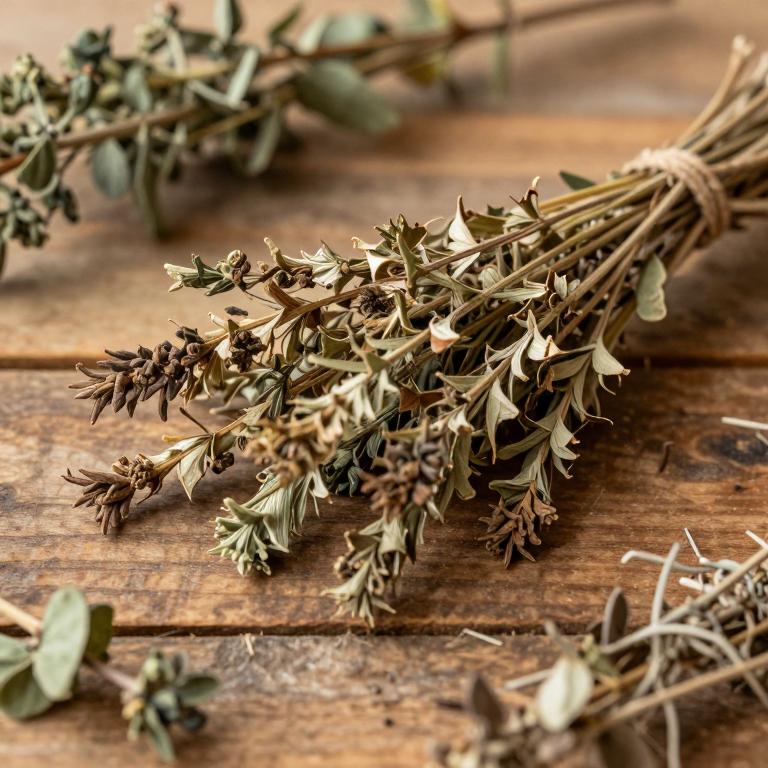
Names and Synonyms
Scientific Names
Accepted name
Maytenus undataSynonyms
- Maytenus goetzeana
- Gymnosporia undata
- Celastrus cymatodes
- Aerisilvaea serrata
- Catha fasciculata var. parvifolia
- Celastrus undatus
- Catha fasciculata
- Maytenus fasciculata
- Celastrus sinuatodentatus
- Scolopia platyphylla
- Maytenus luteola
- Gnidia rehmannii
- Celastrus huillensis
- Maytenus ilicina
- Maytenus lancifolia
- Celastrus laurifolius
- Maytenus laurifolia
- Celastrus luteolus
- Maytenus huillensis
- Celastrus macrophyllus
- Celastrus fasciculatus
- Maytenus zeyheri
- Celastrus dumetorum
- Celastrus collinus
- Celastrus zeyheri
- Gymnosporia fasiculata
- Gymnosporia maliensis
- Gymnosporia lancifolia
- Gymnosporia laurifolia
- Gymnosporia luteola
- Gymnosporia goetzeana
- Gymnosporia huillensis
- Gymnosporia ilicina
- Gymnosporia peglerae
- Gymnosporia rehmannii
- Gymnosporia zeyheri
Sources: Wikidata
Taxonomical Classification
This plant belongs to the kingdom Plantae and is classified under the phylum Streptophyta and class Equisetopsida. Within the subclass Magnoliidae, it is organized under the order Celastrales and the family Celaestraceae. Ultimately, it is identified by the genus Maytenus.
| Rank | Classification |
|---|---|
| Kingdom | Plantae |
| Phylum | Streptophyta |
| Class | Equisetopsida |
| Subclass | Magnoliidae |
| Order | Celastrales |
| Family | Celastraceae |
| Genus | Maytenus |
Sources: The World Checklist of Vascular Plants (WCVP)
Distribution
This plant exhibits a diverse geographical range across several regions of the African continent. In West Tropical Africa, its presence is documented in Guinea, Ivory Coast, and Nigeria. Moving into West-Central Tropical Africa, the species can also be found in Burundi. Additionally, it inhabits the Central African Republic within the same central region. Together, these locations highlight the plant's significant distribution across both western and central tropical zones.
| Region | Area |
|---|---|
| West Tropical Africa | Guinea |
| West Tropical Africa | Ivory Coast |
| West Tropical Africa | Nigeria |
| West-Central Tropical Africa | Burundi |
| West-Central Tropical Africa | Central African Republic |
| West-Central Tropical Africa | Cameroon |
| West-Central Tropical Africa | Congo |
| West-Central Tropical Africa | Rwanda |
| West-Central Tropical Africa | DR Congo |
| Northeast Tropical Africa | Djibouti |
Sources: The World Checklist of Vascular Plants (WCVP)
Botanical Identification
Ecology
The ecology of Maytenus undata is characterized by its broad adaptability across diverse landscapes and significant altitudinal gradients. It thrives within varied habitats, ranging from dry or moist forests and clumped wooded grasslands to closed evergreen bushlands situated near the sea. This species demonstrates a wide vertical distribution, occupying an elevational range that begins as low as 5 m AMSL and extends up to a maximum of 2225 m AMSL.
- Elevational range max:
- 2225 m AMSL
- Elevational range min:
- 5 m AMSL
- Habitat :
- dry or moist forest, closed evergreen bushland near sea, clump wooded grassland
Life history
The life history of Maytenus undata is characterized by its status as a perennial organism, allowing it to persist in its environment through multiple growing seasons. As a long-lived species, it follows a developmental trajectory that extends well beyond the single-year cycles of annuals or the two-year cycles of biennials, establishing a stable presence within its ecological niche. This perennial nature enables the plant to invest significant energy into structural development and long-term survival, facilitating repeated reproductive efforts over many years. Through its extended lifespan, the plant can adapt to seasonal fluctuations and contribute consistently to the local flora over an indefinite period.
- Lifecycle :
- perennial
Morphology
The morphology of Maytenus undata is characterized by a woody growth form that can manifest as either a shrub or a tree. As a terrestrial species, it does not exhibit aquatic or epiphytic tendencies and functions as an independent organism rather than a parasite. In terms of stature, the plant exhibits significant variation in height, ranging from a minimum of 1 m to a maximum of 10 m, with a mean height of approximately 11 m. Additionally, its structural habit is described as self-supporting, rather than acting as a liana or a vine.
- Aquatic :
- terrestrial
- Climber :
- self-supporting
- Epiphyte :
- terrestrial
- Growth form :
- tree
- Growth form :
- shrub
- Parasite :
- independent
- Plant height max:
- 10 m
- Plant height mean:
- 11 m
- Plant height min:
- 1 m
- Woodiness :
- woody
Physiology
The physiology of Maytenus undata is characterized by a metabolic framework centered on the C3 photosynthetic pathway. As a C3 plant, its carbon fixation process occurs primarily through the Calvin cycle, where the enzyme Ribulose-1,5-bisphosphate carboxylase/oxygenase (RuBisCO) captures atmospheric carbon dioxide to produce 3-phosphoglycerate as the first stable intermediate. This physiological mechanism implies that the plant conducts its photosynthetic activities during daylight hours, typically exhibiting higher rates of transpiration to facilitate gas exchange through its stomata. Because it lacks the specialized carbon-concentrating mechanisms found in C4 or CAM plants, its physiological efficiency is closely tied to environmental variables such as temperature and moisture availability, as it must balance the intake of CO2 with the risk of photorespiration under high-heat or water-limited conditions.
- Photosynthetic pathway :
- C3
Reproduction
The reproduction of Maytenus undata involves the production of seeds that exhibit specific morphological and mass-related characteristics. Based on collected data, the seeds of this species demonstrate a notable range in weight, with a measured mean seed mass of approximately 0.008966667 g. The variability within the population is evidenced by a minimum seed mass of 0.00498 g and a maximum seed mass reaching up to 0.01245 g. This distribution of seed mass is a critical component of its reproductive strategy, influencing dispersal potential and initial seedling establishment within its natural habitat.
- Seed mass max:
- 0.01245 g
- Seed mass mean:
- 0.008966667 g
- Seed mass min:
- 0.00498 g
Sources: Global Inventory of Floras and Traits (GIFT)
Chemicals
Maytenus undata has 5 reported phytochemicals identified across 0 scientific publications and several other databases. The most consistently reported chemicals include DICHLOROMETHANE, HEXANE, Koetjapic acid, acetone, methanol.
| Chemical | Supporting sources | Consensus |
|---|---|---|
| DICHLOROMETHANE | 1 supporting sources | ★☆☆☆☆ |
| HEXANE | 1 supporting sources | ★☆☆☆☆ |
| Koetjapic acid | 1 supporting sources | ★☆☆☆☆ |
| acetone | 1 supporting sources | ★☆☆☆☆ |
| methanol | 1 supporting sources | ★☆☆☆☆ |
DICHLOROMETHANE
- Pharmaceutical biology
HEXANE
- Pharmaceutical biology
Koetjapic acid
- Journal of natural products
acetone
- Pharmaceutical biology
methanol
- Pharmaceutical biology
Activities
Maytenus undata has 1 reported activities identified across 0 scientific publications and several other databases. The most consistently reported activities include Antifungal.
| Activity | Supporting sources | Consensus |
|---|---|---|
| Antifungal | 1 supporting sources | ★☆☆☆☆ |
Antifungal
- Pharmaceutical biology
Conditions
Maytenus undata has 3 reported investigations on conditions identified across 0 scientific publications and several other databases. The most consistently reported conditions include Cryptococcus neoformans, Leishmania donovani, malaria.
| Condition | Supporting sources | Consensus |
|---|---|---|
| Cryptococcus neoformans | 1 supporting sources | ★☆☆☆☆ |
| Leishmania donovani | 1 supporting sources | ★☆☆☆☆ |
| Malaria | 1 supporting sources | ★☆☆☆☆ |
Cryptococcus neoformans
- Pharmaceutical biology
Leishmania donovani
- Planta medica
Malaria
- Journal of ethnopharmacology
Preparations
Maytenus undata has 1 reported preparations identified across 0 scientific publications and several other databases. The most consistently reported preparations include Dichloromethane and hexane extracts.
| Preparation | Supporting sources | Consensus |
|---|---|---|
| Dichloromethane and hexane extracts | 1 supporting sources | ★☆☆☆☆ |
Dichloromethane and hexane extracts
- Pharmaceutical biology