Maytenus macrocarpa
Maytenus macrocarpa · Accepted scientific name
Scientific literature: Very Sparse (21 studies) · ★☆☆☆☆
, scientifically known as Maytenus macrocarpa, is a significant medicinal plant valued for its diverse pharmacological properties. Traditionally utilized in various herbal remedies, this species contains bioactive compounds that offer potential therapeutic benefits. Research continues to explore its efficacy in treating inflammatory conditions and supporting overall human wellness.
- Family
- Celastraceae
- Native range
- Southern America
- Parts used
- Root · Leaf
- Common names
- Not available
- Scientific synonyms
- Monteverdia Macrocarpa · Celastrus Macrocarpus · 5 more
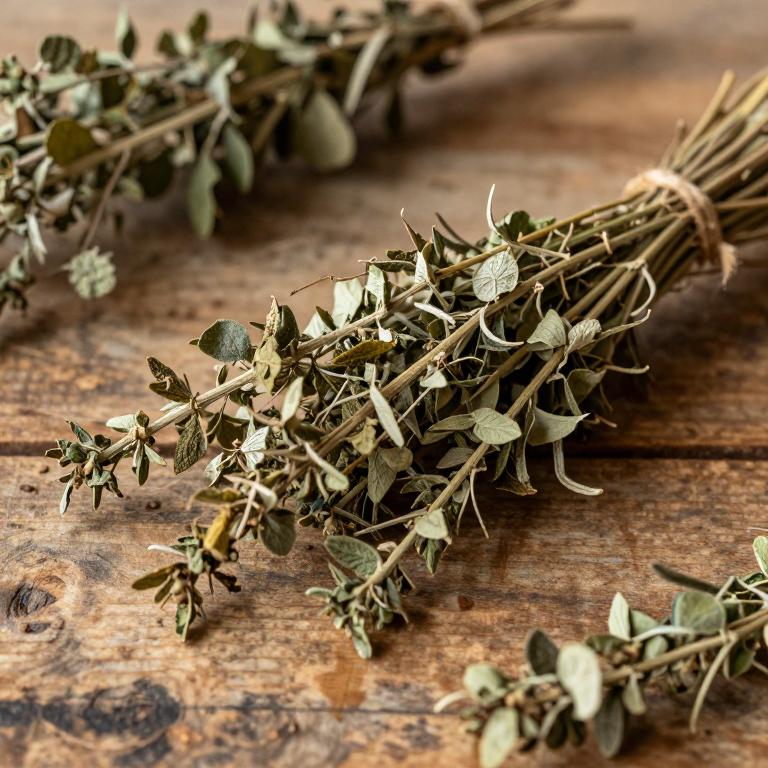
Names and Synonyms
Scientific Names
Accepted name
Maytenus macrocarpaSynonyms
- Monteverdia macrocarpa
- Celastrus macrocarpus
- Monteverdia krukovii
- Haenkea multiflora
- Maytenus multiflora
- Maytenus krukovii
- Maytenus tarapotensis
Sources: Wikidata
Taxonomical Classification
This plant, known scientifically as Maytenus macrocarpa, belongs to the kingdom Plantae and the phylum Streptophyta. Within the class Equisetopsida and subclass Magnoliidae, it is categorized under the order Celastrales and the family Celastraceae. Finally, its taxonomic classification is completed within the genus Maytenus.
| Rank | Classification |
|---|---|
| Kingdom | Plantae |
| Phylum | Streptophyta |
| Class | Equisetopsida |
| Subclass | Magnoliidae |
| Order | Celastrales |
| Family | Celastraceae |
| Genus | Maytenus |
Sources: The World Checklist of Vascular Plants (WCVP)
Distribution
This plant exhibits a diverse range of locations across the South American continent. In the northern part of the region, it can be found growing within Venezuela. Moving toward the western side of the continent, its presence extends into Colombia and Ecuador. Furthermore, its natural habitat includes the territories of Peru and Bolivia. Overall, these specific countries define the primary geographical distribution of the species.
| Region | Area |
|---|---|
| Northern South America | Venezuela |
| Western South America | Bolivia |
| Western South America | Colombia |
| Western South America | Ecuador |
| Western South America | Peru |
| Brazil | Brazil North |
Sources: The World Checklist of Vascular Plants (WCVP)
Botanical Identification
Ecology
The ecology of Maytenus macrocarpa is characterized by its specific preference for the Floresta de Várzea habitat, where it plays a role within these seasonally flooded forest ecosystems. This species exhibits a broad altitudinal distribution, occupying a diverse range of topographical settings. It can be found at elevations as low as 300 m AMSL, climbing through various montane gradients to reach a maximum elevation of 2250 m AMSL. On average, the species thrives at a mean elevation of 1700 m AMSL, indicating a strong adaptation to mid-to-high altitude environmental conditions within its specialized habitat.
- Elevational range max:
- 2250 m AMSL
- Elevational range mean:
- 1700 m AMSL
- Elevational range min:
- 300 m AMSL
- Habitat :
- Floresta de Várzea
Morphology
The morphology of Maytenus macrocarpa is characterized by its growth form as a woody tree, exhibiting a self-supporting structure that is independent of parasitic or epiphytic lifestyles. It is a terrestrial species, not adapted to aquatic or semiaquatic environments, and functions as an independent organism rather than a holoepiphyte, hemiepiphyte, or parasite. The plant reaches a significant stature, with a height ranging from a minimum of 5 meters to a maximum of 20 meters. As a woody tree, it maintains a robust, self-supporting habit without the need for climbing or liana-like growth forms.
- Aquatic :
- terrestrial
- Climber :
- self-supporting
- Epiphyte :
- terrestrial
- Growth form :
- tree
- Parasite :
- independent
- Plant height max:
- 20 m
- Plant height min:
- 5 m
- Woodiness :
- woody
Physiology
The physiology of Maytenus macrocarpa is characterized by a C3 photosynthetic pathway, a metabolic strategy typical of many woody tropical species that relies on the direct fixation of atmospheric carbon dioxide through the enzyme RuBisCO within the mesophyll cells. This carbon fixation process occurs during the light reactions of photosynthesis, where solar energy is captured to drive the Calvin cycle without the specialized carbon-concentrating mechanisms found in C4 or CAM plants. Consequently, the plant's metabolic efficiency and water-use strategy are closely tied to its ability to regulate stomatal conductance to balance carbon uptake with transpirational water loss, a critical physiological adaptation for maintaining turgor and enzymatic function within its specific ecological niche.
- Photosynthetic pathway :
- C3
Sources: Global Inventory of Floras and Traits (GIFT)
Plant Parts
Maytenus macrocarpa has 3 reported plant parts identified across 5 scientific publications and several other databases that are studied for medicinal purposes. The most consistently reported plant part include root, leaf, stem.
| Plant part | Supporting sources | Consensus |
|---|---|---|
| Root | 3 supporting sources | ★★☆☆☆ |
| Leaf | 1 supporting sources | ★☆☆☆☆ |
| Stem | 1 supporting sources | ★☆☆☆☆ |
Root
- Journal of ethnopharmacology
- Bioorganic & medicinal chemistry letters
- Molecules (Basel, Switzerland)
Leaf
- Molecules (Basel, Switzerland)
Stem
- Journal of natural products
Chemicals
Maytenus macrocarpa has 4 reported phytochemicals identified across 5 scientific publications and several other databases. The most consistently reported chemicals include 3-OXO-29-HYDROXYFRIEDELANE, Canophyllol, Friedelin, Triterpenes.
| Chemical | Supporting sources | Consensus |
|---|---|---|
| 3-OXO-29-HYDROXYFRIEDELANE | 1 supporting sources | ★☆☆☆☆ |
| Canophyllol | 1 supporting sources | ★☆☆☆☆ |
| Friedelin | 1 supporting sources | ★☆☆☆☆ |
| Triterpenes | 1 supporting sources | ★☆☆☆☆ |
3-OXO-29-HYDROXYFRIEDELANE
- Journal of natural products
Canophyllol
- Journal of natural products
Friedelin
- Journal of natural products
Triterpenes
- Molecules (Basel, Switzerland)
Activities
Maytenus macrocarpa has 4 reported activities identified across 5 scientific publications and several other databases. The most consistently reported activities include Cytotoxic, Antibacterial, Antiparasitic, Antiviral.
| Activity | Supporting sources | Consensus |
|---|---|---|
| Cytotoxic | 2 supporting sources | ★☆☆☆☆ |
| Antibacterial | 1 supporting sources | ★☆☆☆☆ |
| Antiparasitic | 1 supporting sources | ★☆☆☆☆ |
| Antiviral | 1 supporting sources | ★☆☆☆☆ |
Cytotoxic
- Bioorganic & medicinal chemistry letters
- Molecules (Basel, Switzerland)
Antibacterial
- Molecules (Basel, Switzerland)
Antiparasitic
- Molecules (Basel, Switzerland)
Antiviral
- Molecules (Basel, Switzerland)
Conditions
Maytenus macrocarpa has 4 reported investigations on conditions identified across 5 scientific publications and several other databases. The most consistently reported conditions include bronchitis, diarrhea, rheumatism, wounds.
| Condition | Supporting sources | Consensus |
|---|---|---|
| Bronchitis | 1 supporting sources | ★☆☆☆☆ |
| Diarrhea | 1 supporting sources | ★☆☆☆☆ |
| Rheumatism | 1 supporting sources | ★☆☆☆☆ |
| Wounds | 1 supporting sources | ★☆☆☆☆ |
Bronchitis
- Molecules (Basel, Switzerland)
Diarrhea
- Molecules (Basel, Switzerland)
Rheumatism
- Molecules (Basel, Switzerland)
Wounds
- Molecules (Basel, Switzerland)
Preparations
Maytenus macrocarpa has 3 reported preparations identified across 5 scientific publications and several other databases. The most consistently reported preparations include Ethanol extracts of root bark, roots, stem bark exudates.
| Preparation | Supporting sources | Consensus |
|---|---|---|
| Ethanol extracts of root bark | 1 supporting sources | ★☆☆☆☆ |
| Roots | 1 supporting sources | ★☆☆☆☆ |
| Stem bark exudates | 1 supporting sources | ★☆☆☆☆ |
Ethanol extracts of root bark
- Journal of ethnopharmacology
Roots
- Bioorganic & medicinal chemistry letters
Stem bark exudates
- Journal of natural products