Maytenus boaria
Maytenus boaria · Accepted scientific name
Scientific literature: Very Sparse (13 studies) · ★☆☆☆☆
Maytenus boaria, scientifically known as Maytenus boaria, is a significant medicinal shrub valued in traditional healing practices. Renowned for its diverse bioactive compounds, it is frequently utilized for its antioxidant, anti-inflammatory, and antimicrobial properties. Exploring its phytochemical profile offers promising potential for developing new therapeutic agents in modern pharmacology.
- Family
- Not available
- Native range
- Northern America
- Parts used
- Not available
- Common names
- Not available
- Scientific synonyms
- Not available
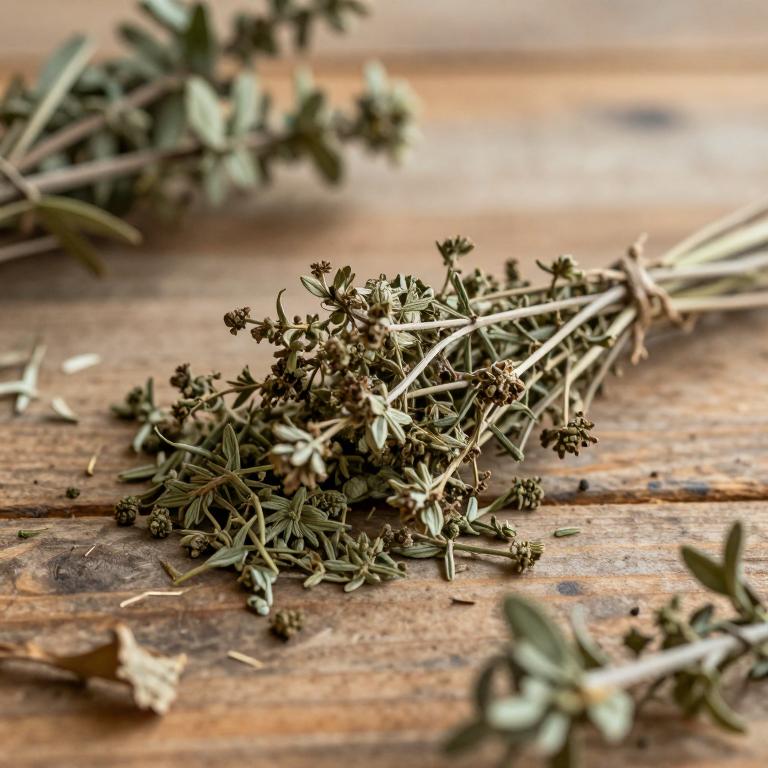
Names and Synonyms
Scientific Names
Accepted name
Maytenus boariaDistribution
This plant exhibits a diverse geographical range that spans across several different regions. In North America, its distribution includes the state of California within the Southwestern U.S.A. Moving into Western South America, it can be found in Bolivia. The species is also prevalent in Brazil, specifically within the Southeast and South regions. Finally, its reach extends to the Northeast of Argentina in Southern South America.
| Region | Area |
|---|---|
| Southwestern U.S.A. | California |
| Western South America | Bolivia |
| Brazil | Brazil Southeast |
| Brazil | Brazil South |
| Southern South America | Argentina Northeast |
| Southern South America | Argentina South |
| Southern South America | Argentina Northwest |
| Southern South America | Chile Central |
| Southern South America | Chile North |
| Southern South America | Chile South |
Sources: The World Checklist of Vascular Plants (WCVP)
Botanical Identification
Ecology
The ecology of Maytenus boaria is characterized by a broad altitudinal distribution, spanning from sea level (0 m AMSL) up to high-altitude environments reaching 4000 m AMSL. This species exhibits significant ecological plasticity, allowing it to colonize a diverse array of distinct habitats. It is commonly found in specialized environments such as Campo de Altitude and Campo Limpo, as well as within various forest formations including Floresta Ciliar or Galeria, Floresta Estacional Semidecidual, and Floresta Ombrófila Mista. This wide range of habitats suggests an ability to adapt to varying moisture regimes and light availability across different Brazilian biomes.
- Elevational range max:
- 4000 m AMSL
- Elevational range min:
- 0 m AMSL
- Habitat :
- Campo de Altitude, Campo Limpo, Floresta Ciliar ou Galeria, Floresta Estacional Semidecidual, Floresta Ombrófila Mista
Life history
The life history of Maytenus boaria is characterized by its status as a perennial plant, allowing it to persist through multiple growing seasons. It functions as a phanerophyte, specifically categorized under both phanerophyte and nanophanerophyte classifications, which indicates that its buds are borne on aerial shoots well above the ground level. Furthermore, the species maintains an evergreen deciduousness, ensuring that it retains its foliage throughout the year rather than shedding it seasonally.
- Deciduousness :
- evergreen
- Life form :
- phanerophyte
- Lifecycle :
- perennial
Morphology
The morphology of Maytenus boaria is characterized by its growth form as a woody tree, which functions as a self-supporting structure rather than a climber or vine. It is a terrestrial species, existing as an independent organism without parasitic or epiphytic tendencies. In terms of stature, the plant reaches a mean height of approximately 10 m, with a maximum potential height of up to 15 m.
- Aquatic :
- terrestrial
- Climber :
- self-supporting
- Epiphyte :
- terrestrial
- Growth form :
- tree
- Parasite :
- independent
- Plant height max:
- 15 m
- Plant height mean:
- 10 m
- Woodiness :
- woody
Physiology
The physiology of Maytenus boaria is characterized by a C3 photosynthetic pathway, which dictates its carbon fixation processes and metabolic efficiency within its environmental niche. The plant's vegetative morphology is defined by relatively consistent leaf dimensions, exhibiting a uniform leaf width of 1.4 cm, with no deviation between the minimum, mean, and maximum recorded values. The leaf length reaches a maximum of 4 cm, providing a specific surface area optimized for light interception under its C3 metabolic constraints. Furthermore, the species does not function as a nitrogen fixer, meaning it lacks the symbiotic relationship with nitrogen-fixing bacteria required to convert atmospheric nitrogen into a usable form, relying instead on the uptake of nitrogen from the soil through its root system.
- Leaf length max:
- 4 cm
- Leaf width mean:
- 1.4 cm
- Nitrogen fixer :
- no
- Photosynthetic pathway :
- C3
Reproduction
The reproduction of Maytenus boaria involves both sexual and asexual processes, with asexual reproduction being present in the species. The sexual reproductive cycle is characterized by the production of fleshy fruits, which have a mean width of 0.5 cm. Within these fruits, the seeds exhibit highly consistent morphological dimensions, maintaining a mean seed length of 4.8 mm (with both minimum and maximum values recorded at 4.8 mm) and a mean seed width of 2.5 mm (ranging from a minimum to a maximum of 2.5 mm). The seed volume is remarkably uniform, with a mean, minimum, and maximum value all recorded at 16 mm³. In terms of mass, the seeds are relatively lightweight, possessing a mean mass of approximately 0.016026667 g, with individual seed weights fluctuating slightly between a minimum of 0.01468 g and a maximum of 0.01695 g.
- Fruit dryness :
- fleshy
- Fruit width mean:
- 0.5 cm
- Reproduction asexual :
- present
- Seed length mean:
- 4.8 mm
- Seed mass max:
- 0.01695 g
- Seed mass mean:
- 0.016026667 g
- Seed mass min:
- 0.01468 g
- Seed volume max:
- 16 mm³
- Seed width mean:
- 2.5 mm
Sources: Global Inventory of Floras and Traits (GIFT)
Chemicals
Maytenus boaria has 1 reported phytochemicals identified across 0 scientific publications and several other databases. The most consistently reported chemicals include Betulin.
| Chemical | Supporting sources | Consensus |
|---|---|---|
| Betulin | 1 supporting sources | ★☆☆☆☆ |
Betulin
- Dr. Duke
Activities
Maytenus boaria has 12 reported activities identified across 0 scientific publications and several other databases. The most consistently reported activities include AntiHIV, Anticarcinomic, Antifeedant, Antiflu, Antiinflammatory.
| Activity | Supporting sources | Consensus |
|---|---|---|
| AntiHIV | 1 supporting sources | ★☆☆☆☆ |
| Anticarcinomic | 1 supporting sources | ★☆☆☆☆ |
| Antifeedant | 1 supporting sources | ★☆☆☆☆ |
| Antiflu | 1 supporting sources | ★☆☆☆☆ |
| Antiinflammatory | 1 supporting sources | ★☆☆☆☆ |
| Antitumor | 1 supporting sources | ★☆☆☆☆ |
| Antiviral | 1 supporting sources | ★☆☆☆☆ |
| Aphidifuge | 1 supporting sources | ★☆☆☆☆ |
| Cytotoxic | 1 supporting sources | ★☆☆☆☆ |
| Hypolipemic | 1 supporting sources | ★☆☆☆☆ |
AntiHIV
- Dr. Duke
Anticarcinomic
- Dr. Duke
Antifeedant
- Dr. Duke
Antiflu
- Dr. Duke
Antiinflammatory
- Dr. Duke
Antitumor
- Dr. Duke
Antiviral
- Dr. Duke
Aphidifuge
- Dr. Duke
Cytotoxic
- Dr. Duke
Hypolipemic
- Dr. Duke