Maytenus aquifolium
Maytenus aquifolium · Accepted scientific name
Scientific literature: Very Sparse (34 studies) · ★☆☆☆☆
Maytenus aquifolium, scientifically known as Maytenus aquifolium, is a versatile medicinal shrub native to tropical regions. Renowned in traditional medicine, it possesses significant antimicrobial, anti-inflammatory, and antioxidant properties. Often used to treat skin ailments and digestive issues, this plant offers promising therapeutic potential for modern pharmacological research and development.
- Family
- Celastraceae
- Native range
- Southern America
- Parts used
- Leaf
- Common names
- Not available
- Scientific synonyms
- Monteverdia Aquifolium
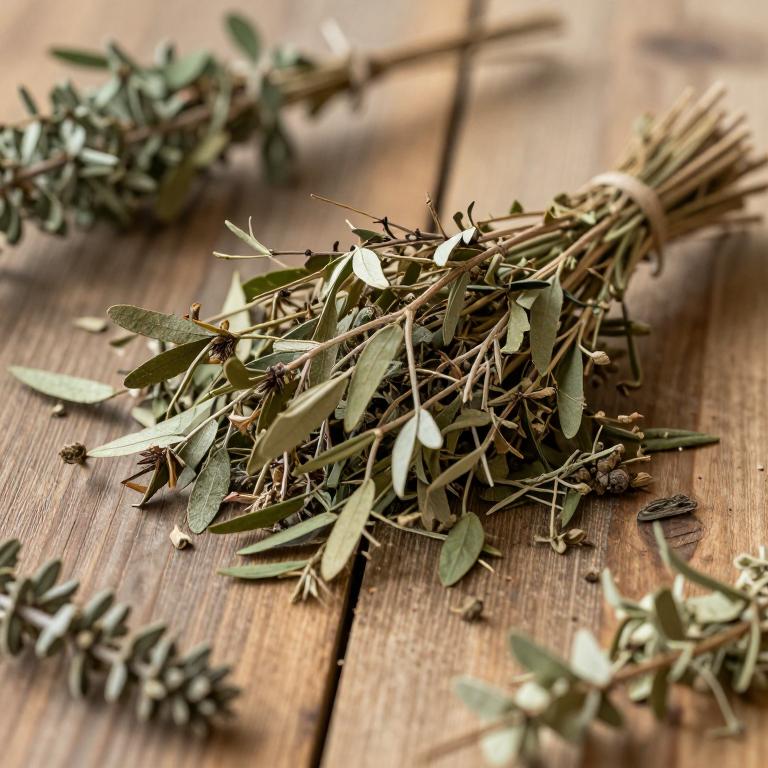
Names and Synonyms
Scientific Names
Accepted name
Maytenus aquifoliumSynonyms
- Monteverdia aquifolium
Regional and Traditional Names
Spanish:
- Maytenus aquifolia
German:
- Maytenus aquifolia
French:
- Maytenus aquifolia
Sources: Wikidata
Taxonomical Classification
This plant, Maytenus aquifolium, belongs to the kingdom Plantae and the phylum Streptophyta. It is classified within the class Equisetopsida and the subclass Magnoliidae, falling under the order Celastrales. Furthermore, it is a member of the family Celaestraceae and is specifically categorized under the genus Maytenus.
| Rank | Classification |
|---|---|
| Kingdom | Plantae |
| Phylum | Streptophyta |
| Class | Equisetopsida |
| Subclass | Magnoliidae |
| Order | Celastrales |
| Family | Celastraceae |
| Genus | Maytenus |
Sources: The World Checklist of Vascular Plants (WCVP)
Distribution
This plant is widely distributed across specific regions of South America. In Brazil, its presence is noted in both the Southeast and South regions. Moving further south, the species can be found in the Northeastern part of Argentina. Additionally, it inhabits territories within Paraguay. These areas collectively define its primary geographical range across the continent.
| Region | Area |
|---|---|
| Brazil | Brazil Southeast |
| Brazil | Brazil South |
| Southern South America | Argentina Northeast |
| Southern South America | Paraguay |
Sources: The World Checklist of Vascular Plants (WCVP)
Botanical Identification
Ecology
The ecology of Maytenus aquifolium is characterized by its ability to thrive across a diverse range of Brazilian ecosystems, demonstrating significant adaptability to various environmental conditions. This species is commonly found inhabiting Campo de Altitude, where it must withstand higher elevations and potentially more exposed conditions, as well as within the humid and shaded environments of Floresta Ciliar or Galeria. Its distribution extends into the seasonally varying landscapes of Floresta Estacional Semidecidual and the diverse, moisture-rich habitats of Floresta Ombrófila Mista. Furthermore, the plant exhibits specialized niche occupancy by occurring in Vegetação Sobre Afloramentos Rochosos, indicating a capacity to colonize rocky outcrops and thin soil profiles where competition may be lower but environmental stressors are higher.
- Habitat :
- Campo de Altitude, Floresta Ciliar ou Galeria, Floresta Estacional Semidecidual, Floresta Ombrófila Mista, Vegetação Sobre Afloramentos Rochosos
Life history
The life history of Maytenus aquifolium is characterized by its status as a perennial organism, allowing it to maintain a presence in its ecosystem over many successive growing seasons. Throughout its existence, the plant exhibits an evergreen habit, retaining its foliage year-round rather than undergoing a period of seasonal leaf shedding. This combination of a long-lived life cycle and continuous leaf presence ensures a stable physiological structure capable of sustained growth and metabolic activity across varying environmental conditions.
- Deciduousness :
- evergreen
- Lifecycle :
- perennial
Morphology
The morphology of Maytenus aquifolium is characterized by its robust, woody growth form, primarily manifesting as a tree. As a terrestrial species, it grows independently of other organisms, functioning as a non-parasitic, self-supporting plant rather than a climber or epiphyte. The physical stature of the plant is significant, with an average height of approximately 7 meters, though it is capable of reaching a maximum height of up to 12 meters in optimal environmental conditions.
- Aquatic :
- terrestrial
- Climber :
- self-supporting
- Epiphyte :
- terrestrial
- Growth form :
- tree
- Parasite :
- independent
- Plant height max:
- 12 m
- Plant height mean:
- 7 m
- Woodiness :
- woody
Physiology
The physiology of Maytenus aquifolium is characterized by its specialized metabolic processes and nutrient acquisition strategies, functioning primarily as a non-nitrogen-fixing woody species. Unlike certain members of the Fabaceae family, this plant does not possess the symbiotic relationship with rhizobia required for atmospheric nitrogen fixation; therefore, its nitrogen fixation status is marked as "no." Instead, the plant relies on the uptake of nitrates and ammonium from the soil through its root system to support its vegetative growth and secondary metabolite production. Its physiological processes include efficient photosynthetic pathways to drive carbon assimilation, which supports the synthesis of various bioactive compounds such as alkaloids and terpenoids. The plant manages its water potential and mineral nutrition through complex osmotic regulation and nutrient transport mechanisms, ensuring survival in its specific ecological niche through standard autotrophic metabolic cycles.
- Nitrogen fixer :
- no
Sources: Global Inventory of Floras and Traits (GIFT)
Plant Parts
Maytenus aquifolium has 1 reported plant parts identified across 2 scientific publications and several other databases that are studied for medicinal purposes. The most consistently reported plant part include leaf.
| Plant part | Supporting sources | Consensus |
|---|---|---|
| Leaf | 2 supporting sources | ★☆☆☆☆ |
Leaf
- Journal of agricultural and food chemistry
- Phytomedicine : international journal of phytotherapy and phytopharmacology
Chemicals
Maytenus aquifolium has 1 reported phytochemicals identified across 2 scientific publications and several other databases. The most consistently reported chemicals include betulinic acid.
| Chemical | Supporting sources | Consensus |
|---|---|---|
| betulinic acid | 1 supporting sources | ★☆☆☆☆ |
betulinic acid
- Dr. Duke
Activities
Maytenus aquifolium has 23 reported activities identified across 2 scientific publications and several other databases. The most consistently reported activities include Analgesic, Antacid, Anthelmintic, AntiHIV, Antibacterial.
| Activity | Supporting sources | Consensus |
|---|---|---|
| Analgesic | 1 supporting sources | ★☆☆☆☆ |
| Antacid | 1 supporting sources | ★☆☆☆☆ |
| Anthelmintic | 1 supporting sources | ★☆☆☆☆ |
| AntiHIV | 1 supporting sources | ★☆☆☆☆ |
| Antibacterial | 1 supporting sources | ★☆☆☆☆ |
| Anticancer | 1 supporting sources | ★☆☆☆☆ |
| Anticarcinomic | 1 supporting sources | ★☆☆☆☆ |
| Anticonvulsant | 1 supporting sources | ★☆☆☆☆ |
| Antiedemic | 1 supporting sources | ★☆☆☆☆ |
| Antiinflammatory | 1 supporting sources | ★☆☆☆☆ |
Analgesic
- Journal of ethnopharmacology
Antacid
- Journal of ethnopharmacology
Anthelmintic
- Dr. Duke
AntiHIV
- Dr. Duke
Antibacterial
- Dr. Duke
Anticancer
- Dr. Duke
Anticarcinomic
- Dr. Duke
Anticonvulsant
- Journal of ethnopharmacology
Antiedemic
- Dr. Duke
Antiinflammatory
- Dr. Duke
Conditions
Maytenus aquifolium has 4 reported investigations on conditions identified across 2 scientific publications and several other databases. The most consistently reported conditions include gastric ulcers, analgesic, antacid, dyspepsias.
| Condition | Supporting sources | Consensus |
|---|---|---|
| Gastric ulcers | 2 supporting sources | ★☆☆☆☆ |
| Analgesic | 1 supporting sources | ★☆☆☆☆ |
| Antacid | 1 supporting sources | ★☆☆☆☆ |
| Dyspepsias | 1 supporting sources | ★☆☆☆☆ |
Gastric ulcers
- Molecules (Basel, Switzerland)
- Journal of ethnopharmacology
Analgesic
- Journal of ethnopharmacology
Antacid
- Journal of ethnopharmacology
Dyspepsias
- Journal of ethnopharmacology
Preparations
Maytenus aquifolium has 2 reported preparations identified across 2 scientific publications and several other databases. The most consistently reported preparations include herbal medicines, infusion.
| Preparation | Supporting sources | Consensus |
|---|---|---|
| Herbal medicines | 1 supporting sources | ★☆☆☆☆ |
| Infusion | 1 supporting sources | ★☆☆☆☆ |
Herbal medicines
- Molecules (Basel, Switzerland)
Infusion
- Zeitschrift fur Naturforschung. C, Journal of biosciences