hoary stock
Matthiola incana · Accepted scientific name
Scientific literature: Very Sparse (5 studies) · ★☆☆☆☆
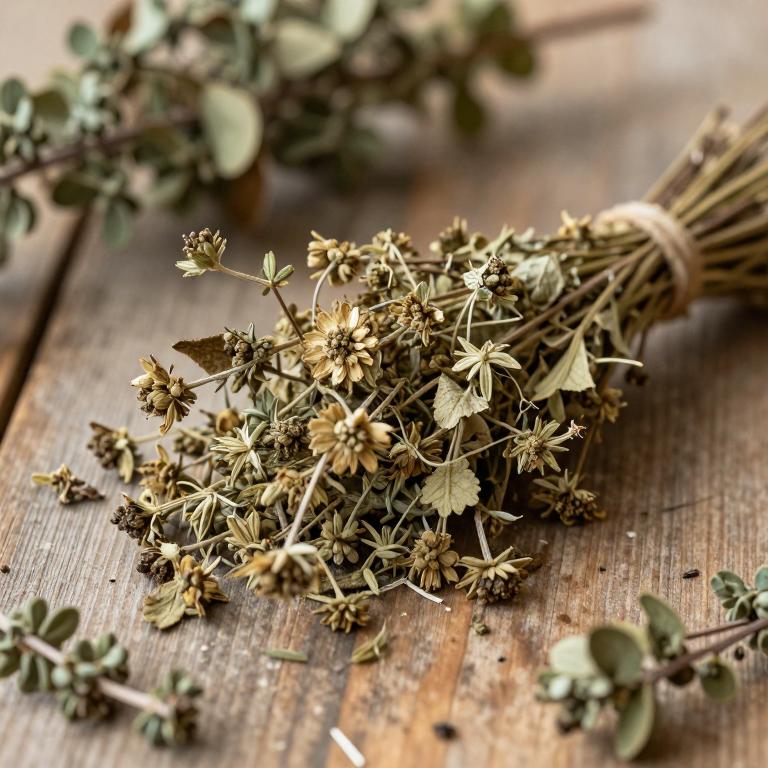
Hoary stock, scientifically known as Matthiola incana, is a fragrant biennial herb celebrated for its striking, colorful blooms. Native to the Mediterranean, this plant is prized in herbalism for its aromatic properties and potential therapeutic uses, offering a unique blend of ornamental beauty and traditional medicinal significance for gardeners.
Names and Synonyms
Common Names
- Brompton stock
- gilliflower
- gillyflower
- hoary stock
- ten-weeks stock
- common stock
- gilly-flower
- ten-week stock
Scientific Names
Accepted name
Matthiola incanaSynonyms
- Mathiolaria incana
- Cheiranthus incanus
- Microstigma incanum
Regional and Traditional Names
Spanish:
- alhelí
German:
- Garten-Levkoje
- Sommerlevkoje
- Garten-Levkoje
- Levkoje
French:
- grande giroflée
- giroflée des jardins
- girofée des fenêtres
- giroflée violier
- matthiole blanchâtre
- violier
- mattiole blanchâtre
- voilier grisâtre
Sources: Wikidata, Catalogue of Life
Taxonomical Classification
This plant belongs to the kingdom Plantae within the phylum Streptophyta and the class Equisetopsida. Classified under the subclass Magnoliidae and the order Brassicales, it is a member of the family Brassicaceae. Specifically, it is categorized under the genus Matthiola.
| Rank | Classification |
|---|---|
| Kingdom | Plantae |
| Phylum | Streptophyta |
| Class | Equisetopsida |
| Subclass | Magnoliidae |
| Order | Brassicales |
| Family | Brassicaceae |
| Genus | Matthiola |
Sources: The World Checklist of Vascular Plants (WCVP)
Distribution
This plant exhibits a varied geographical distribution across several regions of Europe. In Northern Europe, it can be found growing in both Great Britain and Ireland. Its presence extends into Middle Europe, specifically within the territories of Germany and the Czechia-Slovakia region. Moving toward the Mediterranean, the species is also located in Southwestern Europe. Specifically, it inhabits the Baleares islands within that southwestern zone.
| Region | Area |
|---|---|
| Northern Europe | Great Britain |
| Northern Europe | Ireland |
| Middle Europe | Czechia-Slovakia |
| Middle Europe | Germany |
| Southwestern Europe | Baleares |
| Southwestern Europe | Corse |
| Southwestern Europe | France |
| Southwestern Europe | Portugal |
| Southwestern Europe | Sardegna |
| Southwestern Europe | Spain |
Sources: The World Checklist of Vascular Plants (WCVP)
Botanical Identification
Ecology
The ecology of Matthiola incana is characterized by a broad altitudinal distribution and a preference for specific maritime environments. This species thrives across a wide elevational range, beginning at sea level (0 m AMSL) and extending up to a maximum altitude of 2600 m AMSL. Its primary habitat is coastal, where it has adapted to the unique environmental pressures of seaside ecosystems.
- Elevational range max:
- 2600 m AMSL
- Elevational range min:
- 0 m AMSL
- Habitat :
- Coastal
Life history
The life history of Matthiola incana is characterized by a flexible lifecycle that can be described as perennial, though it exhibits variable growth patterns depending on environmental conditions. In terms of its structural life form, the species functions as a therophyte, completing its development through a distinct seasonal cycle. This classification is supported by its growth habit, which identifies it as both a therophyte and a member of the therophyte life form category, indicating that it typically survives through seeds during unfavorable periods to emerge as an annual or short-lived perennial during favorable growing seasons.
- Life form :
- therophyte
- Lifecycle :
- perennial
Morphology
The morphology of Matthiola incana is characterized by its growth form as a non-woody herb. It is a terrestrial plant that functions as an independent organism, neither acting as a parasite nor as an epiphyte. The plant exhibits an erect shoot orientation and is categorized as a self-supporting species rather than a climber, liana, or vine. In terms of stature, the plant typically reaches a mean height of 0.5385 m, with individual specimens ranging from a minimum height of 0.1 m to a maximum height of 1 m.
- Aquatic :
- terrestrial
- Climber :
- self-supporting
- Epiphyte :
- terrestrial
- Growth form :
- herb
- Parasite :
- independent
- Plant height max:
- 1 m
- Plant height mean:
- 0.5385 m
- Plant height min:
- 0.1 m
- Shoot orientation :
- erect
- Woodiness :
- non-woody
Physiology
The physiology of Matthiola incana is characterized by a C3 photosynthetic pathway, which governs its carbon fixation and metabolic processes. The plant's vegetative structure is defined by elliptic leaf forms that exhibit significant morphological variation. On average, the leaves possess a length of 10 cm, with individual measurements ranging from a minimum of 6 cm to a maximum of 14 cm. The leaf width follows a similar distribution, maintaining a mean of 1.5 cm, with a minimum width of 1.2 cm and a maximum width of 2.5 cm. This dimensional profile results in a mean leaf size of 5.9 cm². Furthermore, the plant demonstrates a mean Specific Leaf Area (SLA) of 225.2 cm²/g, reflecting the relationship between its leaf area and dry mass, which is indicative of its resource allocation and leaf thickness strategies.
- Leaf form :
- elliptic
- Leaf length max:
- 14 cm
- Leaf length mean:
- 10 cm
- Leaf length min:
- 6 cm
- Leaf size mean:
- 5.9 cm²
- Leaf width max:
- 2.5 cm
- Leaf width mean:
- 1.5 cm
- Leaf width min:
- 1.2 cm
- Photosynthetic pathway :
- C3
- Specific Leaf Area (SLA) mean:
- 225.2 cm²/g
Reproduction
The reproduction of Matthiola incana is characterized by a bisexual sexual reproductive system where self-fertilization is absent, necessitating biotic pollination. The plant features violet-colored flowers that typically range in length from 2.3 cm to 2.8 cm. The flowering season begins in February and concludes in June. Following successful pollination, the plant develops fruit in the form of a pod. These pods are dehiscent and vary in dimensions, with a mean length of 7.5 cm (ranging from 5 cm to 11 cm) and a mean width of 0.3 cm (ranging from 0.3 cm to 0.5 cm). Each fruit is highly prolific, containing more than 1000 seeds. The seeds themselves are uniform in size, with a mean length, width, and dimension of 2.5 mm, and a mean mass of approximately 0.00164 g (ranging from 0.00142 g to 0.00154 g). Finally, the dispersal syndrome of the species is hydrochorous, indicating that the seeds are dispersed via water.
- Dehiscence :
- dehiscent
- Dispersal syndrome :
- hydrochorous
- Flower colour :
- violet
- Flower length max:
- 2.8 cm
- Flower length min:
- 2.3 cm
- Flowering time :
- Feb
- Flowering time :
- Jun
- Fruit length max:
- 11 cm
- Fruit length mean:
- 7.5 cm
- Fruit length min:
- 5 cm
- Fruit type :
- pod
- Fruit width max:
- 0.5 cm
- Fruit width mean:
- 0.3 cm
- Pollination syndrome :
- insect
- Pollination syndrome :
- biotic
- Reproduction sexual :
- bisexual
- Seed length mean:
- 2.5 mm
- Seed mass max:
- 0.00154 g
- Seed mass mean:
- 0.00164 g
- Seed mass min:
- 0.00142 g
- Seed width mean:
- 2.5 mm
- Seeds_per_fruit :
- >1000
- Self fertilization :
- absent
Sources: Global Inventory of Floras and Traits (GIFT)
Activities
Matthiola incana has 2 reported activities identified across 0 scientific publications and several other databases. The most consistently reported activities include Antioxidant, Cytotoxic.
| Activity | Supporting sources | Consensus |
|---|---|---|
| Antioxidant | 1 supporting sources | ★☆☆☆☆ |
| Cytotoxic | 1 supporting sources | ★☆☆☆☆ |
Antioxidant
- Biology
Cytotoxic
- Biology
Conditions
Matthiola incana has 3 reported investigations on conditions identified across 0 scientific publications and several other databases. The most consistently reported conditions include breast cancer, obesity, type 2 diabetes.
| Condition | Supporting sources | Consensus |
|---|---|---|
| Breast cancer | 1 supporting sources | ★☆☆☆☆ |
| Obesity | 1 supporting sources | ★☆☆☆☆ |
| Type 2 diabetes | 1 supporting sources | ★☆☆☆☆ |
Breast cancer
- Biology
Obesity
- Biology
Type 2 diabetes
- Biology