Matricaria aurea
Matricaria aurea · Accepted scientific name
Scientific literature: Very Sparse (21 studies) · ★☆☆☆☆
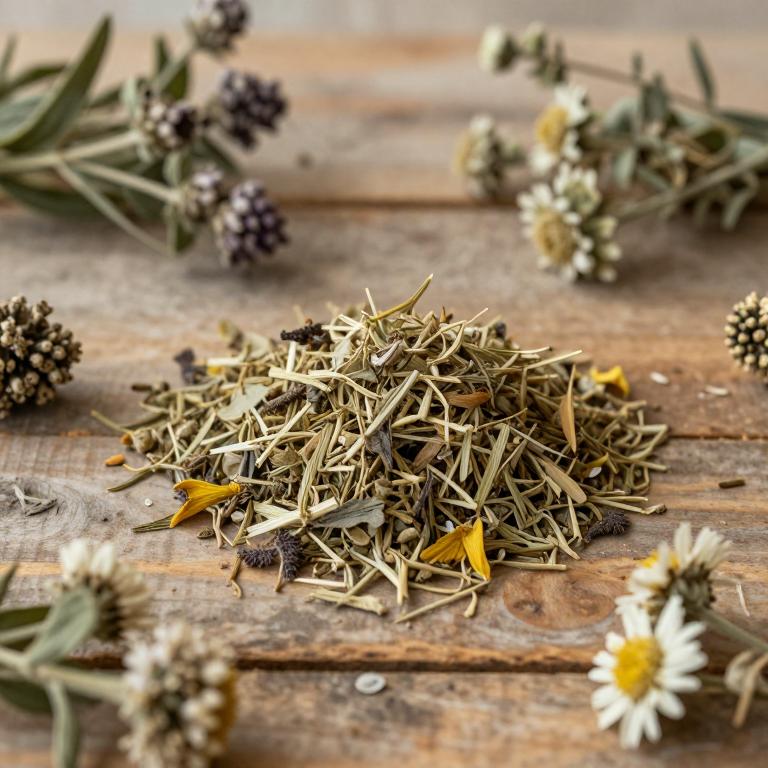
, scientifically known as Matricaria aurea, is a therapeutic herb celebrated for its soothing properties. Belonging to the Asteraceae family, this golden-hued plant offers significant digestive and anti-inflammatory benefits. Traditionally used in herbal remedies, it serves as a gentle natural ally for promoting relaxation and supporting overall wellness.
- Family
- Asteraceae
- Native range
- Europe
- Parts used
- Flower
- Common names
- Not available
- Scientific synonyms
- Lepidotheca Aurea · Anthemis Canescens Var. Aurea · 7 more
Names and Synonyms
Scientific Names
Accepted name
Matricaria aureaSynonyms
- Lepidotheca aurea
- Anthemis canescens var. aurea
- Plagius aureus
- Cenocline aurea
- Chamaemelum aureum
- Chamomilla aurea
- Cotula pubescens
- Cotulina aurea
- Perideraea aurea
Sources: Wikidata, Catalogue of Life
Taxonomical Classification
This plant belongs to the kingdom Plantae and the phylum Streptophyta, falling under the class Equisetopsida and subclass Magnoliidae. Within the order Asterales, it is a member of the family Asteraceae and is specifically classified under the genus Matricaria.
| Rank | Classification |
|---|---|
| Kingdom | Plantae |
| Phylum | Streptophyta |
| Class | Equisetopsida |
| Subclass | Magnoliidae |
| Order | Asterales |
| Family | Asteraceae |
| Genus | Matricaria |
Sources: The World Checklist of Vascular Plants (WCVP)
Distribution
This plant exhibits a broad distribution across several key regions of the European continent. In Northern Europe, its presence can be documented within the borders of Great Britain. Moving toward the center of the continent, it is also found throughout Middle Europe, specifically in Germany. The species extends significantly into Southwestern Europe, where it inhabits the landscapes of France. Finally, its range reaches the southern reaches of the continent in both Portugal and Spain.
| Region | Area |
|---|---|
| Northern Europe | Great Britain |
| Middle Europe | Germany |
| Southwestern Europe | France |
| Southwestern Europe | Portugal |
| Southwestern Europe | Spain |
| Southeastern Europe | Kriti |
| Southeastern Europe | Sicilia |
| Northern Africa | Algeria |
| Northern Africa | Egypt |
| Northern Africa | Libya |
Sources: The World Checklist of Vascular Plants (WCVP)
Botanical Identification
Ecology
The ecology of Matricaria aurea is characterized by its adaptation to diverse and often challenging substrates, thriving in habitats such as limestone, meadows, saline places, and sandy soils. This species occupies a specific altitudinal niche, typically found within an elevational range that begins at 800 m AMSL and reaches an upper limit of 1400 m AMSL.
- Elevational range max:
- 1400 m AMSL
- Elevational range min:
- 800 m AMSL
- Habitat :
- limestone, meadows, saline places, sand
Life history
The life history of Matricaria aurea is characterized by an annual lifecycle, meaning the plant completes its entire biological development—from germination to seed production—within a single growing season. Functionally, it is classified as a therophyte, a life form defined by its strategy of surviving unfavorable environmental conditions through highly resilient seeds that remain dormant until favorable growing conditions return. This life form ensures that the plant avoids seasonal stresses by bypassing the vegetative stage during periods of drought or cold, relying instead on its rapid annual progression to ensure reproductive success before the onset of the next dormant period.
- Life form :
- therophyte
- Lifecycle :
- annual
Morphology
The morphology of Matricaria aurea is characterized by its growth form as a non-woody herb. This plant is a self-supporting species, functioning as an independent organism without parasitic tendencies. It primarily occupies terrestrial habitats, though its ecological range can include semiaquatic or aquatic environments. In terms of stature, it is a relatively low-growing plant, with a height ranging from a minimum of 0.04 m to a maximum of 0.2 m.
- Aquatic :
- terrestrial
- Climber :
- self-supporting
- Growth form :
- herb
- Parasite :
- independent
- Plant height max:
- 0.2 m
- Plant height min:
- 0.04 m
- Woodiness :
- non-woody
Reproduction
The reproduction of Matricaria aurea is closely linked to its seasonal flowering cycle, which dictates its reproductive success and seed production. The flowering period for this species is characterized by significant variability depending on environmental conditions, though it typically follows a predictable seasonal window. The flowering process begins as early as February, marking the onset of the reproductive phase when the plant prepares to attract pollinators. This blooming period continues through the spring, with the flowering end generally occurring around April. Because the specific timing of these stages can be variable throughout the year, the plant's ability to complete its life cycle and distribute seeds is highly dependent on the stability of these seasonal transitions.
- Flowering time :
- Feb
- Flowering time :
- Apr
Sources: Global Inventory of Floras and Traits (GIFT)
Plant Parts
Matricaria aurea has 1 reported plant parts identified across 1 scientific publications and several other databases that are studied for medicinal purposes. The most consistently reported plant part include flower.
| Plant part | Supporting sources | Consensus |
|---|---|---|
| Flower | 1 supporting sources | ★☆☆☆☆ |
Flower
- Current pharmaceutical design
Chemicals
Matricaria aurea has 9 reported phytochemicals identified across 1 scientific publications and several other databases. The most consistently reported chemicals include Antioxidants, CHLOROGENIC ACID, Flavonoid, Flavonoids, Luteolin 7-O-glucoside.
| Chemical | Supporting sources | Consensus |
|---|---|---|
| Antioxidants | 1 supporting sources | ★☆☆☆☆ |
| CHLOROGENIC ACID | 1 supporting sources | ★☆☆☆☆ |
| Flavonoid | 1 supporting sources | ★☆☆☆☆ |
| Flavonoids | 1 supporting sources | ★☆☆☆☆ |
| Luteolin 7-O-glucoside | 1 supporting sources | ★☆☆☆☆ |
| Tannin | 1 supporting sources | ★☆☆☆☆ |
| ferulic acid | 1 supporting sources | ★☆☆☆☆ |
| p-coumaric acid | 1 supporting sources | ★☆☆☆☆ |
| polyphenols | 1 supporting sources | ★☆☆☆☆ |
Antioxidants
- Nutrients
CHLOROGENIC ACID
- Zeitschrift fur Naturforschung. C, Journal of biosciences
Flavonoid
- Zeitschrift fur Naturforschung. C, Journal of biosciences
Flavonoids
- Nutrients
Luteolin 7-O-glucoside
- Zeitschrift fur Naturforschung. C, Journal of biosciences
Tannin
- Zeitschrift fur Naturforschung. C, Journal of biosciences
ferulic acid
- Zeitschrift fur Naturforschung. C, Journal of biosciences
p-coumaric acid
- Zeitschrift fur Naturforschung. C, Journal of biosciences
polyphenols
- Nutrients
Activities
Matricaria aurea has 6 reported activities identified across 1 scientific publications and several other databases. The most consistently reported activities include Antibacterial, Antifungal, Antimicrobial, Antioxidant, Antiproliferative.
| Activity | Supporting sources | Consensus |
|---|---|---|
| Antibacterial | 1 supporting sources | ★☆☆☆☆ |
| Antifungal | 1 supporting sources | ★☆☆☆☆ |
| Antimicrobial | 1 supporting sources | ★☆☆☆☆ |
| Antioxidant | 1 supporting sources | ★☆☆☆☆ |
| Antiproliferative | 1 supporting sources | ★☆☆☆☆ |
| Cytotoxic | 1 supporting sources | ★☆☆☆☆ |
Antibacterial
- Zeitschrift fur Naturforschung. C, Journal of biosciences
Antifungal
- Zeitschrift fur Naturforschung. C, Journal of biosciences
Antimicrobial
- Zeitschrift fur Naturforschung. C, Journal of biosciences
Antioxidant
- Zeitschrift fur Naturforschung. C, Journal of biosciences
Antiproliferative
- Zeitschrift fur Naturforschung. C, Journal of biosciences
Cytotoxic
- Zeitschrift fur Naturforschung. C, Journal of biosciences
Conditions
Matricaria aurea has 4 reported investigations on conditions identified across 1 scientific publications and several other databases. The most consistently reported conditions include diabetes mellitus, dyslipidemia, gastrointestinal diseases, type 2 diabetes mellitus.
| Condition | Supporting sources | Consensus |
|---|---|---|
| Diabetes mellitus | 1 supporting sources | ★☆☆☆☆ |
| Dyslipidemia | 1 supporting sources | ★☆☆☆☆ |
| Gastrointestinal diseases | 1 supporting sources | ★☆☆☆☆ |
| Type 2 diabetes mellitus | 1 supporting sources | ★☆☆☆☆ |
Diabetes mellitus
- Frontiers in pharmacology
Dyslipidemia
- Frontiers in pharmacology
Gastrointestinal diseases
- Nutrients
Type 2 diabetes mellitus
- Frontiers in pharmacology
Preparations
Matricaria aurea has 3 reported preparations identified across 1 scientific publications and several other databases. The most consistently reported preparations include crude flowers of M. aurea extract, hydro-alcoholic extracts, polar hydroethanolic extract of MA.
| Preparation | Supporting sources | Consensus |
|---|---|---|
| Crude flowers of m. aurea extract | 1 supporting sources | ★☆☆☆☆ |
| Hydro-alcoholic extracts | 1 supporting sources | ★☆☆☆☆ |
| Polar hydroethanolic extract of ma | 1 supporting sources | ★☆☆☆☆ |
Crude flowers of m. aurea extract
- Current pharmaceutical design
Hydro-alcoholic extracts
- Iranian journal of basic medical sciences
Polar hydroethanolic extract of ma
- Frontiers in pharmacology