hairy clover-fern
Marsilea vestita · Accepted scientific name
Scientific literature: Very Sparse (21 studies) · ★☆☆☆☆
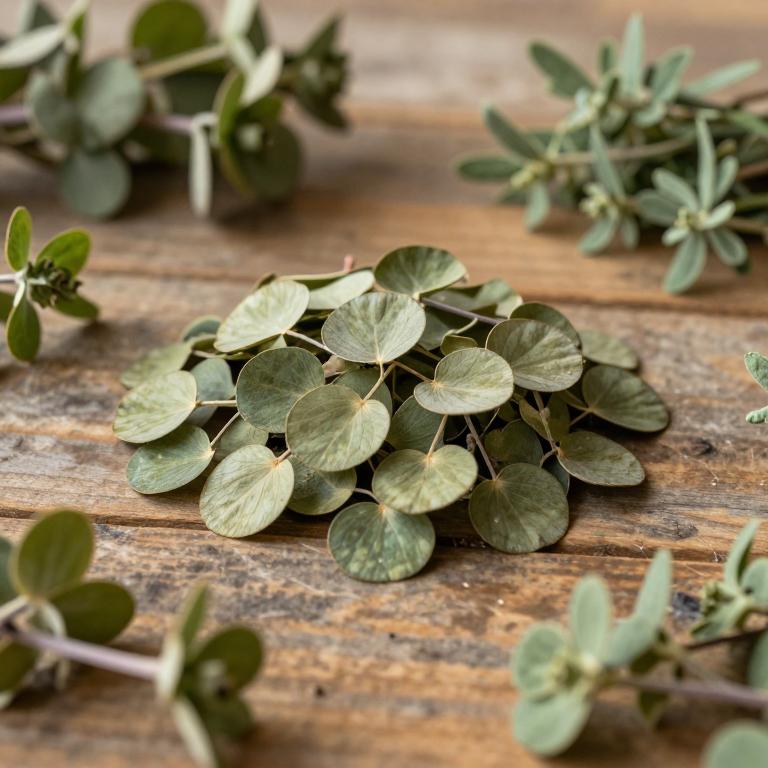
Hairy clover-fern, scientifically known as Marsilea vestita, is a unique aquatic fern distinguished by its fine, hair-like structures. Thriving in wetland environments, this resilient species features distinctive four-leaflet fronds. While primarily valued for its ecological role, it holds significant botanical interest due to its specialized morphological adaptations.
Names and Synonyms
Common Names
- hairy clover-fern
- hairy pepperwort
- hairy water-clover
- hairy water-fern
- hooked pepperwort
- western water-clover
- hooked-pepperwort
- Hairy Clover Fern
- water clover
Scientific Names
Accepted name
Marsilea vestitaSynonyms
- Marsilea brevipes
- Marsilea fournieri
- Marsilea picta
- Marsilea tenuifolia
- Zaluzianskia vestita
- Marsilea vestita var. tenuifolia
- Marsilea longipes
- Marsilea mucronata
- Marsilea vestita subsp. tenuifolia
- Zaluzianskia tenuifolia
Regional and Traditional Names
Spanish:
- helecho trébol de agua
French:
- marsilée vêtue
Sources: Wikidata, Catalogue of Life
Taxonomical Classification
This plant belongs to the kingdom Plantae and the phylum Streptophyta, placing it within the class Equisetopsida. It is further classified under the subclass Polypodiinae and the order Salviniales. Finally, it is a member of the family Marsileaceae, specifically falling under the genus Marsilea.
| Rank | Classification |
|---|---|
| Kingdom | Plantae |
| Phylum | Streptophyta |
| Class | Equisetopsida |
| Subclass | Polypodiinae |
| Order | Salviniales |
| Family | Marsileaceae |
| Genus | Marsilea |
Sources: The World Checklist of Vascular Plants (WCVP)
Distribution
This plant exhibits a specific range across the western portions of North America. In Western Canada, its distribution includes the provinces of Alberta, British Columbia, and Saskatchewan. Moving into the Northwestern United States, the species can also be found in the state of Idaho. Additionally, its presence extends southward into the mountainous region of Colorado. Together, these locations define the documented geographical footprint of Marsilea vestita.
| Region | Area |
|---|---|
| Western Canada | Alberta |
| Western Canada | British Columbia |
| Western Canada | Saskatchewan |
| Northwestern U.S.A. | Colorado |
| Northwestern U.S.A. | Idaho |
| Northwestern U.S.A. | Montana |
| Northwestern U.S.A. | Oregon |
| Northwestern U.S.A. | Washington |
| Northwestern U.S.A. | Wyoming |
| North-Central U.S.A. | Iowa |
Sources: The World Checklist of Vascular Plants (WCVP)
Botanical Identification
Life history
The life history of Marsilea vestita is characterized by a perennial lifecycle, allowing the plant to persist through multiple growing seasons. As a water-fern, its development involves a complex alternation of generations, transitioning between a dominant sporophyte stage and a microscopic gametophyte stage. The plant spreads through the expansion of its creeping rhizomes, which anchor it within aquatic or semi-aquatic substrates. During favorable environmental conditions, the sporophyte produces specialized sporocarps—hard, protective structures that house the spores. These structures are highly resilient, enabling the plant to endure periods of desiccation or unfavorable climates by remaining dormant until moisture levels become optimal for germination. Once triggered by suitable hydration, the spores germinate to produce gametophytes, which eventually facilitate sexual reproduction to sustain the continuous, long-term presence of the species in its habitat.
- Lifecycle :
- perennial
Morphology
The morphology of Marsilea vestita is characterized by its growth form as a non-woody herb and specifically a forb, which lacks any lignified structures. It functions as an independent organism, showing no parasitic tendencies, and is categorized as a terrestrial species rather than an epiphyte. In terms of its habitat and habit, the plant is aquatic or semiaquatic in nature, often found in moist environments. It is a self-supporting plant that does not exhibit climbing behaviors such as liana or vine growth, maintaining a stable, low-profile structure.
- Aquatic :
- aquatic
- Climber :
- self-supporting
- Epiphyte :
- terrestrial
- Growth form :
- herb
- Growth form :
- forb
- Parasite :
- independent
- Woodiness :
- non-woody
Sources: Global Inventory of Floras and Traits (GIFT)
Plant Parts
Marsilea vestita has 2 reported plant parts identified across 2 scientific publications and several other databases that are studied for medicinal purposes. The most consistently reported plant part include leaf, stem.
| Plant part | Supporting sources | Consensus |
|---|---|---|
| Leaf | 1 supporting sources | ★☆☆☆☆ |
| Stem | 1 supporting sources | ★☆☆☆☆ |
Leaf
- Fitoterapia
Stem
- Natural product research
Chemicals
Marsilea vestita has 7 reported phytochemicals identified across 2 scientific publications and several other databases. The most consistently reported chemicals include Flavonoids, Tannins, Terpenoids, Anthraquinones, Coumarins.
| Chemical | Supporting sources | Consensus |
|---|---|---|
| Flavonoids | 2 supporting sources | ★☆☆☆☆ |
| Tannins | 2 supporting sources | ★☆☆☆☆ |
| Terpenoids | 2 supporting sources | ★☆☆☆☆ |
| Anthraquinones | 1 supporting sources | ★☆☆☆☆ |
| Coumarins | 1 supporting sources | ★☆☆☆☆ |
| Fatty acids | 1 supporting sources | ★☆☆☆☆ |
| SAPONIN | 1 supporting sources | ★☆☆☆☆ |
Flavonoids
- Chemistry & biodiversity
- Natural product research
Tannins
- Chemistry & biodiversity
- Natural product research
Terpenoids
- Chemistry & biodiversity
- Natural product research
Anthraquinones
- Natural product research
Coumarins
- Natural product research
Fatty acids
- Chemistry & biodiversity
SAPONIN
- Natural product research
Activities
Marsilea vestita has 8 reported activities identified across 2 scientific publications and several other databases. The most consistently reported activities include Analgesic, Antidepressant, Antidiabetic, Antimicrobial, Antioxidant.
| Activity | Supporting sources | Consensus |
|---|---|---|
| Analgesic | 1 supporting sources | ★☆☆☆☆ |
| Antidepressant | 1 supporting sources | ★☆☆☆☆ |
| Antidiabetic | 1 supporting sources | ★☆☆☆☆ |
| Antimicrobial | 1 supporting sources | ★☆☆☆☆ |
| Antioxidant | 1 supporting sources | ★☆☆☆☆ |
| Antipyretic | 1 supporting sources | ★☆☆☆☆ |
| Hepatoprotective | 1 supporting sources | ★☆☆☆☆ |
| Neuroprotective | 1 supporting sources | ★☆☆☆☆ |
Analgesic
- Chemistry & biodiversity
Antidepressant
- Chemistry & biodiversity
Antidiabetic
- Chemistry & biodiversity
Antimicrobial
- Chemistry & biodiversity
Antioxidant
- Chemistry & biodiversity
Antipyretic
- Chemistry & biodiversity
Hepatoprotective
- Chemistry & biodiversity
Neuroprotective
- Chemistry & biodiversity
Preparations
Marsilea vestita has 3 reported preparations identified across 2 scientific publications and several other databases. The most consistently reported preparations include Marsilea minuta leaf extract [Fr. I], entire plant, stems.
| Preparation | Supporting sources | Consensus |
|---|---|---|
| Marsilea minuta leaf extract [fr. i] | 1 supporting sources | ★☆☆☆☆ |
| Entire plant | 1 supporting sources | ★☆☆☆☆ |
| Stems | 1 supporting sources | ★☆☆☆☆ |
Marsilea minuta leaf extract [fr. i]
- Fitoterapia
Entire plant
- Natural product research
Stems
- Natural product research