Australian water-clover
Marsilea mutica · Accepted scientific name
Scientific literature: Very Sparse (9 studies) · ★☆☆☆☆
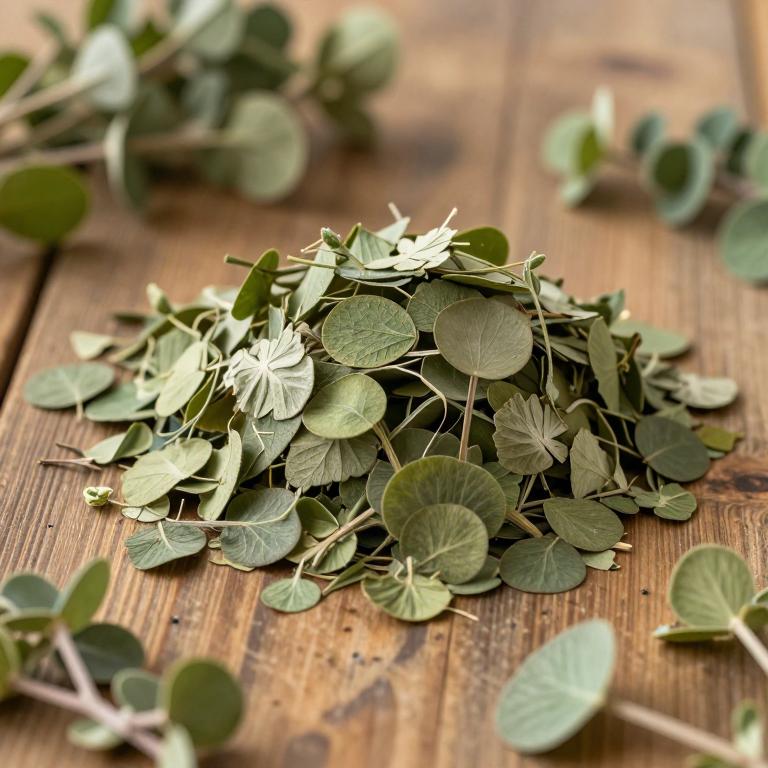
Australian water-clover, scientifically known as Marsilea mutica, is a resilient aquatic fern found in wetlands worldwide. Characterized by its distinctive four-leaflet foliage, this creeping plant thrives in shallow waters and muddy substrates. Beyond its unique appearance, it plays a vital role in stabilizing aquatic ecosystems and supporting biodiversity.
- Family
- Marsileaceae
- Native range
- Asia-Tropical
- Parts used
- Not available
- Common names
- Australian Water-Clover · Smooth Nardoo · 1 more
- Scientific synonyms
- Marsilea Brownii
Names and Synonyms
Common Names
- Australian water-clover
- smooth nardoo
- Nardoo
Scientific Names
Accepted name
Marsilea muticaSynonyms
- Marsilea brownii
Sources: Wikidata, Catalogue of Life
Taxonomical Classification
This plant belongs to the kingdom Plantae and is classified within the phylum Streptophyta and the class Equisetopsida. Further taxonomic details place it in the subclass Polypodiinae and the order Salviniales, specifically within the family Marsileaceae. It is identified under the genus Marsilea, which encompasses this specific medicinal species.
| Rank | Classification |
|---|---|
| Kingdom | Plantae |
| Phylum | Streptophyta |
| Class | Equisetopsida |
| Subclass | Polypodiinae |
| Order | Salviniales |
| Family | Marsileaceae |
| Genus | Marsilea |
Sources: The World Checklist of Vascular Plants (WCVP)
Distribution
This plant exhibits a diverse geographical distribution spanning across several regions in Asia and Oceania. Within the Indo-China region, its presence is specifically noted in Thailand. In Australia, the species can be found inhabiting the state of New South Wales. It also extends into the tropical landscapes of the Northern Territory and the subtropical areas of Queensland. Finally, its range reaches the southern reaches of the continent in Tasmania.
| Region | Area |
|---|---|
| Indo-China | Thailand |
| Australia | New South Wales |
| Australia | Northern Territory |
| Australia | Queensland |
| Australia | Tasmania |
| Australia | Victoria |
| Australia | Western Australia |
| Southwestern Pacific | New Caledonia |
| South-Central U.S.A. | Texas |
| Southeastern U.S.A. | Alabama |
Sources: The World Checklist of Vascular Plants (WCVP)
Botanical Identification
Ecology
The ecology of Marsilea mutica is characterized by its preference for lowland environments, where it thrives in various aquatic and semi-aquatic settings. This species typically colonizes shallow, slow-moving, or stagnant water bodies, including marshes, swamps, ponds, and the margins of lakes or rivers. It is highly adapted to fluctuating water levels, often found in muddy or silty substrates that remain submerged or periodically inundated. Within these lowland ecosystems, the plant plays a vital role in stabilizing sediments and providing microhabitats for various aquatic organisms. Its ability to tolerate diverse hydrological conditions allows it to occupy niches ranging from ephemeral wetlands to more permanent aquatic habitats, making it a resilient component of lowland wetland biodiversity.
- Habitat :
- Lowland
Life history
The life history of Marsilea mutica is characterized by its status as a perennial plant, allowing it to persist through multiple growing seasons within its aquatic habitat. As a specialized hydrophyte, it is biologically adapted to thrive in waterlogged environments or submerged conditions, utilizing its physiological traits to navigate aquatic ecosystems. Furthermore, its classification as a cryptophyte indicates that its perennating organs are protected below the surface, typically in the form of rhizomes or specialized structures, which ensures its survival and ability to regenerate during unfavorable environmental shifts.
- Life form :
- hydrophyte
- Life form :
- cryptophyte
- Lifecycle :
- perennial
Morphology
The morphology of Marsilea mutica is characterized by a non-woody, herbaceous growth form, specifically classified as a forb. As a self-supporting plant, it does not exhibit climbing habits such as lianas or vines, nor does it function as a parasite, remaining an independent organism. It is primarily terrestrial in its epiphytic status, though it exhibits a versatile ecological range as an aquatic, semiaquatic, or terrestrial species. In terms of stature, the plant displays significant variability in height, ranging from a minimum of 0.05 m to a maximum of 1.5 m, with an average plant height of approximately 0.9 m.
- Aquatic :
- aquatic
- Climber :
- self-supporting
- Epiphyte :
- terrestrial
- Growth form :
- herb
- Growth form :
- forb
- Parasite :
- independent
- Plant height max:
- 1.5 m
- Plant height mean:
- 0.9 m
- Plant height min:
- 0.05 m
- Woodiness :
- non-woody
Physiology
The physiology of Marsilea mutica is characterized by distinct morphological variations in its foliage and specific metabolic limitations regarding nutrient acquisition. The plant exhibits significant plasticity in its leaf dimensions, with leaf lengths ranging from a minimum of 5 cm to a maximum of 30 cm. In contrast to the variation seen in length, the leaf width remains highly consistent, maintaining a steady measurement of 3 cm, which serves as both the mean and the minimum/maximum width throughout its development. Furthermore, in terms of its biochemical nitrogen cycle involvement, the plant does not function as a nitrogen fixer, relying instead on the uptake of available nitrogen from its aquatic or semi-aquatic substrate rather than through symbiotic fixation processes.
- Leaf length max:
- 30 cm
- Leaf length min:
- 5 cm
- Leaf width mean:
- 3 cm
- Nitrogen fixer :
- no
Reproduction
The reproduction of Marsilea mutica involves both sexual and asexual mechanisms to ensure survival across its aquatic habitat. Sexual reproduction is characterized by an abiotic pollination syndrome, primarily utilizing water (hydrophily) to facilitate the movement of spores or gametes. Following fertilization, the plant employs an anemochorous dispersal syndrome, where wind serves as a primary agent for spreading its reproductive units. Furthermore, the plant exhibits the capacity for asexual reproduction, allowing it to propagate vegetatively and colonize local environments efficiently.
- Dispersal syndrome :
- anemochorous
- Pollination syndrome :
- water
- Pollination syndrome :
- abiotic
- Reproduction asexual :
- present
Sources: Global Inventory of Floras and Traits (GIFT)
Chemicals
Marsilea mutica has 6 reported phytochemicals identified across 0 scientific publications and several other databases. The most consistently reported chemicals include quercetin, Flavonoids, Saponins, Steroids, Tannins.
| Chemical | Supporting sources | Consensus |
|---|---|---|
| quercetin | 2 supporting sources | ★☆☆☆☆ |
| Flavonoids | 1 supporting sources | ★☆☆☆☆ |
| Saponins | 1 supporting sources | ★☆☆☆☆ |
| Steroids | 1 supporting sources | ★☆☆☆☆ |
| Tannins | 1 supporting sources | ★☆☆☆☆ |
| Terpenoids | 1 supporting sources | ★☆☆☆☆ |
quercetin
- Frontiers in pharmacology
- Natural product research
Flavonoids
- Frontiers in pharmacology
Saponins
- Frontiers in pharmacology
Steroids
- Frontiers in pharmacology
Tannins
- Frontiers in pharmacology
Terpenoids
- Frontiers in pharmacology
Activities
Marsilea mutica has 2 reported activities identified across 0 scientific publications and several other databases. The most consistently reported activities include Antiepileptic, Sedative.
| Activity | Supporting sources | Consensus |
|---|---|---|
| Antiepileptic | 1 supporting sources | ★☆☆☆☆ |
| Sedative | 1 supporting sources | ★☆☆☆☆ |
Antiepileptic
- Journal of ethnopharmacology
Sedative
- Journal of ethnopharmacology