Golden Bell-bean
Markhamia obtusifolia · Accepted scientific name
Scientific literature: Very Sparse (12 studies) · ★☆☆☆☆
Golden Bell-bean, scientifically known as Markhamia obtusifolia, is a striking deciduous tree prized for its vibrant, bell-shaped yellow blossoms. Native to tropical Africa, this ornamental species features lush green foliage and rapid growth, making it a popular choice for landscaping and a valuable subject in traditional medicinal practices.
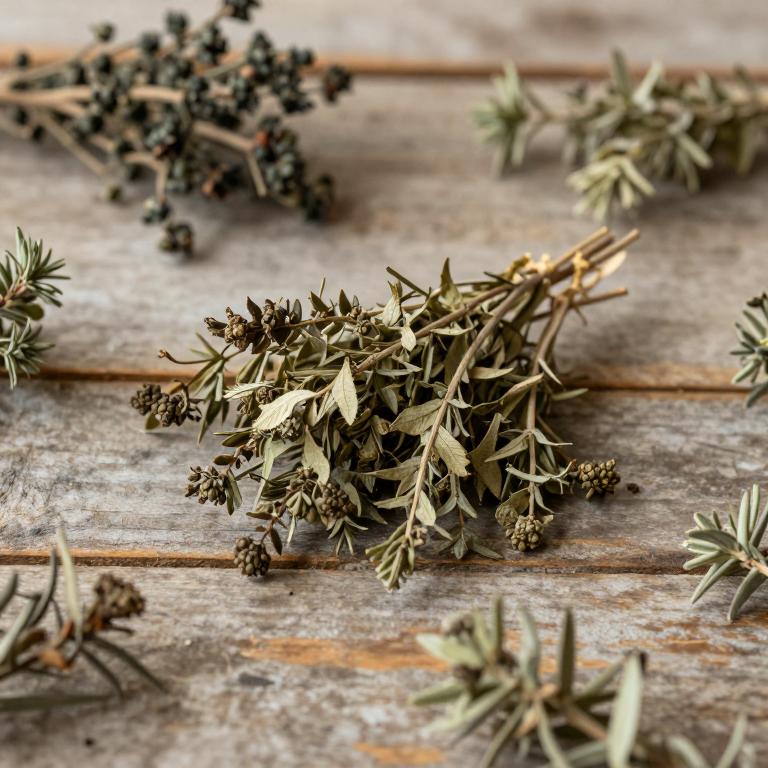
Names and Synonyms
Common Names
- Golden Beantree
- golden bellbean
- Golden bell-bean
Scientific Names
Accepted name
Markhamia obtusifoliaSynonyms
- Markhamia verdickii
- Markhamia lanata
- Markhamia paucifoliolata
- Dolichandrone obtusifolia
Sources: Wikidata, Catalogue of Life
Taxonomical Classification
This plant belongs to the kingdom Plantae and the phylum Streptophyta, falling under the class Equisetopsida and subclass Magnoliidae. Within the order Lamiales, it is classified under the family Bignoniaceae and is identified by the genus Markhamia.
| Rank | Classification |
|---|---|
| Kingdom | Plantae |
| Phylum | Streptophyta |
| Class | Equisetopsida |
| Subclass | Magnoliidae |
| Order | Lamiales |
| Family | Bignoniaceae |
| Genus | Markhamia |
Sources: The World Checklist of Vascular Plants (WCVP)
Distribution
This plant exhibits a specific distribution across several regions of the African continent. In West-Central Tropical Africa, it can be found in Burundi and the Central African Republic. The species also extends through the Democratic Republic of the Congo and Rwanda within that same West-Central zone. Moving toward the eastern side of the continent, its range reaches into East Tropical Africa. Specifically, this medicinal plant is documented to grow within the borders of Kenya.
| Region | Area |
|---|---|
| West-Central Tropical Africa | Burundi |
| West-Central Tropical Africa | Central African Republic |
| West-Central Tropical Africa | Rwanda |
| West-Central Tropical Africa | DR Congo |
| East Tropical Africa | Kenya |
| East Tropical Africa | Tanzania |
| South Tropical Africa | Angola |
| South Tropical Africa | Malawi |
| South Tropical Africa | Mozambique |
| South Tropical Africa | Zambia |
Sources: The World Checklist of Vascular Plants (WCVP)
Botanical Identification
Ecology
The ecology of Markhamia obtusifolia is characterized by a specific altitudinal niche, where it thrives within a narrow elevational range. This species is predominantly found at higher altitudes, specifically occupying a specialized zone between 910 m AMSL and 945 m AMSL. This restricted vertical distribution suggests that the plant is adapted to the particular climatic conditions, such as temperature gradients and moisture availability, found within this precise mountainous or hilly belt. Such a localized elevational profile indicates a high degree of environmental specialization, likely influenced by the specific soil compositions and atmospheric pressures unique to this altitude.
- Elevational range max:
- 945 m AMSL
- Elevational range min:
- 910 m AMSL
Life history
The life history of Markhamia obtusifolia is characterized by its status as a perennial plant, allowing it to persist in its environment through multiple growing seasons. In terms of its growth architecture and survival strategy, it is classified as a phanerophyte, specifically exhibiting characteristics consistent with both phanerophyte and nanophanerophyte life forms. This means that its perennating buds are located well above the ground, typically on aerial stems, which enables the plant to withstand seasonal variations and maintain a structural presence in its ecological niche over a long-term lifecycle.
- Life form :
- phanerophyte
- Lifecycle :
- perennial
Morphology
The morphology of Markhamia obtusifolia is characterized by a woody growth form, specifically classified as a tree. This species is a self-supporting plant, meaning it does not function as a liana or vine, and it grows as an independent organism rather than a parasite. It is a terrestrial plant, lacking aquatic or epiphytic tendencies. In terms of its stature, the plant exhibits significant variation in size, with heights ranging from a minimum of 0.6 m to a maximum of 15 m, maintaining an average plant height of approximately 10 m.
- Aquatic :
- terrestrial
- Climber :
- self-supporting
- Epiphyte :
- terrestrial
- Growth form :
- tree
- Parasite :
- independent
- Plant height max:
- 15 m
- Plant height mean:
- 10 m
- Plant height min:
- 0.6 m
- Woodiness :
- woody
Physiology
The physiology of Markhamia obtusifolia is characterized by a C3 photosynthetic pathway, which dictates its carbon fixation processes and metabolic efficiency under typical environmental conditions. As a C3 plant, it utilizes the enzyme RuBisCO to fix atmospheric carbon dioxide directly through the Calvin cycle, a process that is highly efficient in temperate to moist tropical environments but can be susceptible to photorespiration under high temperatures or water stress. Furthermore, this species does not function as a nitrogen fixer, meaning it lacks the symbiotic relationship with nitrogen-fixing bacteria required to convert atmospheric nitrogen into bioavailable forms, thus relying instead on the uptake of nitrates and ammonium from the surrounding soil to meet its nitrogenous nutritional requirements.
- Nitrogen fixer :
- no
- Photosynthetic pathway :
- C3
Reproduction
The reproduction of Markhamia obtusifolia is characterized by specific seed morphologies and dispersal strategies designed for propagation. The plant produces seeds with a highly consistent mass, where both the minimum, mean, and maximum recorded values converge at 0.02264 g, indicating a uniform seed size within the species. In terms of its dispersal mechanism, the species primarily utilizes an anemochorous syndrome, meaning its seeds are adapted for dispersal by wind. While other potential dispersal modes such as zoochory, autochory, hydrochory, or unspecialized methods exist in various botanical contexts, the specific functional trait for this plant is identified as anemochorous, allowing the wind to facilitate the movement of its seeds away from the parent plant.
- Dispersal syndrome :
- anemochorous
- Seed mass mean:
- 0.02264 g
Sources: Global Inventory of Floras and Traits (GIFT)
Plant Parts
Markhamia obtusifolia has 1 reported plant parts identified across 1 scientific publications and several other databases that are studied for medicinal purposes. The most consistently reported plant part include leaf.
| Plant part | Supporting sources | Consensus |
|---|---|---|
| Leaf | 1 supporting sources | ★☆☆☆☆ |
Leaf
- Heliyon
Chemicals
Markhamia obtusifolia has 4 reported phytochemicals identified across 1 scientific publications and several other databases. The most consistently reported chemicals include Flavonoids, Lignans, Phytosterols, Terpenoids.
| Chemical | Supporting sources | Consensus |
|---|---|---|
| Flavonoids | 1 supporting sources | ★☆☆☆☆ |
| Lignans | 1 supporting sources | ★☆☆☆☆ |
| Phytosterols | 1 supporting sources | ★☆☆☆☆ |
| Terpenoids | 1 supporting sources | ★☆☆☆☆ |
Flavonoids
- Pharmacognosy reviews
Lignans
- Pharmacognosy reviews
Phytosterols
- Pharmacognosy reviews
Terpenoids
- Pharmacognosy reviews
Activities
Markhamia obtusifolia has 6 reported activities identified across 1 scientific publications and several other databases. The most consistently reported activities include Analgesic, Antifungal, Antiinflammatory, Antiprotozoal, Antiviral.
| Activity | Supporting sources | Consensus |
|---|---|---|
| Analgesic | 1 supporting sources | ★☆☆☆☆ |
| Antifungal | 1 supporting sources | ★☆☆☆☆ |
| Antiinflammatory | 1 supporting sources | ★☆☆☆☆ |
| Antiprotozoal | 1 supporting sources | ★☆☆☆☆ |
| Antiviral | 1 supporting sources | ★☆☆☆☆ |
| Cytotoxic | 1 supporting sources | ★☆☆☆☆ |
Analgesic
- Pharmacognosy reviews
Antifungal
- Pharmacognosy reviews
Antiinflammatory
- Pharmacognosy reviews
Antiprotozoal
- Pharmacognosy reviews
Antiviral
- Pharmacognosy reviews
Cytotoxic
- Pharmacognosy reviews
Conditions
Markhamia obtusifolia has 1 reported investigations on conditions identified across 1 scientific publications and several other databases. The most consistently reported conditions include Aspergillus flavus.
| Condition | Supporting sources | Consensus |
|---|---|---|
| Aspergillus flavus | 1 supporting sources | ★☆☆☆☆ |
Aspergillus flavus
- Heliyon
Preparations
Markhamia obtusifolia has 1 reported preparations identified across 1 scientific publications and several other databases. The most consistently reported preparations include extracts.
| Preparation | Supporting sources | Consensus |
|---|---|---|
| Extracts | 1 supporting sources | ★☆☆☆☆ |
Extracts
- Heliyon