Markhamia lutea
Markhamia lutea · Accepted scientific name
Scientific literature: Very Sparse (19 studies) · ★☆☆☆☆
Markhamia lutea, scientifically known as Markhamia lutea, is a striking deciduous tree native to tropical Africa. Renowned for its vibrant, trumpet-shaped yellow flowers, it is highly valued in traditional medicine. Various parts of the plant are utilized to treat ailments ranging from skin infections to inflammatory conditions.
- Family
- Bignoniaceae
- Native range
- Africa
- Parts used
- Root · Stem
- Common names
- Not available
- Scientific synonyms
- Spathodea Lutea · Markhamia Hildebrandtii · 5 more
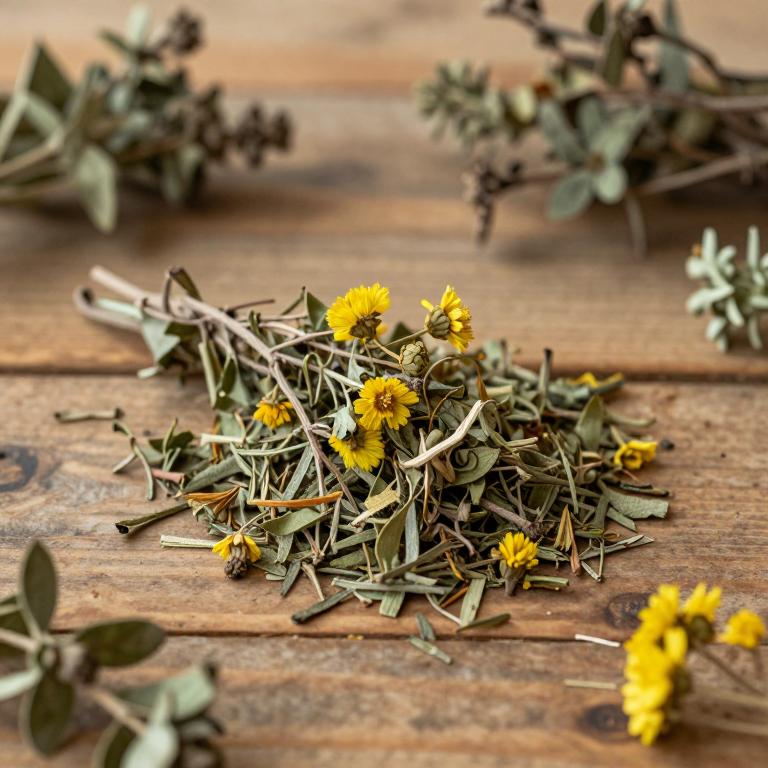
Names and Synonyms
Scientific Names
Accepted name
Markhamia luteaSynonyms
- Spathodea lutea
- Markhamia hildebrandtii
- Markhamia platycalyx
- Muenteria lutea
- Dolichandrone platycalyx
- Dolichandrone lutea
- Dolichandrone hildebrandtii
Regional and Traditional Names
Spanish:
- Tulipán del Nilo
German:
- Gelber Trompetenbaum
French:
- Markhamia
Sources: Wikidata, Catalogue of Life
Taxonomical Classification
This plant belongs to the kingdom Plantae and is classified under the phylum Streptophyta within the class Equisetopsida. As a member of the subclass Magnoliidae and the order Lamiales, it is further categorized into the family Bignoniaceae. Finally, it is identified by the genus Markhamia, which includes the specific species Markhamia lutea.
| Rank | Classification |
|---|---|
| Kingdom | Plantae |
| Phylum | Streptophyta |
| Class | Equisetopsida |
| Subclass | Magnoliidae |
| Order | Lamiales |
| Family | Bignoniaceae |
| Genus | Markhamia |
Sources: The World Checklist of Vascular Plants (WCVP)
Distribution
This plant exhibits a wide geographical distribution across several regions of the African continent. In West Tropical Africa, it can be found growing within the borders of Ghana and Ivory Coast. Its presence extends further east through Togo and into Nigeria. Additionally, the species reaches into West-Central Tropical Africa. Specifically, one documented location for this medicinal plant is Burundi.
| Region | Area |
|---|---|
| West Tropical Africa | Ghana |
| West Tropical Africa | Ivory Coast |
| West Tropical Africa | Nigeria |
| West Tropical Africa | Togo |
| West-Central Tropical Africa | Burundi |
| West-Central Tropical Africa | Central African Republic |
| West-Central Tropical Africa | Cameroon |
| West-Central Tropical Africa | Congo |
| West-Central Tropical Africa | Gabon |
| West-Central Tropical Africa | Gulf of Guinea Is. |
Sources: The World Checklist of Vascular Plants (WCVP)
Botanical Identification
Life history
The life history of Markhamia lutea is characterized by its status as a perennial plant, allowing it to persist through multiple growing seasons. As a phanerophyte, its reproductive shoots are elevated well above the ground, typically manifesting as a large tree structure. The species maintains an evergreen deciduousness, retaining its foliage to support continuous physiological processes throughout its life cycle.
- Deciduousness :
- evergreen
- Life form :
- phanerophyte
- Lifecycle :
- perennial
Morphology
Morphologically, Markhamia lutea is characterized as a woody tree that functions as a self-supporting growth form. It is a terrestrial species and operates as an independent organism rather than a parasite or epiphyte. The plant exhibits significant vertical development, with a recorded height ranging from a minimum of approximately 4.57 meters to a maximum of about 9.14 meters, though it maintains a mean plant height of approximately 13.67 meters.
- Aquatic :
- terrestrial
- Climber :
- self-supporting
- Epiphyte :
- terrestrial
- Growth form :
- tree
- Parasite :
- independent
- Plant height max:
- 9.144111192 m
- Plant height mean:
- 13.6666666666667 m
- Plant height min:
- 4.572055596 m
- Woodiness :
- woody
Physiology
The physiology of Markhamia lutea is characterized by a C3 photosynthetic pathway, which governs its carbon fixation processes and metabolic efficiency under typical environmental conditions. In terms of nutrient cycling and symbiotic relationships, the species does not function as a nitrogen fixer, meaning it lacks the specialized root nodules required to convert atmospheric nitrogen into a bioavailable form.
- Nitrogen fixer :
- no
- Photosynthetic pathway :
- C3
Reproduction
The reproduction of Markhamia lutea is driven by a biotic pollination syndrome, primarily facilitated by insects, with bees serving as a key pollinator. The fruiting cycle of this species is highly flexible, with the fruiting period beginning in January and concluding in January, though it can be categorized as variable throughout the year. The resulting seeds are characterized by a relatively small mass, with a mean seed mass of 0.02055 g. Individual seed weights vary within a specific range, reaching a minimum of 0.013 g and a maximum of 0.02841 g.
- Fruiting time :
- Jan
- Pollination syndrome :
- insect
- Pollination syndrome :
- bee
- Pollination syndrome :
- biotic
- Seed mass max:
- 0.02841 g
- Seed mass mean:
- 0.02055 g
- Seed mass min:
- 0.013 g
Sources: Global Inventory of Floras and Traits (GIFT)
Plant Parts
Markhamia lutea has 2 reported plant parts identified across 2 scientific publications and several other databases that are studied for medicinal purposes. The most consistently reported plant part include root, stem.
| Plant part | Supporting sources | Consensus |
|---|---|---|
| Root | 1 supporting sources | ★☆☆☆☆ |
| Stem | 1 supporting sources | ★☆☆☆☆ |
Root
- Journal of natural products
Stem
- Journal of chromatography. B, Analytical technologies in the biomedical and life sciences
Chemicals
Markhamia lutea has 9 reported phytochemicals identified across 2 scientific publications and several other databases. The most consistently reported chemicals include Flavonoids, LUTEOSIDE A, LUTEOSIDE B, LUTEOSIDE C, Lignans.
| Chemical | Supporting sources | Consensus |
|---|---|---|
| Flavonoids | 1 supporting sources | ★☆☆☆☆ |
| LUTEOSIDE A | 1 supporting sources | ★☆☆☆☆ |
| LUTEOSIDE B | 1 supporting sources | ★☆☆☆☆ |
| LUTEOSIDE C | 1 supporting sources | ★☆☆☆☆ |
| Lignans | 1 supporting sources | ★☆☆☆☆ |
| Phytosterols | 1 supporting sources | ★☆☆☆☆ |
| Terpenoids | 1 supporting sources | ★☆☆☆☆ |
| Verbascoside | 1 supporting sources | ★☆☆☆☆ |
| isoverbascoside | 1 supporting sources | ★☆☆☆☆ |
Flavonoids
- Pharmacognosy reviews
LUTEOSIDE A
- Journal of natural products
LUTEOSIDE B
- Journal of natural products
LUTEOSIDE C
- Journal of natural products
Lignans
- Pharmacognosy reviews
Phytosterols
- Pharmacognosy reviews
Terpenoids
- Pharmacognosy reviews
Verbascoside
- Journal of natural products
isoverbascoside
- Journal of natural products
Activities
Markhamia lutea has 6 reported activities identified across 2 scientific publications and several other databases. The most consistently reported activities include Antiviral, Analgesic, Antifungal, Antiinflammatory, Antiprotozoal.
| Activity | Supporting sources | Consensus |
|---|---|---|
| Antiviral | 2 supporting sources | ★☆☆☆☆ |
| Analgesic | 1 supporting sources | ★☆☆☆☆ |
| Antifungal | 1 supporting sources | ★☆☆☆☆ |
| Antiinflammatory | 1 supporting sources | ★☆☆☆☆ |
| Antiprotozoal | 1 supporting sources | ★☆☆☆☆ |
| Cytotoxic | 1 supporting sources | ★☆☆☆☆ |
Antiviral
- Journal of natural products
- Pharmacognosy reviews
Analgesic
- Pharmacognosy reviews
Antifungal
- Pharmacognosy reviews
Antiinflammatory
- Pharmacognosy reviews
Antiprotozoal
- Pharmacognosy reviews
Cytotoxic
- Pharmacognosy reviews
Conditions
Markhamia lutea has 1 reported investigations on conditions identified across 2 scientific publications and several other databases. The most consistently reported conditions include respiratory syncytial virus.
| Condition | Supporting sources | Consensus |
|---|---|---|
| Respiratory syncytial virus | 1 supporting sources | ★☆☆☆☆ |
Respiratory syncytial virus
- Journal of natural products
Preparations
Markhamia lutea has 1 reported preparations identified across 2 scientific publications and several other databases. The most consistently reported preparations include roots.
| Preparation | Supporting sources | Consensus |
|---|---|---|
| Roots | 1 supporting sources | ★☆☆☆☆ |
Roots
- Journal of natural products