Marginatocereus marginatus
Marginatocereus marginatus · Accepted scientific name
Scientific literature: Very Sparse (2 studies) · ★☆☆☆☆
Marginatocereus marginatus is a fascinating cactus species that has recently garnered significant scientific interest due to its unique biochemical properties. Researchers have focused their investigations on the plant's stem, which serves as a rich source of bioactive compounds. Specifically, studies have utilized ethyl acetate and hexane extracts to isolate and analyze the chemical constituents of this succulent. These specialized preparations have revealed promising antitumor activities that could hold value for future medicinal developments. Consequently, this plant represents a compelling subject in the ongoing search for novel natural agents against cancer cells.
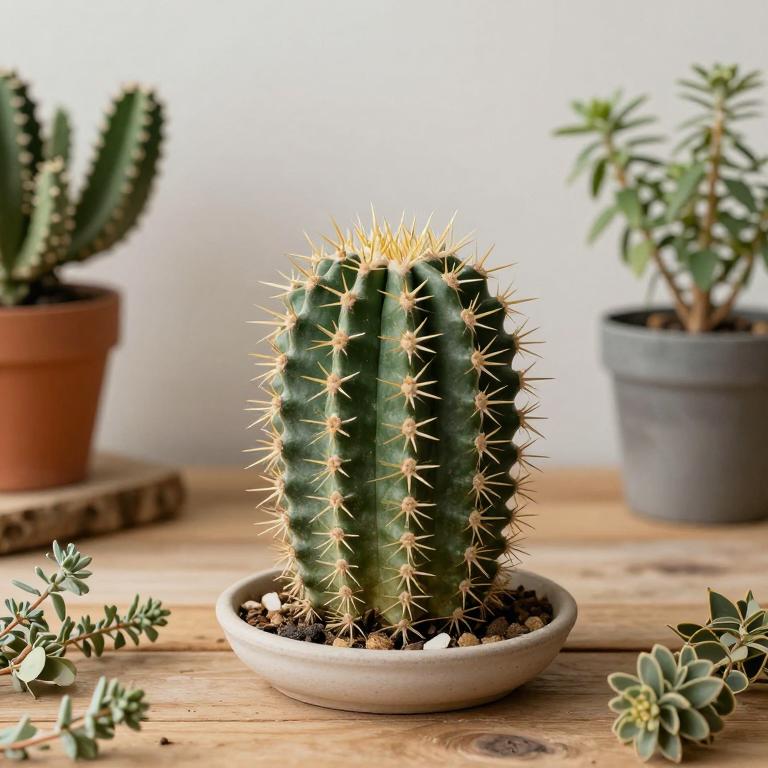
- Synonyms
- Echinopsis Gemmata · Stenocereus Marginatus · 20 more
- Common names
- Not available
- Family
- Cactaceae
- Distribution
- Africa
- Plant Parts
- Stem
Classification
Common Names
Marginatocereus marginatus is a striking succulent known by a diverse array of regional and descriptive names. Many enthusiasts affectionately refer to this species as the Chilayo. It is also widely recognized in botanical circles as the Mexican Fence Post Cactus due to its upright growth habit. Because of its unique, segmented structure, it is frequently called the Organ Cactus. In certain areas, it may even be simply known by the name Organo.
Sources: Catalogue of Life (COL)
Synonyms
Marginatocereus marginatus is a complex species that has been identified by various botanical names throughout its taxonomic history. Scientific literature frequently lists several synonyms for this plant, including Cereus cupulatus and Cereus geminatus. Researchers have also documented its relationship to Cereus gemmatus and the closely related Cereus incrustans. Furthermore, the name Cereus incrustatus is often used interchangeably within different botanical records. Navigating these various designations is essential for anyone studying the precise classification of this cactus.
Sources: The World Checklist of Vascular Plants (WCVP)
Taxonomy
Marginatocereus marginatus is a distinctive member of the kingdom Plantae. As a specialized organism, it belongs to the class Equisetopsida. Within this classification, the plant is situated under the order Caryophyllales. It is further defined by its placement in the genus Marginatocereus. Finally, this unique species is a proud representative of the Cactaceae family.
| Rank | Classification |
|---|---|
| Kingdom | Plantae |
| Phylum | Streptophyta |
| Class | Equisetopsida |
| Subclass | Magnoliidae |
| Order | Caryophyllales |
| Family | Cactaceae |
| Genus | Marginatocereus |
Sources: The World Checklist of Vascular Plants (WCVP)
Distribution
Geographic Regions
Marginatocereus marginatus exhibits a remarkably diverse geographical distribution that spans several continents. In Asia, the species is found throughout the tropical regions of Indo-China and Cambodia. Its range extends into Europe, specifically within the Southwestern European territories of Spain and the Baleares. The plant also makes a significant presence in Northern America, where it thrives in various parts of Mexico. This widespread occurrence includes both the central highlands and the coastal regions of the Mexico Gulf.
Sources: The World Checklist of Vascular Plants (WCVP)
Identification
Biological Activities
Marginatocereus marginatus, also known as Lophocereus marginatus, has demonstrated significant antitumor potential through the study of its endophytic fungi. Research indicates that extracts derived from fungi living within the stems of this cactus can inhibit the growth of various cancer cells, including murine lymphoma, human colorectal adenocarcinoma, and breast cancer. Specifically, strains such as Cladosporium sp. and Metarhizium anisopliae have shown remarkable ability to suppress tumor cell proliferation in vitro. Further investigations into Aspergillus versicolor extracts have even confirmed antitumor activity in vivo, leading to increased survival rates in murine models. These findings highlight the importance of the cactus's microbial inhabitants as a promising source for developing new antineoplastic treatments.
Compounds
Conditions
Marginatocereus marginatus, through its endophytic fungi, exhibits significant antitumor activity against human breast cancer (MCF-7) and human colorectal adenocarcinoma (HT-29) cells. These fungal extracts also demonstrate the ability to treat murine L5178Y-R lymphoma cells in both in vitro and in vivo models. The research highlights that the extracts specifically target murine lymphoma (L5178Y-R) to increase survival rates. Additionally, the studies utilized human peripheral blood mononuclear cells (PBMC) to evaluate the selectivity and safety of these treatments. Collectively, these findings illustrate the diverse therapeutic potential of the plant's endophytes against various cancer cell lines.
Preparations
Marginatocereus marginatus serves as the host plant for endophytic fungi used to derive specific chemical compounds. In the described study, the researchers focused on the endophytes residing within this cactus species. These biological materials were specifically prepared as ethyl acetate and hexane extracts to test their medicinal properties. This extraction process allowed for the isolation of metabolites from the fungal residents of the plant. Consequently, the resulting ethyl acetate and hexane extracts were evaluated for their potential antitumor activities.
Parts used
Marginatocereus marginatus serves as a vital host for various endophytic fungi that possess significant medicinal potential. These specialized fungi are specifically isolated from the stem of the Lophocereus marginatus cactus, which is native to Mexico. Research indicates that extracts from these stem-dwelling organisms can effectively inhibit the growth of several tumor cell lines. Specifically, strains such as Cladosporium sp. have demonstrated remarkable cytotoxic activity against murine lymphoma and colorectal adenocarcinoma cells. This unique relationship between the cactus stem and its internal fungi offers a promising pathway for developing new antitumor agents.