Goose Berry
Margaritaria nobilis · Accepted scientific name
Scientific literature: Very Sparse (4 studies) · ★☆☆☆☆
Goose Berry, scientifically known as Margaritaria nobilis, is a remarkable medicinal plant valued for its diverse therapeutic properties. Renowned in traditional herbalism, it offers potent antioxidant and anti-inflammatory benefits. This versatile species serves as a vital resource in natural healing, supporting wellness through its unique bioactive compounds and phytochemical richness.
- Family
- Phyllanthaceae
- Native range
- Northern America
- Parts used
- Not available
- Common names
- Goose Berry
- Scientific synonyms
- Phyllanthus Antillanus Var. Hypomalacus · Margaritaria Nobilis Var. Hypomalaca · 24 more
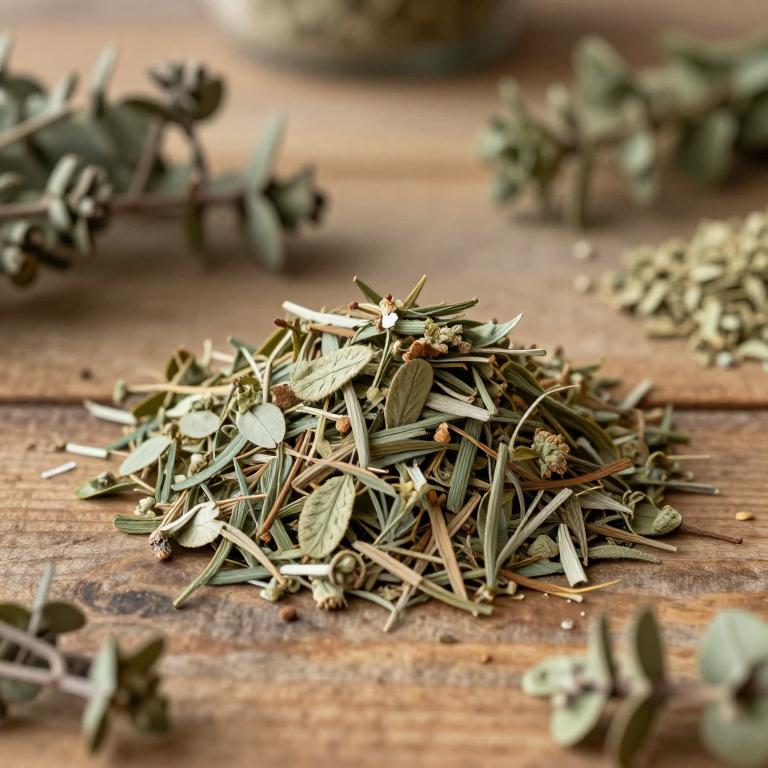
Names and Synonyms
Common Names
- Goose Berry
Scientific Names
Accepted name
Margaritaria nobilisSynonyms
- Phyllanthus antillanus var. hypomalacus
- Margaritaria nobilis var. hypomalaca
- Cicca chinensis
- Phyllanthus ibonensis
- Cicca antillana
- Phyllanthus heteromorphus
- Phyllanthus nobilis
- Cicca antillana var. pedicellaris
- Phyllanthus nobilis var. antillanus
- Phyllanthus nobilis var. brasiliensis
- Cicca pavoniana
- Phyllanthus nobilis var. guyanensis
- Phyllanthus nobilis var. hypomalacus
- Phyllanthus nobilis var. martii
- Cicca surinamensis
- Phyllanthus nobilis var. panamensis
- Phyllanthus nobilis var. pavonianus
- Phyllanthus nobilis var. peruvianus
- Phyllanthus nobilis var. riedelianus
- Phyllanthus pseudonobilis
- Phyllanthus antillanus var. pedicellaris
- Phyllanthus antillanus
- Phyllanthus antillanus var. concolor
- Phyllanthus sinicus
- Margaritaria nobilis var. antillana
- Diasperus antillanus
Regional and Traditional Names
Spanish:
- ciruelillo
French:
- Bois mille branches
Sources: Wikidata, Catalogue of Life
Taxonomical Classification
This plant belongs to the kingdom Plantae and is classified under the phylum Streptophyta and class Equisetopsida. Within the subclass Magnoliidae, it is placed in the order Malpighiales and the family Phyllanthaceae. Finally, its specific taxonomic designation is within the genus Margaritaria.
| Rank | Classification |
|---|---|
| Kingdom | Plantae |
| Phylum | Streptophyta |
| Class | Equisetopsida |
| Subclass | Magnoliidae |
| Order | Malpighiales |
| Family | Phyllanthaceae |
| Genus | Margaritaria |
Sources: The World Checklist of Vascular Plants (WCVP)
Distribution
This plant exhibits a broad presence across several distinct regions of Mexico. It can be found throughout the central part of the country, specifically within Mexico Central. Its distribution extends into the coastal and inland areas of Mexico Northeast and Mexico Gulf. Additionally, the species is located in the western territories of Mexico Northwest. Finally, the plant completes its range by appearing in the region of Mexico Southwest.
| Region | Area |
|---|---|
| Mexico | Mexico Central |
| Mexico | Mexico Northeast |
| Mexico | Mexico Gulf |
| Mexico | Mexico Northwest |
| Mexico | Mexico Southwest |
| Mexico | Mexico Southeast |
| Central America | Belize |
| Central America | Costa Rica |
| Central America | El Salvador |
| Central America | Guatemala |
Sources: The World Checklist of Vascular Plants (WCVP)
Botanical Identification
Ecology
The ecology of Margaritaria nobilis is characterized by its remarkable adaptability to diverse Brazilian biomes and a broad altitudinal distribution. This species can be found across a wide range of environments, including the Cerrado (lato sensu), Floresta Ciliar or Galeria, Floresta de Várzea, Floresta Estacional Semi-decidual, Floresta Ombrófila (pluvial), and Floresta Ombrófila Mista. Its vertical distribution is equally extensive, spanning from sea level (0 m AMSL) up to elevations of 2200 m AMSL, allowing it to inhabit both lowland tropical forests and higher montane ecosystems.
- Elevational range max:
- 2200 m AMSL
- Elevational range min:
- 0 m AMSL
- Habitat :
- Cerrado (lato sensu), Floresta Ciliar ou Galeria, Floresta de Várzea, Floresta Estacional Semidecidual, Floresta Ombrófila (= Floresta Pluvial), Floresta Ombrófila Mista
Life history
The life history of Margaritaria nobilis is characterized by a perennial lifecycle, allowing the plant to persist through multiple growing seasons. In terms of its structural growth strategy, it exhibits characteristics of both a phanerophyte and a nanophanerophyte, indicating a life form where the stem or woody parts are elevated above the ground level. Additionally, the plant follows a deciduous pattern, shedding its foliage as part of its seasonal biological cycle.
- Deciduousness :
- deciduous
- Life form :
- nanophanerophyte
- Life form :
- phanerophyte
- Lifecycle :
- perennial
Morphology
The morphology of Margaritaia nobilis is characterized by a versatile growth form that can manifest as either a shrub or a tree, reaching significant dimensions with a mean height of 8 m and a maximum height of up to 30 m. This species exhibits a woody structure and is classified as a terrestrial plant, functioning as an independent organism rather than a parasite. In terms of its physical habit, it is a self-supporting plant, lacking the climbing characteristics of vines or lianas, and it does not function as an epiphyte, maintaining a strictly terrestrial existence.
- Aquatic :
- terrestrial
- Climber :
- self-supporting
- Epiphyte :
- terrestrial
- Growth form :
- tree
- Growth form :
- shrub
- Parasite :
- independent
- Plant height max:
- 30 m
- Plant height mean:
- 8 m
- Woodiness :
- woody
Physiology
The physiology of Margaritaia nobilis is characterized by a C3 photosynthetic pathway, which dictates its carbon fixation processes and metabolic efficiency. In terms of leaf architecture and resource allocation, the plant exhibits a consistent Leaf Dry Matter Content (LDMC) with a recorded mean, minimum, and maximum value of 317 mg/g, indicating a stable level of biomass density within its foliage. Additionally, regarding its nutrient acquisition capabilities, the species does not function as a nitrogen fixer, relying instead on the uptake of available nitrogen from the soil through its root system.
- Leaf dry matter content (LDMC) mean:
- 317 mg/g
- Nitrogen fixer :
- no
- Photosynthetic pathway :
- C3
Reproduction
The reproduction of Margaritaria nobilis is characterized by specific morphological and biological traits that govern its propagation. The plant produces dry fruits, which contain seeds with varying dimensions and weights. These seeds exhibit a mean length of 11 mm, ranging from a minimum of 6 mm to a maximum of 15 mm, and a mean volume of 210 mm³, with individual volumes fluctuating between 140 mm³ and 280 mm³. In terms of mass, the seeds have a mean weight of 0.01125 g, with a minimum recorded mass of 0.008 g and a maximum of 0.0145 g. Regarding its reproductive strategy, the species does not exhibit self-fertilization, and its dispersal is classified as zoochorous, relying on animals for the movement of its seeds.
- Dispersal syndrome :
- zoochorous
- Fruit dryness :
- dry
- Seed length max:
- 15 mm
- Seed length mean:
- 11 mm
- Seed length min:
- 6 mm
- Seed mass max:
- 0.0145 g
- Seed mass mean:
- 0.01125 g
- Seed mass min:
- 0.008 g
- Seed volume max:
- 280 mm³
- Seed volume mean:
- 210 mm³
- Seed volume min:
- 140 mm³
- Self fertilization :
- absent
Sources: Global Inventory of Floras and Traits (GIFT)
Chemicals
Margaritaria nobilis has 2 reported phytochemicals identified across 0 scientific publications and several other databases. The most consistently reported chemicals include Flavonoids, Hydrolyzable Tannins.
| Chemical | Supporting sources | Consensus |
|---|---|---|
| Flavonoids | 1 supporting sources | ★☆☆☆☆ |
| Hydrolyzable Tannins | 1 supporting sources | ★☆☆☆☆ |
Flavonoids
- Pharmaceuticals (Basel, Switzerland)
Hydrolyzable Tannins
- Pharmaceuticals (Basel, Switzerland)
Conditions
Margaritaria nobilis has 2 reported investigations on conditions identified across 0 scientific publications and several other databases. The most consistently reported conditions include abscesses, nociception.
| Condition | Supporting sources | Consensus |
|---|---|---|
| Abscesses | 1 supporting sources | ★☆☆☆☆ |
| Nociception | 1 supporting sources | ★☆☆☆☆ |
Abscesses
- Pharmaceuticals (Basel, Switzerland)
Nociception
- Pharmaceuticals (Basel, Switzerland)